Automation shifts wealth within the shopping ecosystem by benefiting big tech firms and retailers that adopt advanced AI and automation tools, while reducing opportunities for low- and middle-income workers. Self-checkout kiosks, automated warehouses, and personalized online shopping tend to concentrate profits among corporations and their owners. As automation grows, more money flows upward, making it harder for everyday consumers and workers to share in economic gains. To understand how this trend continues to reshape the economy, keep exploring these shifts further.
Key Takeaways
- Automation in retail reduces labor costs but often favors wealthier businesses and owners over low-income workers.
- Self-checkout kiosks and AI-driven logistics streamline shopping, benefiting large retailers and tech firms financially.
- Digital tools like robo-advisors democratize wealth management, shifting financial benefits toward middle- and high-income consumers.
- Automation accelerates wealth concentration among top industries and individuals, widening economic disparities across the shopping ecosystem.
- Policy efforts are needed to ensure automation benefits are shared broadly, preventing increased inequality within the retail and consumer landscape.
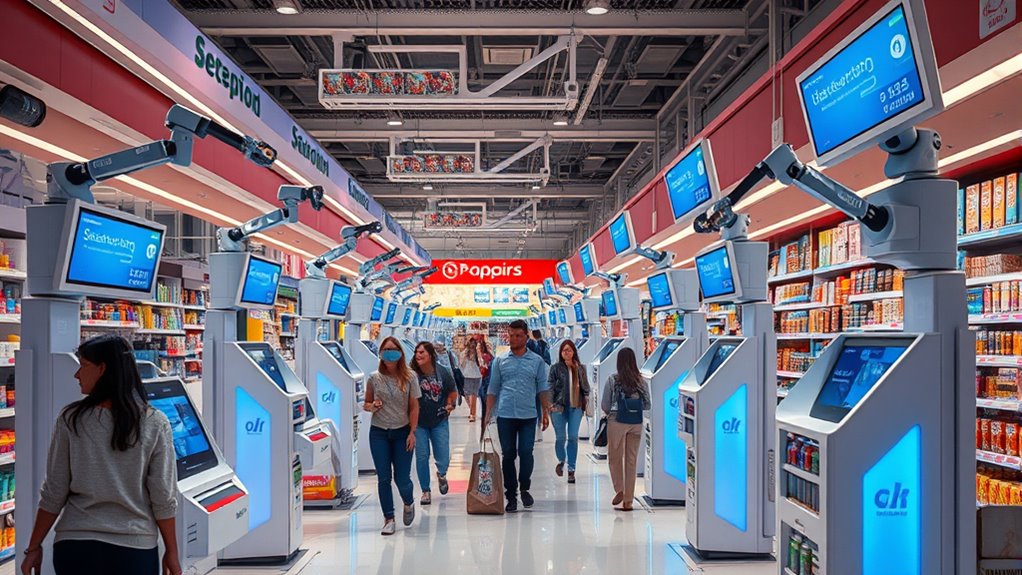
Automation is transforming the retail landscape by shifting wealth and altering job opportunities across the shopping ecosystem. As you navigate this changing environment, you’ll notice how automation impacts income distribution and who benefits most. Self-checkout kiosks, for instance, cut labor costs but don’t substantially boost productivity. Instead, they shift jobs away from low-skill workers, reducing opportunities for those with limited education and experience. Since 1980, automation has played a role in widening the income gap, explaining about half to most of the increase in inequality between more and less educated workers. Workers without high school degrees have seen their inflation-adjusted earnings drop by 15%, while those with advanced degrees have enjoyed income growth. This trend hits low- and middle-income workers hardest, as automation diminishes their wage growth and job prospects. Automation’s impact on wages has been especially severe for marginalized groups, further widening existing disparities. Moreover, the unequal distribution of benefits from automation often mirrors existing social inequalities, compounding challenges for disadvantaged populations.
Automation isn’t just affecting individual incomes; it’s also reshaping wealth distribution at a broader level. Industries like finance, technology, and e-commerce have embraced AI, leading to greater wealth concentration among the top 1%. From 2006 to 2021, their share of national wealth increased from 32% to 37%, while the bottom 50% saw its share decline from 2.5% to 2%. The strong correlation between AI adoption and wealth concentration means that high-tech sectors tend to amplify existing disparities. Corporate elites and tech entrepreneurs benefit the most, reaping disproportionate gains from automation-driven growth.
At the same time, automation is democratizing some aspects of wealth management. Robo-advisors now offer middle-class households access to personalized investment advice, reducing the minimum investment requirements from thousands to hundreds of dollars. This shift makes it easier for more people to grow their wealth through automated, cost-effective services. As a result, wealth redistribution becomes more accessible, empowering smaller investors and helping to bridge some income gaps. However, the overall impact remains mixed. Automation is projected to eliminate a substantial portion of jobs by the late 2020s, especially for middle- and low-income workers, while high-skilled and capital owners see most of the benefits. The pace of adoption and the existing inequality levels determine whether these shifts will widen or narrow the wealth gap in the long run. Recognizing these dynamics is crucial for developing policies that promote economic equity and social mobility.
Frequently Asked Questions
How Does Automation Impact Small Retail Businesses?
Automation impacts small retail businesses by boosting efficiency and reducing costs, helping you compete with larger stores. It streamlines tasks like inventory management and checkout, allowing you to serve customers faster and better. However, the upfront costs and technical challenges can be tough to manage. You might face workforce displacement concerns and need to invest in retraining, but if adopted wisely, automation can enhance your productivity and customer experience considerably.
What Roles Do Consumers Play in Automated Shopping Ecosystems?
In automated shopping ecosystems, you actively shape your experience by engaging with digital tools like self-service kiosks, AI recommendations, and AR features. You co-create your journey through personalized suggestions and seamless omnichannel interactions. Your real-time preferences, data sharing, and feedback help retailers improve services and tailor offerings. By embracing automation, you influence store layouts, product selections, and innovations, making the ecosystem more responsive and aligned with your needs.
Are There Ethical Concerns With Wealth Redistribution via Automation?
You should know that 65% of Americans believe robots will perform much of human work within 50 years, highlighting ethical concerns about wealth redistribution via automation. As automation benefits capital owners and high-skilled professionals, low-skilled workers often face job loss and income decline. This widening gap raises moral questions about fairness, societal responsibility, and how we can implement policies that guarantee technology benefits everyone, not just the wealthy.
How Do Automation Trends Vary Across Different Geographic Regions?
You’ll notice automation trends differ by region. Asia-Pacific leads with rapid growth, especially in manufacturing and smart industries, driven by large investments. North America dominates sales and marketing automation, with high AI adoption in utilities. Europe progresses more slowly, focusing on hardware and regulation. Emerging markets mainly automate discrete tasks, like coding, with lower overall adoption. These variations reflect economic stages, infrastructure, and industry priorities across the globe.
What Skills Are Needed for Workers Displaced by Automation?
You need to develop digital dexterity, data-driven decision-making, and dynamic problem-solving skills. Focus on mastering AI, big data, and cybersecurity to stay ahead. Cultivate cognitive curiosity, creative thinking, and flexible resilience to adapt to evolving roles. Upskilling in software, systems, and cloud tech helps you shift seamlessly. By building these basic and advanced abilities, you’ll better bounce back from job disruptions and boost your value in an automated world.
Conclusion
As automation reshapes the shopping landscape, think of it as a mighty river redistributing its waters—some areas flourish, while others find new challenges. You’re part of this flow, witnessing how wealth shifts across the ecosystem. Embrace the change, adapt your strategies, and navigate this evolving landscape with agility. Just like a river carves new paths, automation offers opportunities to reshape your future—so stay flexible and keep moving forward.