
TL;DR

Get business pricing on tech for your team
- Business-only prices and quantity discounts
- Tax-exempt purchasing
- Multiple users, one account, clear invoices
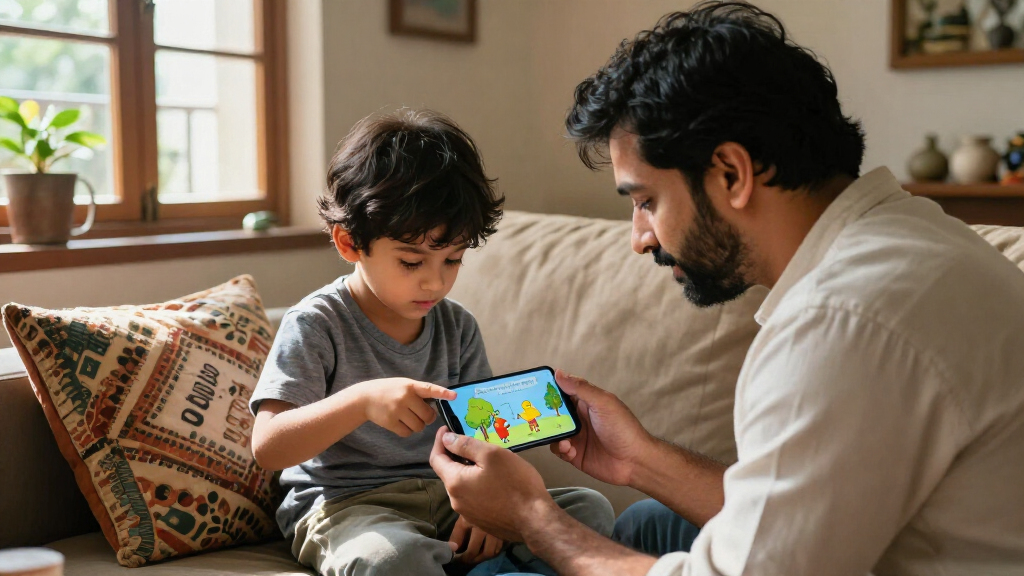
Google has brought Dreambeans, its AI app for generating illustrated personal stories from connected Google services, to India, its first market outside the United States. The app supports 13 local languages, but stories can use only one language at a time; privacy controls and the app’s early U.S. download figures also shape the launch.
Google launched Dreambeans in India on Monday, taking its experimental AI app for personalized illustrated stories beyond the United States for the first time. The Android and iOS app can draw on information from connected Google services to create stories without users entering a prompt, and the India release supports 13 local languages alongside English.
Introduced in June, Dreambeans uses Google’s Personal Intelligence technology to draw on selected connected services, including Calendar, Gemini, Gmail, Photos, Search and YouTube. It generates stories about a user’s interests and everyday life, initially as static AI illustrations. Google recently added an option to animate images in some stories using its Veo video-generation model.
Google product manager Gozde Oznur said the company chose India as its first international market because users there had shown strong interest and because Google services are widely used. She said India stood out for the overlap among users of Gemini, Gmail and Google Photos. The app’s supported languages include Hindi, Punjabi, Tamil, Telugu and Bengali, as well as English.
Language support has a limit: users can select only one language for generated stories at a time. Oznur said Dreambeans can draw on information across Google services in multiple languages, but it cannot yet produce stories that mix languages. The app is for personal Gmail account holders, not enterprise users, and Google says each user’s generated stories are visible only to that account holder.
India Tests Dreambeans’ Reach
The India launch puts Dreambeans in a large, multilingual market where Google says many people already use several of the services that feed the app. That gives the company a chance to test whether personal, automatically generated stories appeal beyond the U.S. and to users with different language preferences. The app’s ability to connect information across Google products is central to that proposition, but it also makes the choice of what data to share a central user concern.
Early U.S. download estimates provide a limited measure of interest, not proof of how people use the app or whether they keep it. Sensor Tower estimates that Dreambeans received nearly 55,000 U.S. downloads from its June debut through the period covered by the report. About 63% came in September, when Google opened it to all eligible U.S. users aged 18 and older; estimated downloads then fell 84% month over month, to about 5,500 in October. Those figures do not establish why downloads changed, and they do not predict performance in India.
The app is also not directly comparable with general-purpose chatbots: Dreambeans focuses on generating personal stories rather than answering a wide range of questions. Its India rollout will test a more specific use of generative AI, while the single-language limit may be a drawback for people who regularly switch between languages or mix Hindi and English.
Products Worth Considering

Samsung Galaxy Tab A7 Lite 8.7-Inch 32GB Wi-Fi Tablet, Gray

Samsung Galaxy Tab A11 Wi-Fi Tablet, 8.7-Inch, 64GB, 4GB RAM, Gray (SM-X133, International Version)

Jackery Solar Generator 1000 V2 with 200W Solar Panel, 1070Wh
As an affiliate, we earn on qualifying purchases.
From U.S. Trial to India
Google introduced Dreambeans in June and later made it available to all eligible U.S. users aged 18 and older, less than two months before the India expansion described in the report. India is the app’s first market outside the U.S. The company’s stated rationale combines interest from Indian users with the country’s use of Google products that can supply material for personalized stories.
Sensor Tower’s estimates, shared with TechCrunch, put Dreambeans at about 29,000 downloads in its first 30 days after opening to eligible U.S. users. For comparison, the firm estimated first-30-day downloads of 7.4 million for Meta’s Muse, 2.8 million for ChatGPT, 362,000 for Grok Bot and 155,000 for Claude during their respective launch periods. These are third-party download estimates, and the products serve different purposes; the comparison does not measure retention, satisfaction or story quality.
Privacy and Language Limits
It is not yet clear how many people in India will try Dreambeans, how often users will return, or whether the app’s stories will feel useful or intrusive. Google has not provided India-specific adoption figures in the reported material. The U.S. download estimates do not answer those questions, and download counts alone do not show whether users retained the app.
The service draws on connected accounts that may contain sensitive personal information. Oznur said users can choose connected services, disconnect them, delete Dreambeans data in the app, and ask it to avoid topics such as business information. She also said information deleted from the underlying services is removed from Dreambeans’ personalization system. These are Google’s descriptions of its controls; the report does not provide an independent technical assessment of how the deletion and personalization systems operate.
Personalized stories could also surface upsetting subjects, including people who have died, Oznur acknowledged. She said users can ask Dreambeans to stop showing particular topics, but the reported material does not specify how reliably the app will honor those requests. It is also unclear when mixed-language stories or other changes may arrive.
Google Weighs More Actions
Google is exploring ways to make Dreambeans more actionable, Oznur told reporters, moving beyond stories and recommendations toward helping users act on suggestions. The company has not announced a timeline or described specific features. For now, the India release adds another market and more language options, while retaining the one-language-per-story constraint.
The next indicators to watch are whether Google expands language capabilities, changes the app’s data controls or adds functions that let users follow through on its suggestions. Any assessment of the India launch will also depend on usage and retention information that Google has not yet reported. Until such details emerge, the confirmed development is the app’s expansion—not evidence of its reach or long-term uptake.
Key Questions
What is Google Dreambeans?
Dreambeans is an experimental AI app that creates illustrated personal stories from information in Google services a user chooses to connect. It generates stories proactively, without requiring a prompt.
Which languages does Dreambeans support in India?
The India release supports 13 local languages alongside English, including Hindi, Punjabi, Tamil, Telugu and Bengali. Users can choose only one language at a time for the stories.
What Google data can Dreambeans use?
According to the report, it can use selected connected services including Calendar, Gemini, Gmail, Photos, Search and YouTube. Users can choose which services to connect and can disconnect them, Google product manager Gozde Oznur said.
Can Dreambeans create stories in mixed languages?
Not currently. Oznur said the app can draw on information across services in multiple languages, but generated stories cannot mix languages at this time.
What remains unknown about the India launch?
Google has not reported India-specific downloads or retention figures in the source material. It is also unclear when the app may add mixed-language stories or the more actionable features the company says it is exploring.
Source: techcrunch.com