🔍 Read the full analysis: AI And The Second Wave Of Attacks On European Supermarket Refrigeration on ThorstenMeyerAI.com

Get business pricing on tech for your team
- Business-only prices and quantity discounts
- Tax-exempt purchasing
- Multiple users, one account, clear invoices
TL;DR
Reports say more than 115 supermarkets and other food businesses across at least six countries experienced refrigeration disruptions overnight on November 1–2. Belgian installer Sabcobel said the systems were remotely switched into defrost, matching the method reported in France in October; no attacker has been identified, and there is no evidence that AI was used.
More than 115 stores and food businesses across at least six European countries reportedly suffered refrigeration disruptions overnight on November 1–2, after remote attacks changed the settings on systems controlling freezers and cold rooms. The reported method resembles an October attack on French supermarkets, but no group has claimed responsibility and authorities have not established who was behind either wave.
Reports compiled by BleepingComputer count incidents in Belgium, the Netherlands, Sweden, Luxembourg, Ireland and Estonia; Finnish authorities and retailer Kesko also reported anomalies at a few smaller stores. The counts vary by source and may overlap or change as investigations continue. The reported total is an incident count, not a verified final tally of all affected sites.
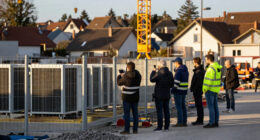
Belgian refrigeration installer Sabcobel chief executive Stephan Moelans told Belgian media that technicians began disconnecting affected installations around 1 a.m. He said the company itself was not hacked: the internet-reachable controllers at stores were attacked directly. About 20 of the several hundred installations Sabcobel manages in Belgium were affected, Moelans told The Record. Sabcobel said evaporators had been remotely switched into defrost mode, the same mechanism it reported in France.
Retailers described losses and disruption at individual locations. A Proxy Delhaize in Hoepertingen reported freezers at 15 °C rather than about minus 22 °C and estimated that at least €60,000 of food had to be discarded, according to regional reporting cited by VRT NWS. A butcher in Hove said it threw away hundreds of kilos of food. Other shops shut systems or intervened before their stock was lost.
EUROPE · RETAIL OPERATIONAL TECHNOLOGY · NOVEMBER 2026
AI and the Second Wave of Attacks on European Supermarket Refrigeration
More than 115 supermarkets and food businesses reportedly faced overnight refrigeration disruptions across at least six countries. Investigators have not identified an attacker, and the available reporting provides no evidence that AI was used.
Businesses and stores in reports covering at least six countries.
Remote changes to refrigeration controls reportedly warmed cold rooms and freezers.
01 / THE DEVELOPMENT
When freezer controls become a business risk
Refrigeration is operational technology: equipment that controls physical processes. A remote setting change can affect food safety, inventory and a store’s ability to operate—without anyone entering the building.
Remote access
Sabcobel said internet-reachable store controllers were attacked directly. The installer said its own company systems were not hacked.
Warm-up risk
Evaporators were reportedly switched into defrost mode. Retailers described warming freezers, shutdowns and emergency interventions.
Stock and service
A Proxy Delhaize in Hoepertingen reported freezers at 15 °C instead of about −22 °C and estimated at least €60,000 in discarded food. A butcher in Hove reported throwing away hundreds of kilos.
Scope matters: reporting describes site-specific temperatures and disposal. It does not establish that food at every affected store became unsafe; some operators intervened before stock was lost.
02 / THE REPORTED SEQUENCE
From exposed controller to store disruption
The reporting points to remotely reachable refrigeration systems. The route used to access each controller has not been established publicly.
Reachable system
Store refrigeration controllers were accessible remotely, according to the installer’s account.
Settings changed
Evaporators were reportedly switched into defrost mode.
Temperature rises
Some freezers warmed; other shops shut systems or intervened quickly.
Losses assessed
Operators checked equipment, stock and store-by-store damage.
Method overlap does not prove shared operators
The November reports followed an October 11–12 wave in France. Sabcobel called the mechanism “exactly the same,” while France’s CERT-FR had warned about exposed remote management interfaces for refrigeration controllers.
Warning on exposed interfaces
On October 12, CERT-FR said remote management interfaces were exposed online contrary to recommended practice and warned campaigns were “probably still ongoing.” The Paris prosecutor’s office counted about 700 victims, according to the supplied reporting.
Reported recurrence
Belgian reports described remote defrost-mode changes resembling the French mechanism. Similarity links the accounts but does not establish the same attackers or a shared access route.
“Exactly the same” mechanism as in France.
Stephan Moelans · Sabcobel chief executive, as reported by Belgian media“We have identified an IT incident affecting the refrigeration systems in several dozen stores.”
Ahold Delhaize“Currently 15 of our 700 stores are affected, both in Flanders and Wallonia.”
Carrefour Belgium04 / WHAT THE COUNTS SHOW
Reported estimates, still being reconciled
BleepingComputer’s compiled count exceeded 115 sites across Belgium, the Netherlands, Sweden, Luxembourg, Ireland and Estonia. Finnish authorities and retailer Kesko also reported anomalies at a few smaller stores.
Outside central networks
ICA said affected stores operated outside its central network. Coop reported disruptions at seven of more than 800 locations.
Independently operated shops
Colruyt said affected Spar shops were run by independent entrepreneurs with their own refrigeration systems; its own stores were not affected.
Uneven visibility
Separate systems may sit outside central safeguards. That pattern alone does not explain why any particular site was vulnerable.
Key questions remain open
No public attribution
There has been no announced attribution or claim of responsibility. Belgium’s federal prosecutor has opened a criminal investigation; its cyber centre has warned that identifying the attacker may not be possible.
Unconfirmed—and unsupported by this reporting
Belgium’s cyber centre has warned of a broader rise in attacks that partly involve AI. No supplied source says AI was used to find controllers, change settings or conduct these incidents.
Still under review
Authorities and operators are checking store-level reports. Counts may change, and the final scale of food losses remains unsettled.
Technical details are limited
Reports point to internet-reachable systems but do not explain how access was gained at every site or which available manufacturer updates had been applied.
06 / WHAT TO WATCH
Investigations and store-by-store checks
Belgium’s federal prosecutor is investigating as retailers and refrigeration providers assess affected equipment and site-level damage. National cyber authorities are also examining reported incidents in Finland and elsewhere.
Access route
Any public technical account of how attackers reached the controllers and whether sites shared a weakness.
Connection to France
Whether investigators link the November incidents to the October French cases beyond the reported similarity in method.
Verified impact
Updated site counts, confirmed losses and whether affected operations have been restored.
Operator focus: France’s earlier warning and reported manufacturer updates give businesses a basis to review internet exposure, remote access and their ability to isolate building systems quickly. Public reporting does not establish which corrective steps each affected business has taken.
When Freezer Controls Become a Business Risk
Refrigeration is operational technology: equipment that controls physical processes, rather than ordinary office computing. If remote access is exposed or insufficiently protected, a change to a controller can affect food safety, inventory and a store’s ability to operate. The reported losses show how a digital incident can create immediate physical and financial consequences, even when no intruder enters a building.
The incidents also appear concentrated in smaller or independently operated businesses. ICA said affected Swedish stores operated outside its central network; Coop reported disruptions at seven of more than 800 locations. Colruyt said the affected Spar shops were run by independent entrepreneurs with their own refrigeration systems, while its own stores were not affected. That pattern suggests that central safeguards may not cover every separately managed system. It does not, by itself, establish why any particular site was vulnerable.
For shoppers, the consequences can include unavailable goods and temporary store disruption. For operators, the case highlights the need to know which building systems are connected to the internet, who can reach them remotely and whether they can be isolated quickly. The reporting does not establish that food in every affected store became unsafe; it describes site-specific temperature changes and reported disposal of stock.
Products Worth Considering

LG UltraGear 34GX90SA-W 34-inch WQHD Curved OLED Gaming Monitor

LG UltraGear 32GX850A-B 32-inch 4K UHD Glossy OLED Gaming Monitor

DJI Mini 3 Drone with DJI RC Controller
As an affiliate, we earn on qualifying purchases.
A Similar French Attack in October
The November incidents follow a reported wave in France on the night of October 11–12. The Paris prosecutor’s office counted about 700 victims, according to the source material. On October 12, France’s CERT-FR warned that remote management interfaces for refrigeration controllers were exposed online contrary to recommended practice. It said attack campaigns were “probably still ongoing.”
The overlap in reported method links the two episodes, but does not prove that the same people carried them out. Sabcobel described the Belgian mechanism as “exactly the same” as in France. That is an installer’s assessment of how the systems were affected, not public attribution of a perpetrator. The source material also says manufacturers had issued updates months earlier, but does not identify which products or updates were involved at each affected site, or establish whether they had been installed.
Reports from November describe different temperature readings and different numbers of affected businesses. BleepingComputer counted more than 115 sites in six countries, while individual retailer and media accounts gave separate figures for particular chains and regions. Those totals should be treated as reported estimates rather than a single reconciled count.
“Sabcobel said the evaporators had been switched into defrost mode remotely, “exactly the same” mechanism as in France.”
— Stephan Moelans, chief executive of Sabcobel, as reported by Belgian media
Who Was Behind the Controller Changes
No attribution has been announced, and the source material reports no claim of responsibility. Belgium’s federal prosecutor has opened a criminal investigation. Belgium’s cyber centre has warned that identifying the attacker may not be possible. It is also unclear whether the November and October incidents were conducted by the same people, despite the reported similarity in method.
AI’s role is unconfirmed. Belgium’s cyber centre has warned of a broader rise in attacks that partly involve AI, but no source in the supplied reporting says AI was used to find exposed controllers, change settings or otherwise conduct these incidents. The article’s title refers to AI, but the evidence provided does not connect AI to this attack wave.
The final number of affected sites, the full scale of food losses and the route used to access each controller remain unsettled. Reporting points to internet-reachable systems, but does not provide a technical account of how access was gained at every location. It is also not clear which affected sites had applied available manufacturer updates or what safeguards were in place.
Investigations and Store-by-Store Checks
Belgium’s federal prosecutor is investigating, while retailers and refrigeration providers are assessing affected equipment and the damage at individual sites. Authorities and operators may revise the store count as reports are checked. The incidents in Finland and elsewhere are also being examined by national cyber authorities, according to the source material.
For now, the next developments to watch are any public findings on how attackers reached the controllers, whether investigators connect the November wave to the French cases, and whether retailers confirm further losses or restored operations. Manufacturers’ updates and France’s earlier warning give operators a basis for reviewing remote access and controller exposure, but the available reporting does not establish what corrective steps have been taken at every affected business.
Key Questions
How many stores were affected?
BleepingComputer reported more than 115 stores or businesses in at least six countries. Finnish authorities and Kesko also reported problems at a few smaller stores. Counts differ between reports and have not been reconciled into a final total.
What happened to the refrigeration systems?
Sabcobel said evaporators were remotely switched into defrost mode. Retailers and local reports described freezers warming, refrigeration units shutting down or, in some cases, heat being generated. Effects and temperatures varied by site.
Was AI used in the attacks?
There is no reported evidence that AI was used. Belgium’s cyber centre has discussed AI in the context of a broader rise in cyberattacks, but no source in this reporting links AI to the refrigeration incidents.
Has anyone been identified as responsible?
No. The supplied reports say there has been no attribution or claim of responsibility. Belgium’s federal prosecutor has opened a criminal investigation.
Were all affected stores part of major retail chains?
No. Reports include chain locations as well as independent businesses. Several retailers said affected stores operated outside their central networks or used separately managed refrigeration systems, though the reasons for each site’s exposure have not been established.
Source: ThorstenMeyerAI.com