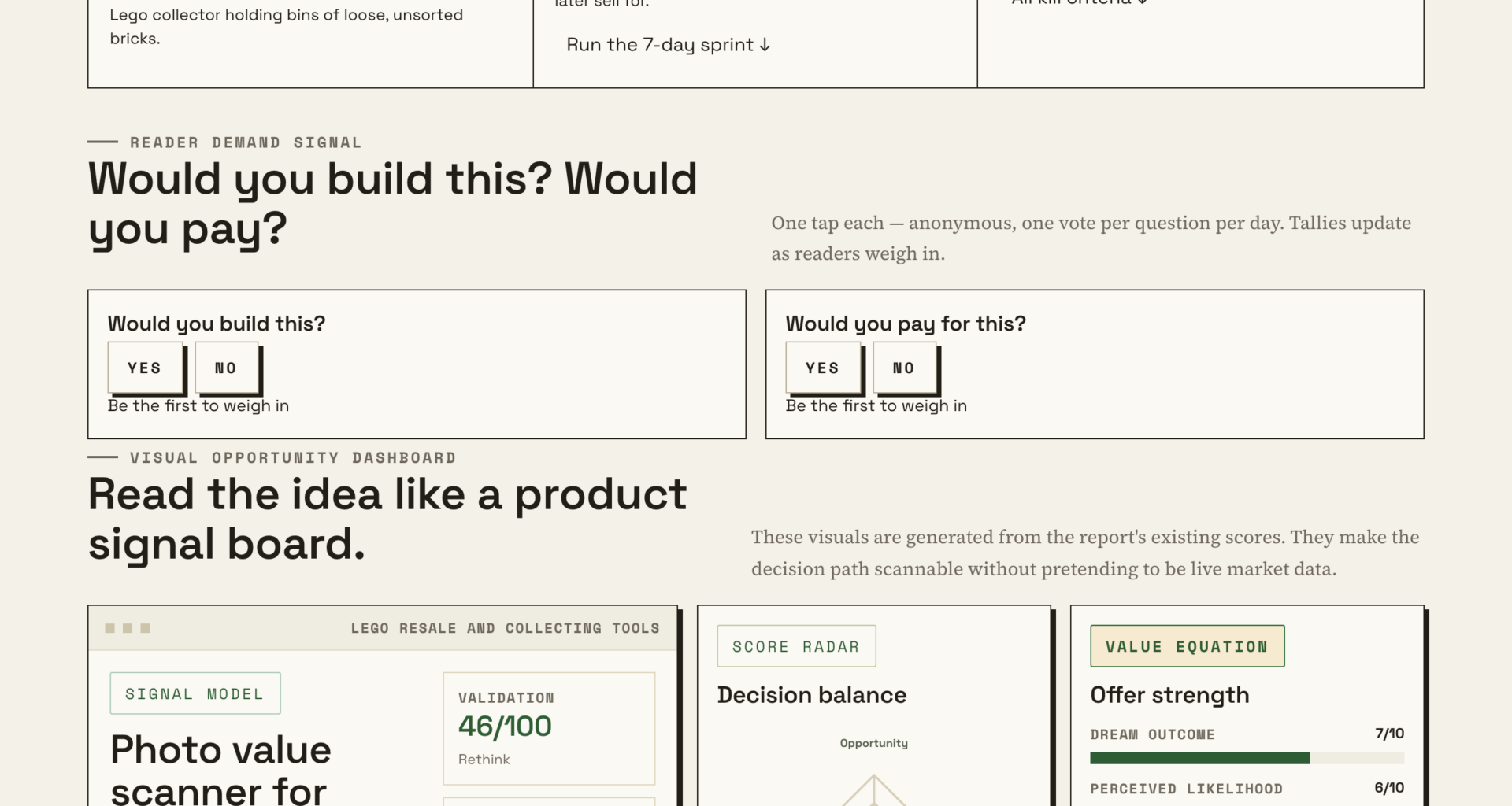

📊 Full opportunity report: Is Your Loose Lego Collection Worth Big Bucks? Find Out Now on IdeaNavigator AI — validation score, market gap, and execution plan.

Get business pricing on tech for your team
- Business-only prices and quantity discounts
- Tax-exempt purchasing
- Multiple users, one account, clear invoices
TL;DR
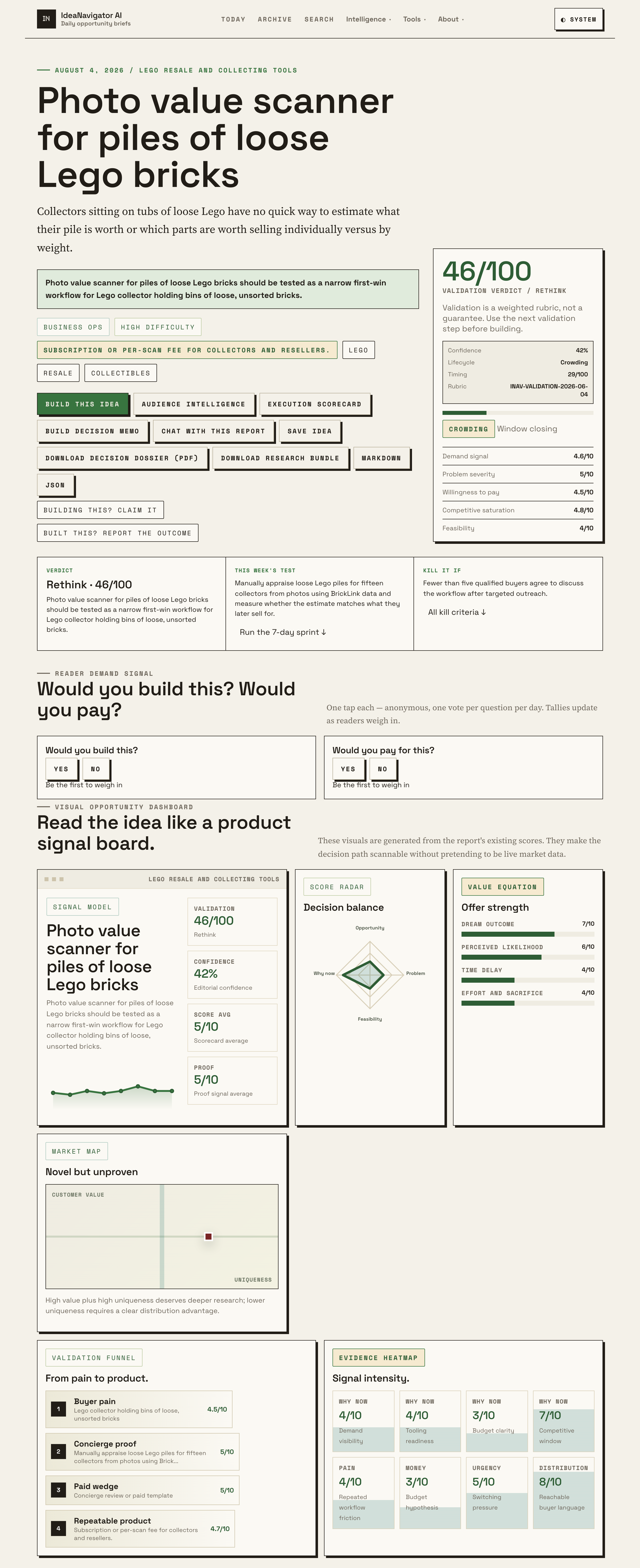
A prototype app is being developed to allow Lego collectors to estimate the value of their loose brick piles using photos. This could streamline resale efforts and unlock hidden value in unsorted collections.
A new tool prototype is being tested that allows Lego collectors to photograph their piles of loose bricks and receive an estimated value range. This innovation aims to address a common challenge among collectors and resellers, offering a quick, data-driven way to assess potential worth and identify high-value parts. The development could significantly impact the secondary Lego market by making valuation faster and more accessible.
The proposed app, developed by IdeaNavigator AI, uses a photo of a sample of loose Lego bricks to generate a rough estimate of the collection’s total value. It also provides a shortlist of high-value parts that could be sold individually, rather than by weight or as a bulk lot. The tool is designed specifically for Lego collectors holding large, unsorted tubs of bricks, who currently lack efficient methods to appraise their collections without manual, time-consuming sorting and research.
According to initial testing, the app’s accuracy will be validated by comparing its estimates against manual appraisals from 15 collectors, using BrickLink data as a benchmark. The goal is to determine whether the app can reliably reflect actual resale prices, thereby becoming a valuable resource for hobbyists and resellers alike. Revenue models under consideration include subscription services or per-scan fees, targeting the growing market of secondhand Lego trading platforms.
Potential Impact on Lego Resale Market
If successful, this photo-based valuation tool could revolutionize how collectors and resellers approach their Lego inventories. It would reduce the time and effort required to identify valuable parts, potentially increasing resale income and helping collectors make more informed decisions. This innovation could also attract new users to the secondary market, expanding the overall trading ecosystem and making Lego collecting more accessible and profitable.
Lego brick sorting and valuation app
As an affiliate, we earn on qualifying purchases.
As an affiliate, we earn on qualifying purchases.
Growing Demand for Lego Resale and Valuation Tools
The secondhand Lego market has expanded rapidly, with dedicated online marketplaces facilitating trades at all levels. Despite this growth, there remains a gap in accessible tools that help collectors quickly estimate the worth of their unsorted bricks. Currently, valuation involves manual sorting, research, and experience, which can be time-consuming and inconsistent. The development of a photo-based valuation app aims to fill this gap, building on existing data sources like BrickLink, a popular Lego trading platform that provides part-level pricing information.
“The idea is to make valuation as simple as snapping a photo. If the app can accurately estimate value, it could change how collectors manage their collections.”
— an anonymous researcher
Lego loose brick storage containers
As an affiliate, we earn on qualifying purchases.
As an affiliate, we earn on qualifying purchases.
Uncertainties Around App Accuracy and Adoption
It is not yet clear how accurately the app will estimate values compared to manual appraisals or actual resale prices. The validation process involving 15 collectors is ongoing, and results are pending. Additionally, questions remain about user adoption, pricing models, and whether the app can handle the wide variety of brick types and conditions found in real collections.
As an affiliate, we earn on qualifying purchases.
Next Steps in Validation and Market Testing
The developers plan to complete the validation phase by comparing app estimates with actual sales data. If the results are promising, they will move toward broader beta testing with more collectors. Future updates may include refining the AI algorithms, expanding the database, and launching a commercial version with subscription or pay-per-scan options. The timeline for commercial release remains uncertain, pending validation outcomes.
As an affiliate, we earn on qualifying purchases.
Key Questions
How accurate is the photo-based Lego valuation app expected to be?
The accuracy is currently being tested against manual appraisals and BrickLink data, but definitive results are not yet available. The goal is for the app to reliably reflect resale values.
Will this app work for all types of Lego bricks and sets?
The prototype is focused on loose, unsorted bricks. Handling different types, conditions, and sets will depend on further development and AI training.
How much will the app cost to use?
Pricing models are still under consideration, with options including subscriptions or per-scan fees, aimed at making the tool accessible to hobbyists and resellers.
When will the app be available to the public?
A commercial release date has not yet been announced, pending validation and testing outcomes.
Could this tool significantly increase resale profits for collectors?
If accurate, the app could help collectors identify valuable parts more efficiently, potentially boosting resale income and making collection management easier.
Source: IdeaNavigator AI
Fall Picks
fall essentials
As an affiliate, we earn on qualifying purchases.