
TL;DR
SoftBank Group reported a ¥1.115 trillion net loss for July to September 2026, after booking a $3.73 billion loss related to power equipment procurement plans that it revised. A subsidiary had paid $9.48 billion in advance for equipment and factory capacity; SoftBank says $6.6 billion remains allocated to projects and that it may receive conditional rebates on future purchases.
SoftBank Group reported a ¥1.115 trillion ($7.0 billion) net loss for July to September 2026, including a ¥597.2 billion ($3.73 billion) loss after a subsidiary revised plans for power generation equipment intended for U.S. AI data centers. The charge shows how changes to data center plans can leave a company with costs for equipment and factory capacity it had reserved in advance.

Get business pricing on tech for your team
- Business-only prices and quantity discounts
- Tax-exempt purchasing
- Multiple users, one account, clear invoices
SoftBank’s second-quarter results, published November 10, show that sales rose to ¥2.215 trillion from ¥1.917 trillion in the same quarter a year earlier. The loss came from items below sales: the power equipment charge was recorded under “other gain (loss),” financing costs increased, and investment gains were much smaller than in the prior-year quarter. A year earlier, SoftBank had reported net income attributable to owners of ¥2.502 trillion.
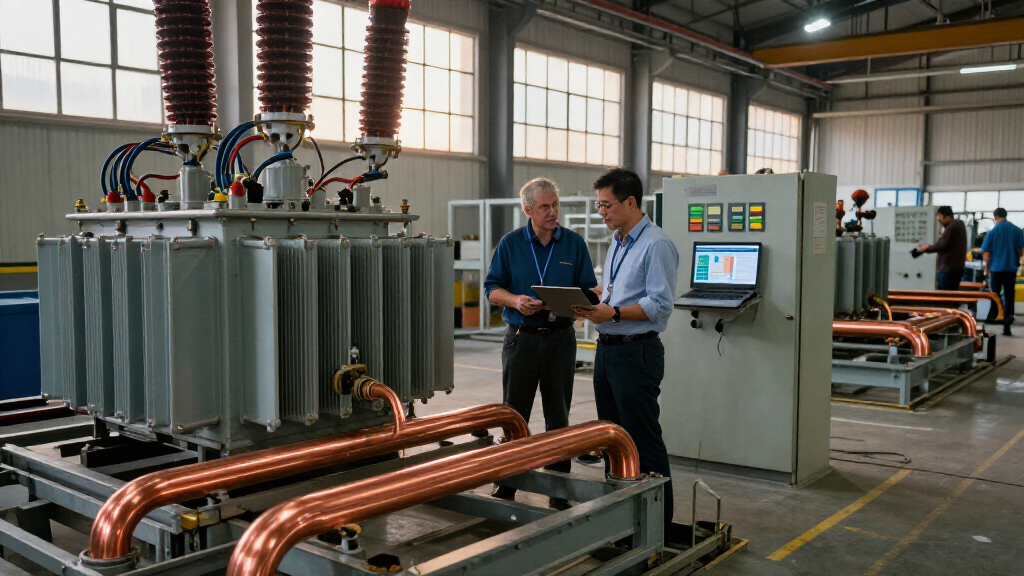
The equipment charge followed a review by Silver Bands 7 (SB7), a subsidiary in which SoftBank and its second Vision Fund have invested. SoftBank said SB7 had signed manufacturing capacity reservation agreements and equipment purchase contracts for power generation equipment connected to U.S. AI data center projects, including the PORTS-Pike Technology Campus in Ohio. The company said it had made advance investments to secure equipment amid anticipated shortages.
Through September 30, SB7 had paid about $9.48 billion for equipment and reserved factory capacity: $3.9 billion in fiscal 2025 and $5.6 billion in the first half of fiscal 2026. After SB7 revised its procurement strategy in response to changing project requirements, SoftBank recorded $2.9 billion in losses on non-refundable advance payments for equipment no longer in its plans and $0.9 billion for contract changes and settlements. SoftBank said cash payments related to the latter amount were expected from the third quarter onward.
SoftBank’s Power Equipment Charge Behind a Quarterly Loss
SoftBank reported a quarterly net loss after revising power equipment plans for U.S. AI data center projects. The charge shows how advance commitments can become costly when project requirements change.
What drove the charge
SB7 revised its procurement strategy as project requirements changed.
$2.9 billion in advances
Losses on payments for equipment no longer in SB7’s plans.
$0.9 billion in settlements
Cash payments were expected from the third quarter onward.
A stronger sales quarter, a net loss
Sales increased, but costs and smaller investment gains weighed on the result.
| Measure | July–September 2026 | Year-earlier quarter |
|---|---|---|
| Sales | ¥2.215 trillion | ¥1.917 trillion |
| Finance costs | ¥461.9 billion | ¥174.7 billion |
| Net result | ¥1.115 trillion loss | ¥2.502 trillion income |
What recovery depends on
SoftBank says the remaining advance payments support PORTS-Pike and other projects.
SoftBank plans to recover the investment through project financing; no detailed timetable was provided.
Conditional rebates could reach $2.1 billion over 10 years, but are not guaranteed.
The report does not say how much equipment will be installed or on what schedule.
The Cost of Changing Data Center Plans
The charge puts a financial figure on one of the constraints facing the AI data center buildout: power equipment must be planned and ordered, and suppliers may require commitments before a facility is ready. SoftBank said it reserved capacity in anticipation of shortages. When project requirements changed, some of those commitments could not be recovered in full.
For investors, the episode complicates a quarter in which sales increased but the company recorded a large loss. SoftBank’s finance costs were ¥461.9 billion, up from ¥174.7 billion in the same quarter a year earlier. The power charge was a major contributor to the result, though the reported loss also reflected other gains and losses and higher financing costs. It should not be read as a measure of the profitability of AI data centers alone.
The exposure also matters to companies seeking AI computing capacity. Delays or changes in power supply plans can affect when data centers are built and how much reserved equipment is ultimately used. SoftBank said $6.6 billion in advance payments remained allocated to PORTS-Pike and other projects. How much of that equipment will be installed, and on what schedule, was not stated in the reported material.
Products Worth Considering

Logitech MX Mechanical Wireless Illuminated Keyboard, Tactile Quiet, Graphite

Apple Watch Ultra 4 GPS + Cellular, 49 mm

Bose SoundLink Max Portable Bluetooth Speaker, IP67 Waterproof and Dustproof, Up to 20 Hours of Battery Life, Black
As an affiliate, we earn on qualifying purchases.
From Equipment Shortage to Revised Orders
SoftBank’s fiscal year runs from April to March, so the reported quarter covers July through September 2026. The group had reported a ¥347.3 billion profit in its first fiscal quarter, April through June, before the second-quarter loss. For the six months through September, it reported a net loss of ¥768.0 billion.
The company described SB7’s original commitments as a response to expected shortages of power generation equipment. Its financial report identifies the project area as U.S. AI data centers and names PORTS-Pike in Pike County, Ohio. It says the subsidiary later revised its procurement strategy in light of evolving requirements across existing and planned projects. The available details do not identify the equipment makers or specify which orders were cancelled or changed.
SoftBank’s figures are reported in yen, with the company translating the quarterly net loss to $7.0 billion at ¥160.12 per dollar, its average exchange rate for the quarter. The financial report is an English translation of the Japanese original and says the statements had not been reviewed by auditors. These qualifications apply to the reported figures as presented on November 10.
““made bridge investments in advance to secure power generation equipment in anticipation of shortages””
— SoftBank Group investor presentation
Which Orders and Rebates Remain
SoftBank has not disclosed which equipment it bought, which suppliers were involved, or which purchases were cancelled. It has also not provided a project-by-project breakdown of the $6.6 billion still allocated to equipment. The reported charge therefore does not show how much equipment is already delivered, how much remains on order, or how revisions could affect construction schedules.
The company said SB7 may receive rebates of up to $2.1 billion over the next 10 years on future equipment purchases, subject to conditions. SoftBank did not record the potential rebates as an asset because their amount could not be determined. The maximum figure is not a guaranteed recovery, and the available material does not state what purchases or other conditions would be required.
It is also unclear how much of the charge is specific to PORTS-Pike versus other projects, when project financing might be arranged, and how much of the reported equipment loss will be offset by future recoveries. The figures are from an unaudited report, and the company’s stated expectation of recovery depends on financing and conditional rebates.
Recovery Depends on Project Financing
SoftBank said it expects cash payments for the $0.9 billion in contract modifications and settlements from the third quarter onward. It also said it plans to recover the investment through project financing and may receive conditional rebates against future purchases. The company has not given a timetable or a detailed financing plan in the material available for this report.
Investors will be watching for updates on how much of the remaining advance payments is converted into equipment for PORTS-Pike and other projects, whether the revised procurement plan changes project timelines, and whether any rebates become measurable. SoftBank’s next reported results should provide a further view of these costs and the company’s financing position, but the reported information does not specify when each recovery or project milestone will occur.
Key Questions
Why did SoftBank report a $7 billion quarterly loss?
SoftBank reported a ¥1.115 trillion net loss for July to September 2026. A ¥597.2 billion ($3.73 billion) loss related to revised power equipment procurement was a major factor. Higher finance costs and other investment-related gains and losses also affected the result.
What was the $3.73 billion power equipment charge for?
The charge included $2.9 billion in losses on non-refundable advances for equipment no longer in SB7’s revised plans, plus $0.9 billion for contract modifications and settlements.
How much had SoftBank’s subsidiary paid in advance?
Through September 30, 2026, SB7 had paid about $9.48 billion for power generation equipment and reserved factory capacity. SoftBank said $6.6 billion remained allocated to equipment for PORTS-Pike and other projects.
Will SoftBank recover the money?
SoftBank said it expects to recoup the investment through project financing. It may also receive rebates of up to $2.1 billion on future equipment purchases over 10 years, subject to conditions. The rebates are not guaranteed, and the company did not record them as an asset because their amount could not be determined.
Which equipment orders were changed?
The reported material does not identify the equipment, suppliers, or specific orders that were cancelled or changed. SoftBank said the revised procurement strategy reflected evolving requirements for existing and planned U.S. data center projects.
Source: Thorsten Meyer AI