

🔍 Read the full analysis: Which 10 NVMe SSDs Suit High-Performance Computing In 2027? on ThorstenMeyerAI.com

Get business pricing on tech for your team
- Business-only prices and quantity discounts
- Tax-exempt purchasing
- Multiple users, one account, clear invoices
TL;DR
The source recommends 10 NVMe SSD models for different priorities, including the Samsung 990 PRO 2TB for overall performance and the Kingston NV3 1TB as a budget option. It provides selection criteria and qualitative trade-offs, but no complete model list, benchmark results, prices or evidence that the drives were tested for high-performance computing workloads.
A buyer’s guide from ThorstenMeyerAI.com recommends a set of 10 NVMe SSDs for 2027, naming the Samsung 990 PRO 2TB as its best overall option and the Kingston NV3 1TB as a budget pick. The guide says buyers should weigh sustained throughput, thermal behavior and capacity alongside advertised peak speeds, but the supplied material does not include a full list of 10 models or high-performance computing benchmarks.
The guide says it assessed drives using sequential read and write performance, random I/O, thermal throttling, endurance ratings and warranty terms. It argues these measures better reflect tasks such as large file transfers and multitasking than peak figures alone. However, the source provides no test setup, benchmark data, measured temperatures, prices or warranty details to independently compare the recommendations.
Among the models identified, the guide describes the Samsung 990 PRO 2TB as a balance of high sequential speeds and power efficiency. It presents the Kingston NV3 1TB as a lower-cost PCIe 4.0 option, while warning that sustained writes can slow after its SLC cache is used. The guide also names the Samsung 9100 PRO, Bestoss 1TB and SanDisk Optimus 5100, but the supplied source does not provide enough product-specific test results to substantiate a ranked comparison among them.
The article’s other main point is that capacity and cooling affect consistency. It says smaller drives can slow more noticeably during large transfers and that an integrated heatsink may help in compact systems. These are general considerations in the source, not reported measurements for the named models. The material says it evaluated 10 drives but does not identify all 10 in the supplied text.
The 10 picks
- 1
 Samsung 990 PRO 4TB PCIe 4.0 NVMe M.2 2280 SSDView on Amazon →
- 2
 Gigastone Game Turbo 4TB M.2 NVMe PCIe 4.0 Internal SSDView on Amazon →
- 3
 Gigastone 1TB Game Turbo PCIe Gen4x4 M.2 NVMe SSD (2-Pack)View on Amazon →
- 4
 Samsung 9100 PRO 2TB Internal SSDView on Amazon →
- 5
 Samsung 990 PRO 2TB PCIe 4.0 M.2 2280 NVMe SSDView on Amazon →
- 6
 Bestoss 1TB PCIe 4.0 NVMe M.2 2280 SSD with HeatsinkView on Amazon →
- 7
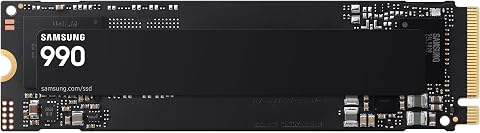 Samsung 990 1TB PCIe 4.0 NVMe Internal SSDView on Amazon →
- 8
 SanDisk Optimus 5100 1TB NVMe SSD, PCIe 4.0, M.2 2280View on Amazon →
- 9
 Kingston NV3 1TB M.2 2280 PCIe 4.0 NVMe SSDView on Amazon →
- 10
 SanDisk Optimus 5100 500GB NVMe SSD, PCIe 4.0, M.2 2280View on Amazon →
Matching SSDs to HPC workloads
For readers choosing storage for HPC, data analysis or other write-heavy work, a drive’s sustained behavior can matter more than a short burst-speed result. Large datasets, scratch files and repeated transfers may expose cache limits or thermal throttling that are less visible in light desktop use. The guide’s focus on capacity, cooling and endurance is relevant to that distinction.
Still, the recommendations should be treated as a consumer-focused buying guide, not a verified HPC procurement ranking. The supplied material does not report performance with parallel workloads, server-class use, workload-specific endurance, or power and cooling measurements under sustained operation. Readers selecting drives for production compute systems need evidence matched to their own workload and platform.
Products Worth Considering

Samsung 32-inch Odyssey G5 G51F QHD 180Hz Gaming Monitor

DJI Mini 3 Drone with DJI RC and 3‑Axis Mechanical Gimbal

Bose QuietComfort Wireless Headphones – Twilight Blue (Limited Edition)
As an affiliate, we earn on qualifying purchases.
The guide’s selection criteria
The source frames SSD selection as a trade-off between peak throughput and sustained performance. It explains that PCIe generation affects interface bandwidth and advises checking motherboard support; a newer drive may run at a lower supported speed in an older slot. It also distinguishes drives with onboard DRAM from DRAM-less models that use Host Memory Buffer technology, describing the latter as potential budget choices with possible latency trade-offs under heavier multitasking.
Thermal control and endurance are also part of its framework. The guide says excess heat can prompt a drive to throttle during sustained transfers and describes TBW (terabytes written) as one measure for comparing write endurance. It states that larger capacities may offer more consistent performance, but supplies no capacity-by-capacity figures. No underlying test methodology or independent source material is included with the recommendations presented here.
“Sustained write performance diverges sharply from peak burst speeds, especially in entry-level drives like the Kingston NV3 when the SLC cache is exhausted.”
— ThorstenMeyerAI.com guide
Missing tests and model details
The supplied source does not name all 10 recommended drives, provide a complete ranking, or show the benchmark results behind its assessments. It also lacks current prices, detailed endurance and warranty figures, test dates, and evidence for its claims about the Samsung 9100 PRO’s efficiency or the Bestoss drive’s thermal performance. The article’s use of “HPC” in the requested topic is not matched by specific HPC workload testing in the source.
It is also unclear whether the product descriptions and recommendations were checked against specifications available at publication. The source refers to 2027 but provides no publication date or method for verifying future-facing product availability. Buyers should confirm compatibility, current specifications and pricing with manufacturers and system vendors before purchase.
Verify models against workload needs
The next step for readers is to compare each candidate’s current specifications and independent test results against their system’s PCIe support, cooling, capacity requirements and write workload. For HPC deployments, that should include sustained, workload-relevant testing rather than relying on headline sequential speeds or a general consumer ranking. The guide’s missing model names and data mean a complete 10-drive comparison cannot be reconstructed from the supplied material.
Key Questions
Which drive does the guide recommend overall?
It names the Samsung 990 PRO 2TB as its best overall choice, citing a combination of sequential speed and power efficiency. The supplied material does not include benchmark results validating that assessment.
What is the guide’s budget pick?
The guide identifies the Kingston NV3 1TB as a budget PCIe 4.0 option. It also cautions that sustained write performance may fall after the SLC cache is exhausted.
Does the source provide a complete list of 10 SSDs?
No. It says it evaluated 10 options, but the supplied text names only some models and does not provide a complete list or full ranking.
Are these picks proven for high-performance computing?
The source does not provide HPC-specific benchmarks or testing details for parallel, server or sustained production workloads. Its recommendations should not be treated as a verified HPC ranking.
What should buyers check before selecting an NVMe SSD?
Check system compatibility, sustained performance, cooling, capacity, endurance and warranty, then compare independent results that reflect the workload. Confirm current pricing and specifications with the manufacturer or seller.
Source: ThorstenMeyerAI.com