
Automation changes how work gets done, often shifting demand away from routine tasks and pushing wages down for less-skilled workers. While some jobs become obsolete, new opportunities for those with specialized skills emerge, potentially widening income gaps. If you don’t adapt and develop new skills, your income could be affected. Want to understand how these changes might impact your career and what you can do about it? Keep exploring to find out.
Open a free Amazon Business account
Business pricing, bulk buying and tax-exempt orders.
As an affiliate, we earn on qualifying purchases.
Key Takeaways
- Automation often replaces routine tasks, leading to wage stagnation or decline for low-skilled workers.
- Higher-income groups benefit more from automation-driven productivity, widening income inequality.
- Workers lacking adaptable, advanced skills face greater unemployment risk and wage pressure.
- Investment in automation boosts profits mainly for owners and shareholders, not necessarily workers.
- Continuous skill development helps mitigate negative wage impacts caused by automation.
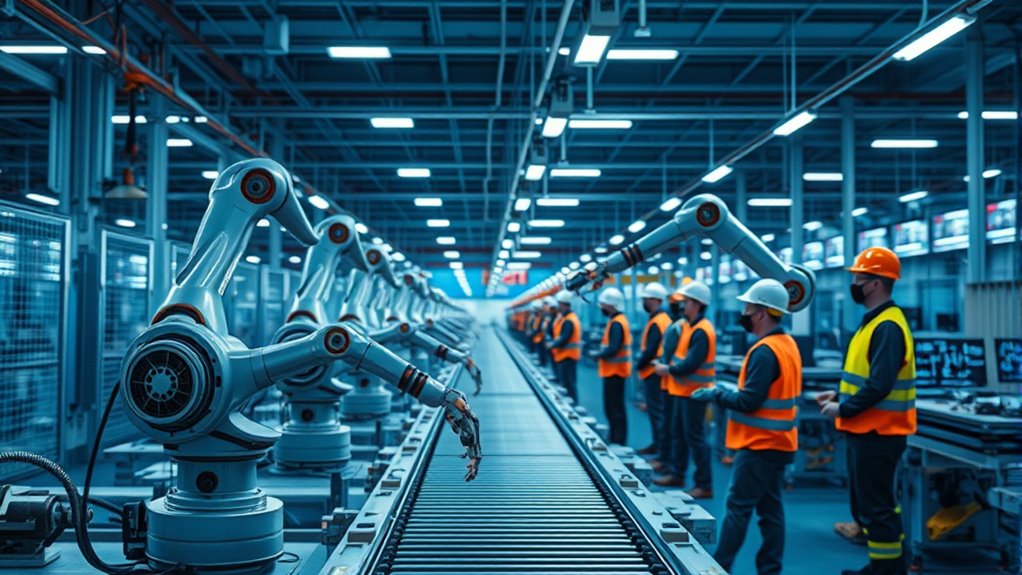
Automation has transformed the job market by changing how work is done and who does it. As machines and algorithms take over routine tasks, you might wonder what this means for your future job prospects and income. One of the most significant concerns is how automation influences future job markets and whether it widens wage inequality. You’re living through a shift where certain roles become obsolete while new opportunities emerge, but not everyone benefits equally. This creates a landscape where income gaps could widen if the gains from automation aren’t shared fairly.
Automation is reshaping jobs, creating opportunities but also widening income gaps if gains aren’t shared fairly.
In the short term, automation tends to favor those with technical skills or specialized knowledge. Jobs that require repetitive tasks, like assembly line work or data entry, are more susceptible to automation, often leading to job displacement. If you’re in a position vulnerable to automation, you might find yourself needing to upskill quickly or face unemployment. Meanwhile, roles that demand creativity, critical thinking, and emotional intelligence are less easily automated, creating a growing divide between high- and low-wage workers. This divide fuels wage inequality, as the benefits of automation often accrue to those who already command higher incomes or possess advanced skills.
Looking ahead, the future job markets will likely be shaped by how well you adapt to these changes. If you embrace lifelong learning and develop skills that complement automation—such as problem-solving or managing complex systems—you can position yourself to thrive. However, if you stick to routine tasks, automation might push your wages downward or even eliminate your job altogether. This dynamic emphasizes the importance of education and continuous skill development to stay competitive in an evolving economy.
Automation also influences wage inequality on a broader scale by affecting the distribution of income across different sectors and occupations. As companies invest in automation technology to increase productivity, they often reduce labor costs, which can yield higher profits but may not translate into higher wages for workers. Instead, the income gains are concentrated among business owners and shareholders, deepening economic divides. For workers in lower-paying jobs that are easily automated, wage stagnation or decline becomes a real threat, further widening the gap between high- and low-income earners. Additionally, embracing Honda Tuning modifications showcases how specialized skills can create opportunities for higher earnings and career growth.
online skill development courses
As an affiliate, we earn on qualifying purchases.
As an affiliate, we earn on qualifying purchases.
Frequently Asked Questions
How Do Automation Trends Vary Across Different Industries?
You’ll notice industry-specific automation varies widely, with manufacturing and logistics seeing rapid adoption, often leading to regional employment shifts. In contrast, sectors like healthcare or education adopt automation more cautiously, focusing on augmenting human work. This variation impacts regional economies differently, causing employment shifts in areas heavily reliant on manual labor. Staying aware of these trends helps you understand how automation influences jobs across industries and regions, shaping the future workforce landscape.
What Policies Can Mitigate Automation’s Negative Wage Effects?
You can help mitigate automation’s negative wage effects by supporting policies like Universal Basic Income, which guarantees a safety net for displaced workers, and advocating for tax incentives that encourage companies to invest in employee training. Imagine a future where workers upgrade their skills instead of losing jobs—that’s possible when these policies are in place, providing stability and opportunity amid automation’s rise.
How Do Automation Impacts Differ Between High-Skill and Low-Skill Workers?
You’ll find that automation benefits high-skill workers by boosting productivity and wages, while low-skill workers face skill mismatch and job displacement. This leads to wage polarization, where income gaps widen. High-skill workers adapt more easily to new technologies, gaining from automation, whereas low-skill workers struggle to keep up, risking lower wages or unemployment. Policymakers must tackle these disparities to guarantee equitable growth in an automated economy.
What Role Do Education and Training Play in This Context?
Education and training play a vital role in shaping your future in an automated world. Skill development and lifelong learning empower you to adapt to changing job demands, stay competitive, and seize new opportunities. By continuously upgrading your skills, you can bridge gaps caused by automation, enhance your value, and secure higher wages. Embracing ongoing education guarantees you remain resilient, flexible, and prepared for the evolving landscape of work.
How Might Future Technological Advances Influence Wage Dynamics?
Future technological advances could increase technological displacement, pushing some jobs out of reach and widening wage gaps. You might see wage polarization, where high-skill, high-wage roles grow while middle and low-wage positions shrink. To stay ahead, you should focus on developing skills that complement new tech, ensuring you’re adaptable and valuable in an evolving job market. Staying informed and flexible can help you navigate these shifting wage dynamics effectively.
automation and AI training books
As an affiliate, we earn on qualifying purchases.
As an affiliate, we earn on qualifying purchases.
Conclusion
Imagine a bustling river where robots are the new currents shaping the flow. As they carve through the landscape, they can sometimes divert waters away from traditional shores, lowering wages for some. Yet, other times, they create new channels, opening up fresh opportunities. Your challenge is to navigate these waters wisely, balancing innovation with fairness. Embrace the change, but remember, you hold the oar—guiding the flow toward a future where everyone can thrive.
professional upskilling programs
As an affiliate, we earn on qualifying purchases.
As an affiliate, we earn on qualifying purchases.
coding and programming tutorials
As an affiliate, we earn on qualifying purchases.
As an affiliate, we earn on qualifying purchases.
Flea & tick season Picks
flea and tick prevention
As an affiliate, we earn on qualifying purchases.