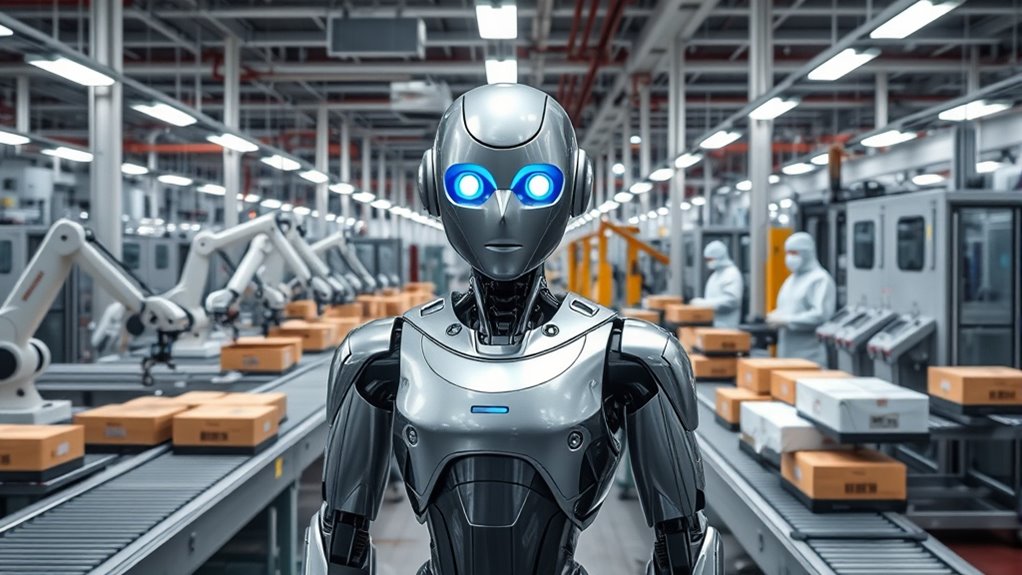

Yes, COVID-19 definitely accelerated automation beyond predictions. You saw robots taking on roles in hospitals for disinfection and patient care, reducing the burden on healthcare workers. Supply chains relied more on automated systems to keep goods moving quickly and safely. Organizations adopted robots in manufacturing and logistics to stay operational during shutdowns. This surge in automation offers long-term safety benefits and efficiency gains—continue to explore how these changes are shaping industries for the future.
Key Takeaways
- The pandemic accelerated adoption of robots in healthcare, supply chains, and logistics to ensure safety and operational continuity.
- COVID-19 prompted rapid deployment of automation to reduce human contact and address workforce shortages.
- Organizations expanded robot fleets and automation capabilities, confirming predicted growth trends during the crisis.
- The crisis demonstrated robots’ role in maintaining essential services despite disruptions, boosting automation investments.
- Long-term benefits include increased reliability, safety, and resilience, aligning with predictions of accelerated automation post-pandemic.

Have robots played a essential role in combating the COVID-19 pandemic? The answer is a clear yes. As the world faced unprecedented challenges, you could see how a growing robot workforce stepped in to fill critical gaps. Robots were deployed in hospitals to disinfect surfaces, deliver medicines, and assist with patient care, reducing the burden on human healthcare workers. They helped guarantee safety and efficiency when resources were stretched thin. Beyond healthcare, robots became indispensable in maintaining the flow of goods and services, especially as supply chain disruptions threatened to cripple economies. Their ability to operate continuously and autonomously made them invaluable assets in keeping essential supplies moving. The pandemic also accelerated the adoption of diverse robot applications, demonstrating their versatility across industries.
Robots played a vital role in fighting COVID-19 by supporting healthcare and maintaining supply chains efficiently.
The pandemic accelerated the adoption of supply chain automation, a process where robots take on roles traditionally performed by humans. With factories shutting down or operating at limited capacity, many companies turned to automation to sustain production. You might have noticed how warehouses became more robot-centric, with automated guided vehicles (AGVs) and robotic arms streamlining order fulfillment and inventory management. This shift not only minimized human contact but also increased speed and accuracy, helping businesses meet the surge in demand for online shopping and home deliveries. The integration of robots into supply chains proved indispensable for resilience, allowing companies to adapt quickly to unpredictable market conditions.
The move toward a more extensive robot workforce was driven by necessity but also revealed long-term benefits. Robots can operate 24/7 without fatigue, making them ideal for high-volume tasks that demand precision and consistency. As a result, many organizations realized that investing in robotics wasn’t just a short-term fix but a strategic decision to future-proof their operations. You might have seen reports of companies expanding their robot fleets, emphasizing automation in logistics, manufacturing, and even customer service. This trend suggests that even as the pandemic wanes, the role of robots in daily operations will continue to grow.
Moreover, the pandemic highlighted the importance of reducing human-to-human contact, especially in environments prone to contamination. Robots helped bridge that gap by performing tasks that would otherwise require close human proximity. This not only protected workers but also helped maintain operational continuity amid safety restrictions. The experience of rapid automation adoption during COVID-19 has set a precedent, encouraging industries to rethink how they deploy technology for efficiency, safety, and resilience. Overall, you can see that the pandemic didn’t just test existing systems; it catalyzed a significant shift toward a more automated, robot-driven future.
hospital disinfection robots
As an affiliate, we earn on qualifying purchases.
As an affiliate, we earn on qualifying purchases.
Frequently Asked Questions
How Have Robots Impacted Mental Health During the Pandemic?
Robots have impacted your mental health during the pandemic by providing emotional support and helping maintain social connection. They offer companionship to reduce feelings of loneliness and fill gaps when human interaction is limited. While they can’t replace real relationships, robots help you feel less isolated and more supported, easing anxiety and boosting your mood during challenging times. This technological aid makes a meaningful difference in your emotional well-being.
What Ethical Concerns Arose From Increased Robot Use in Healthcare?
You might worry that increased robot use in healthcare raises ethical issues, but it’s true. Privacy concerns become critical as robots handle sensitive patient data, and ensuring patient consent remains essential to avoid violations. While robots can improve care, you must address these ethical concerns proactively to protect patient rights and maintain trust. Balancing technological advancement with ethical responsibility helps you deliver safe, respectful healthcare.
Are Robots Replacing Human Jobs Permanently or Temporarily?
Robots are likely to replace some jobs temporarily as part of automation trends, but they won’t permanently eliminate employment security for most workers. You’ll find that automation often shifts roles rather than completely removing them, creating new opportunities. While certain tasks become automated, humans remain essential in areas requiring creativity and emotional intelligence. Your adaptability and skill development will be key to maintaining your employment security amid ongoing technological advances.
How Accessible Are Robotic Technologies to Small Businesses?
Robotic technologies are becoming increasingly accessible to small businesses, but cost barriers remain a challenge. You can find affordable options, especially with leasing or cloud-based solutions, making automation more feasible for your small business. While initial investments might seem high, the long-term savings and efficiency improvements can outweigh costs. Keep an eye on emerging tech and grants that could help you adopt automation without breaking the bank.
What Are Future Trends in Robot Development Post-Pandemic?
Imagine autonomous vehicles maneuvering busy streets smoothly—future robot development will focus on advanced AI integration to enhance safety and efficiency. You’ll see more autonomous vehicles, smart robots in healthcare, and collaborative robots in factories. These innovations will transform industries, making work safer and more productive. As AI becomes more sophisticated, robots will handle complex tasks, creating new opportunities and challenges for businesses and consumers alike.

The Warehouse: Workers and Robots at Amazon
As an affiliate, we earn on qualifying purchases.
As an affiliate, we earn on qualifying purchases.
Conclusion
So, did COVID-19 truly turbocharge automation? Absolutely. The pandemic forced you to rethink safety, efficiency, and innovation at a breakneck pace, making robots seem like superheroes saving the day. If you thought automation was just a trend, think again—it’s now the backbone of a resilient future. You’re witnessing a revolution so monumental it’s like watching a spaceship launch into the stars, forever transforming how we live and work.

Interactive Remote Control Robot – Smart Food Delivery Robot for Home, Playroom, School, Preschool, Party, Holiday, Daycare, Family Fun, and Game Night Entertainment
Interactive Remote Control: Kids can drive the robot to deliver food, snacks, or toys Promotes imaginative play, hand-eye…
As an affiliate, we earn on qualifying purchases.
As an affiliate, we earn on qualifying purchases.

Make: Robotic Arms
As an affiliate, we earn on qualifying purchases.
As an affiliate, we earn on qualifying purchases.