
As software learns the ropes, your entry-level job shifts from manual tasks to roles focused on managing, troubleshooting, and improving automated systems. Instead of doing routine work, you’ll oversee technology, interpret data, and solve complex problems. Your skills in critical thinking, problem-solving, and working alongside automation become more valuable. Embracing these changes can open new opportunities. Keep exploring how these shifts can shape your career journey and help you stay ahead in a rapidly evolving job market.
Key Takeaways
- Entry-level roles shift from manual tasks to overseeing, troubleshooting, and managing automated systems.
- Automation reduces routine tasks, requiring new skills like digital literacy and problem-solving for entry-level workers.
- New opportunities emerge in roles focused on customizing, maintaining, and improving automation technologies.
- Continuous learning and adaptability are essential for entry-level employees to stay relevant in an automated workforce.
- Software acts as a collaborator, transforming entry-level jobs into positions that emphasize human oversight and strategic input.
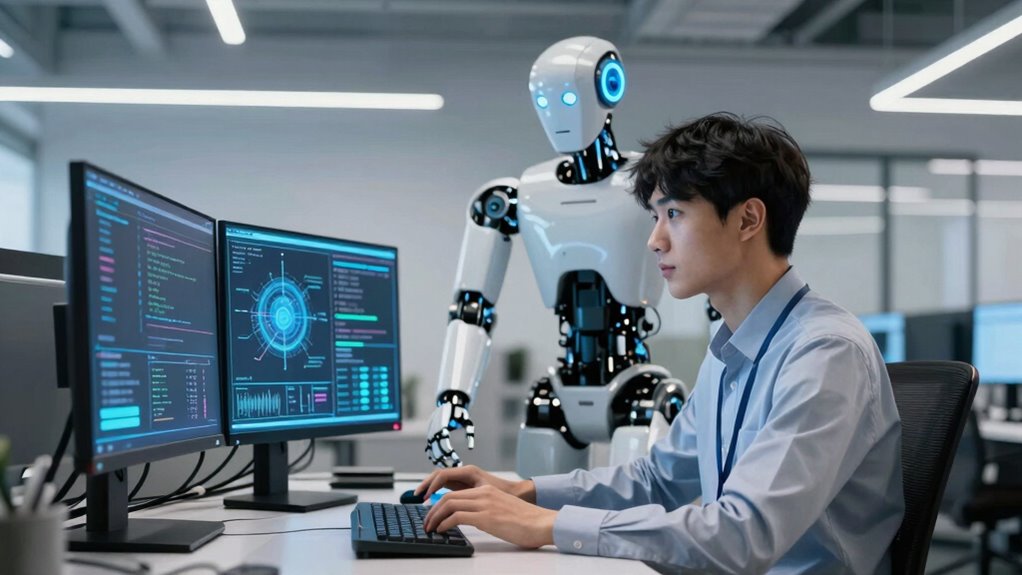
Are you wondering how to land an entry-level job in today’s competitive market? As software continues to learn the ropes and take on more responsibilities, the landscape of entry-level positions is shifting rapidly. The automation impact is undeniable—you’ll see machines and algorithms handling tasks once performed by humans, especially in fields like data entry, customer service, and basic analysis. This reality pushes you to think differently about your career path. Instead of relying solely on traditional skills, you need to focus on skill adaptation, learning to work alongside automation rather than compete with it.
In the past, entry-level roles often involved repetitive tasks, which automation now handles more efficiently. For you, this means fewer entry-level jobs will be purely manual or routine. Instead, these roles are transforming into positions that require oversight, troubleshooting, or strategic input. To stay relevant, you’ll need to develop skills like digital literacy, problem-solving, and critical thinking—areas where human judgment still surpasses machines. As software learns the ropes, it’s not about replacing you entirely but shifting your responsibilities towards areas that demand creativity, empathy, and complex decision-making.
You might worry that automation will make entry-level jobs obsolete. While that’s true in some sectors, it also opens new opportunities. Many companies now look for individuals who can manage, customize, and improve automated systems. This means your focus should be on skill adaptation—learning new tools, understanding how automation works, and finding ways to leverage these technologies in your work. For example, gaining knowledge in basic programming, data analysis, or software management can set you apart. The jobs of tomorrow may require you to work with AI and automation rather than against them, making continuous learning essential. Embracing automation in the job market can help you identify emerging roles and skills that will be in high demand.
Your ability to adapt your skills determines how well you’ll navigate these changes. Instead of viewing automation as a threat, see it as a catalyst for growth. The more you learn about emerging technologies, the more valuable you become. You’ll find that entry-level positions are no longer just about performing tasks—they’re about understanding and managing the tools that do the work. This shift demands you to be proactive in skill development, staying updated on industry trends, and being flexible enough to pivot as roles evolve. Additionally, understanding the role of automation in job markets will give you a clearer perspective on how to position yourself for future opportunities. Developing a mindset of continuous learning and adaptability is crucial in an environment where technological change occurs rapidly. Recognizing the importance of upskilling and reskilling can significantly enhance your career resilience. Moreover, cultivating a growth mindset will help you see technological shifts as opportunities rather than obstacles. Ultimately, your success hinges on your willingness to embrace change and sharpen your skills to fit a future where software is a key collaborator, not just a competitor.
entry-level automation troubleshooting tools
As an affiliate, we earn on qualifying purchases.
As an affiliate, we earn on qualifying purchases.
Frequently Asked Questions
How Quickly Can Software Replace Human Entry-Level Workers?
Software can replace human entry-level workers quite rapidly, especially in repetitive tasks, within months or a few years. As AI ethics become more prominent, companies recognize the importance of responsible automation, but job displacement remains a concern. You might find yourself adapting quickly, learning new skills to stay relevant, as AI continues to advance. Embracing change and understanding AI’s impact can help you navigate this evolving job landscape.
What New Roles Emerge for Entry-Level Workers in Ai-Driven Workplaces?
In AI-driven workplaces, you’ll find new roles emphasizing human adaptability and ethical considerations. You’ll become a collaborator, guiding AI systems, ensuring ethical standards, and interpreting data insights. You’ll also serve as a communicator, translating complex AI outputs for teams and clients. These roles require creativity, emotional intelligence, and adaptability—skills that AI can’t replicate. Embracing these opportunities helps you stay relevant while shaping responsible, innovative workplaces.
How Can Entry-Level Employees Stay Relevant Amid Automation?
To stay relevant amidst automation, you need employee adaptability and skill diversification. Embrace continuous learning by acquiring new technical skills and understanding emerging technologies. Be proactive in adapting to changes, and seek opportunities to develop soft skills like critical thinking and communication. By staying flexible and expanding your expertise, you’ll position yourself as a valuable asset that complements automation rather than competes with it.
Are There Industries Less Affected by Software Learning?
Sure, some industries seem immune to automation’s impact, like artisanal cheese making or professional cuddling—because who’d want a robot to replace your favorite hug? Industry resilience varies, but fields relying heavily on human intuition, creativity, and emotional intelligence tend to be less affected by software learning. So, if you want job security, consider roles where machines just can’t replicate genuine human connection or artistry.
What Skills Are Most Valuable for Entry-Level Jobs in the Future?
You’ll find that skill adaptability and human creativity become your most valuable assets in future entry-level jobs. As software takes over routine tasks, your ability to learn new skills quickly and adapt to changing roles will set you apart. Additionally, your creative problem-solving and original thinking will remain irreplaceable, helping you add unique value that machines can’t replicate. Focus on developing these skills to stay relevant and thrive in evolving workplaces.

MTEL Digital Literacy and Computer Science (71) Secrets Study Guide: MTEL Review and Practice Exam for the Massachusetts Tests for Educator Licensure
As an affiliate, we earn on qualifying purchases.
As an affiliate, we earn on qualifying purchases.
Conclusion
As software takes the reins, your entry-level job landscape transforms like a budding garden adapting to new sunlight. While some tasks may wither away, others bloom into fresh opportunities, demanding skills that only humans can nurture. Embrace this evolution like a sailor adjusting sails to the wind—your adaptability becomes the compass guiding you through shifting waters. With resilience as your anchor, you’ll navigate the future, turning technological tides into a voyage of growth and discovery.

Visual Basic 2026 Made Easy: A Complete Beginner-to-Advanced Tutorial in 35 Lessons
As an affiliate, we earn on qualifying purchases.
As an affiliate, we earn on qualifying purchases.

Practical SQL, 2nd Edition: A Beginner's Guide to Storytelling with Data
As an affiliate, we earn on qualifying purchases.
As an affiliate, we earn on qualifying purchases.