
TL;DR
South Korea’s government is considering distributing dividends to citizens using profits from AI and semiconductor industries. This move aims to address economic inequality driven by tech sector gains. Details are still emerging, and the policy is in early discussion stages.
South Korea’s government is exploring a policy to distribute a portion of AI and semiconductor industry profits directly to its citizens, aiming to address rising economic inequality amid a tech-driven economic boom.
A high-ranking official within South Korea’s administration suggested that profits generated by the country’s leading chipmakers and AI sectors could be used to fund a universal dividend for the public. This proposal reflects the government’s recognition of the growing economic disparity linked to the rapid growth of the technology industry. The idea was publicly floated during a policy discussion but has not yet been formalized into legislation or a detailed plan. Officials emphasize that the move is intended to leverage the immense profits from the semiconductor and AI sectors, which have become vital to South Korea’s economy, to benefit the broader population.
Sources indicate that the proposal is still in the early stages of internal debate, with no specific figures or implementation mechanisms announced. The government aims to use AI-driven profits, which are expected to increase as the industry expands, to fund social programs and reduce income inequality. Critics and industry representatives are awaiting further details on how the profits would be calculated, distributed, and whether this approach could impact the competitiveness of local chipmakers.
Why It Matters
This initiative, if implemented, could mark a significant shift towards more redistributive economic policies in South Korea, a country heavily reliant on semiconductor exports. It highlights the growing influence of AI and chip industries on national wealth and the government’s interest in ensuring broader economic benefits. The move could set a precedent for other nations seeking to manage the social impacts of technological and economic growth, especially as AI profits become more substantial.

LAFVIN AI Chatbot Kit for ESP32-S3, Preloaded OpenAI & Deepseek Voice Assistant Projects, Voice Wake-up & Real-time Interruption, Suitable for Learning AI and IoT Projects.
【POWERFUL ESP32‑S3 CONTROLLER】Built‑in Xtensa 32‑bit LX7 dual‑core processor, 512KB SRAM, 8MB PSRAM, 16MB Flash for stable AI voice…
As an affiliate, we earn on qualifying purchases.
As an affiliate, we earn on qualifying purchases.
Background
South Korea’s economy has become increasingly dependent on semiconductor exports, with major companies like Samsung and SK Hynix leading global markets. The government has previously supported the tech sector through subsidies and research investments. The idea of sharing profits with the public emerges amid concerns over income inequality and the concentration of wealth in the industry. Discussions about a ‘people’s dividend’ have surfaced periodically but have gained renewed attention as AI technology advances and industry profits surge. This proposal aligns with broader global debates on redistributive policies in the face of technological disruption.
“We are considering ways to ensure that the immense profits generated by our AI and semiconductor industries benefit all citizens, possibly through a dividend system.”
— South Korea’s policy chief
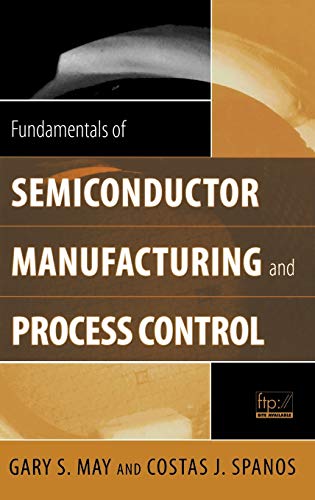
Fundamentals of Semiconductor Manufacturing and Process Control (IEEE Press)
As an affiliate, we earn on qualifying purchases.
As an affiliate, we earn on qualifying purchases.
What Remains Unclear
It is not yet clear whether the proposal will be formally adopted, what the specific mechanisms for profit sharing would be, or how it might impact the competitiveness of South Korea’s tech industry. Details on funding sources, eligibility, and implementation timelines remain unconfirmed and are still under discussion.

NVIDIA DGX Spark™ – Personal AI Desktop Supercomputer – Desktop GB10 Grace Blackwell Chip
Supercomputer performance directly to your desk in a compact, energy-efficient design, enabling enterprise-scale AI and high-performance computing right…
As an affiliate, we earn on qualifying purchases.
As an affiliate, we earn on qualifying purchases.
What’s Next
The government is expected to hold further consultations with industry stakeholders and policymakers. A formal proposal or legislation could be introduced within the coming months, with public consultations and detailed planning to follow. Monitoring of industry reactions and legislative developments will be key to understanding the policy’s trajectory.

The Chip Age: How Semiconductors Build the AI World and Rewire Global Power
As an affiliate, we earn on qualifying purchases.
As an affiliate, we earn on qualifying purchases.
Key Questions
What is the ‘people’s dividend’ in this context?
The ‘people’s dividend’ refers to a proposed redistribution of profits from AI and semiconductor industries directly to citizens, aimed at reducing economic inequality.
How would the profits be shared or distributed?
Details are not yet finalized, but the idea involves allocating a portion of industry profits as dividends to the public, potentially through a government-funded program.
Could this policy affect South Korea’s tech industry competitiveness?
It is uncertain; industry representatives have expressed concerns, and the government has not yet specified how to balance profit sharing with industry growth.
When might this policy be implemented?
No specific timeline has been announced; further discussions and legislative processes are expected over the coming months.