
TL;DR
Open a free Amazon Business account
Business pricing, bulk buying and tax-exempt orders.
As an affiliate, we earn on qualifying purchases.
ThorstenMeyerAI.com published a 2026 cooling guide that says air cooling should be the default for most 24/7 inference rigs because it is simpler, cheaper, quieter at idle, and easier to repair. The guide says 360mm AIO liquid cooling makes sense when the CPU runs beyond air-cooling limits, a large tower cooler will not fit, or the room is hot and poorly cooled.
ThorstenMeyerAI.com has published a 2026 guide advising builders of 24/7 AI inference workstations to default to high-end air cooling in most cases, arguing that long-term reliability matters more than peak benchmark temperatures for machines expected to run unattended for hours or days.
The guide says most gaming-focused air-versus-liquid comparisons ask the wrong question for AI workstations. Instead of asking which cooler produces the lowest peak temperature, it frames the decision around which cooling setup is more likely to keep working over years of sustained use.
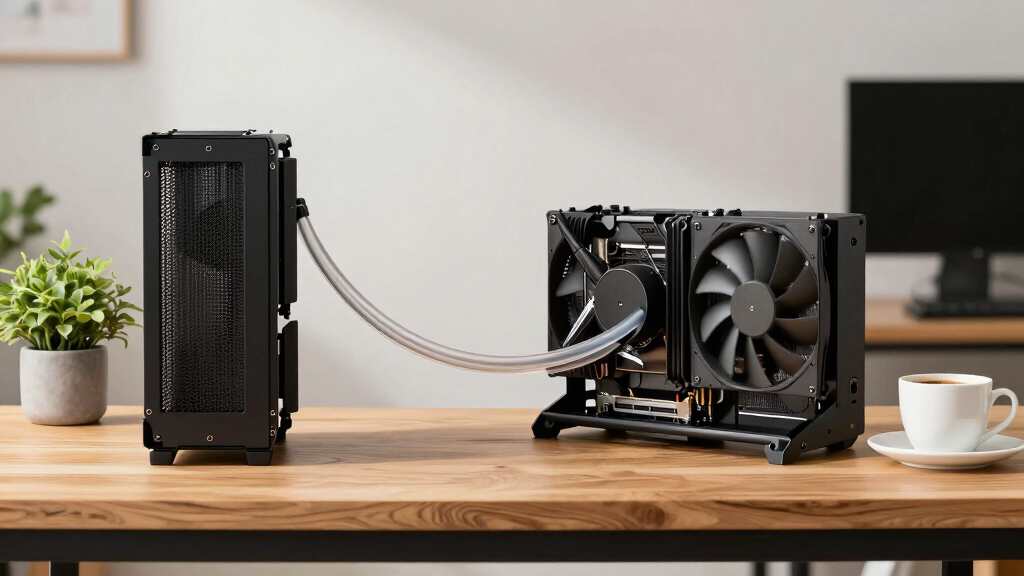
According to ThorstenMeyerAI.com, a large dual-tower air cooler is the safer default for most always-on rigs because the heatsink has no pump, no coolant loop, and only a replaceable fan as its main wear item. The guide contrasts that with all-in-one liquid coolers, which rely on a pump the site describes as a single point of failure and says typically require full-unit replacement after pump failure.
The site does not dismiss liquid cooling. It says a 360mm AIO can be the better choice when a CPU is too hot for air cooling under sustained all-core load, when a large tower cooler will not physically fit, or when the builder needs to move heat out through a radiator rather than leave more of it inside the case.
Why It Matters
The guidance matters because AI inference rigs are often used differently from gaming PCs. A gaming system may see short bursts of high load, while an inference workstation may run long jobs overnight, across weekends, or in remote rooms where the owner may not notice a cooling problem right away.
For readers building or upgrading local AI workstations, the practical stakes are cost, noise, serviceability, and failure risk. ThorstenMeyerAI.com says top air coolers can handle many mainstream and high-end CPUs under sustained load, while AIO systems can cost two to three times more over their useful life once replacement is included.
high-end air CPU cooler for 24/7 inference rigs
As an affiliate, we earn on qualifying purchases.
As an affiliate, we earn on qualifying purchases.
Background
The guide positions the cooling choice as part of a broader workstation heat and noise strategy. It links the air-versus-liquid decision to sustained-load cooling, case fit, room temperature, and product selection for quiet CPU coolers.
The source material cites typical 2026 figures: a top air cooler handling about 250 watts in sustained use and a 360mm AIO handling about 360 watts for hotter CPUs, overclocked systems, or cases where air clearance is limited. It attributes those ranges to 2026 cooling comparisons from outlets and manufacturers including Tom’s Hardware, Corsair, MSI, and independent reviewers, while warning that results vary by unit, mounting, airflow, and environment.
“For set-and-forget systems, air remains the safest choice.”
— ThorstenMeyerAI.com
“An air cooler has one moving part. An AIO has a pump on a clock.”
— ThorstenMeyerAI.com
“Reach for a 360mm AIO in three specific situations.”
— ThorstenMeyerAI.com
360mm AIO liquid CPU cooler for continuous use
As an affiliate, we earn on qualifying purchases.
As an affiliate, we earn on qualifying purchases.
What Remains Unclear
Several details remain dependent on the specific build. The guide’s wattage, lifespan, noise, and cost figures are presented as typical ranges, not guarantees. Actual results depend on CPU power limits, case airflow, cooler model, fan curve, ambient temperature, dust, mounting quality, workload pattern, and warranty terms.
The source also notes that prices and availability change frequently, and it tells readers to confirm current pricing and compatibility before buying. It includes an affiliate disclosure stating that the site may earn from qualifying purchases.
dual tower air cooler for AI workstation
As an affiliate, we earn on qualifying purchases.
As an affiliate, we earn on qualifying purchases.
What’s Next
Readers planning a 24/7 inference rig should check case clearance, CPU sustained power draw, room temperature, RAM height, radiator support, warranty length, and replacement cost before choosing a cooler. The next decision point is product selection: choosing a specific tower cooler or 360mm AIO that matches the case, workload, and noise target.
reliable all-in-one liquid cooling system
As an affiliate, we earn on qualifying purchases.
As an affiliate, we earn on qualifying purchases.
Key Questions
What is the main recommendation for 24/7 inference rigs?
ThorstenMeyerAI.com recommends air cooling as the default for most always-on inference rigs because it is simpler, cheaper, quieter at the low end, and easier to repair if a fan fails.
When does liquid cooling make sense?
The guide says a 360mm AIO is worth using when the CPU is too hot for air cooling under sustained all-core load, a large air cooler will not fit, or the system is in a hot room where radiator exhaust is useful.
Is liquid cooling confirmed to be less reliable?
The source says AIO coolers add a pump and sealed loop that can fail over time, while air coolers mainly depend on replaceable fans. Exact lifespan varies by model, use, mounting, and environment.
Do the numbers apply to every AI workstation?
No. The cited 250-watt air and 360-watt AIO figures are typical 2026 ranges from cooling comparisons, according to the source. Builders still need to verify CPU power, case airflow, cooler fit, and room conditions.
Source: Thorsten Meyer AI
Flea & tick season Picks
flea and tick prevention
As an affiliate, we earn on qualifying purchases.