
TL;DR

Get business pricing on tech for your team
- Business-only prices and quantity discounts
- Tax-exempt purchasing
- Multiple users, one account, clear invoices
The most effective way to quiet your rig isn’t just foam or barriers; it’s about moving it away and managing sound at the source. A closet setup can work wonders if you treat reflections and ventilate properly.
Ever notice how some home studios sound surprisingly good, even in tiny closets? It’s not magic. It’s smart placement, thoughtful dampening, and managing heat. You don’t need a fancy soundproof room—just a closet and a few tricks.
In this guide, you’ll learn how to cut noise, tame reflections, and keep your gear cool. Whether you’re recording vocals, voiceovers, or running a high-power GPU rig, these tips will help you make the most of tight spaces without sacrificing quality or safety.
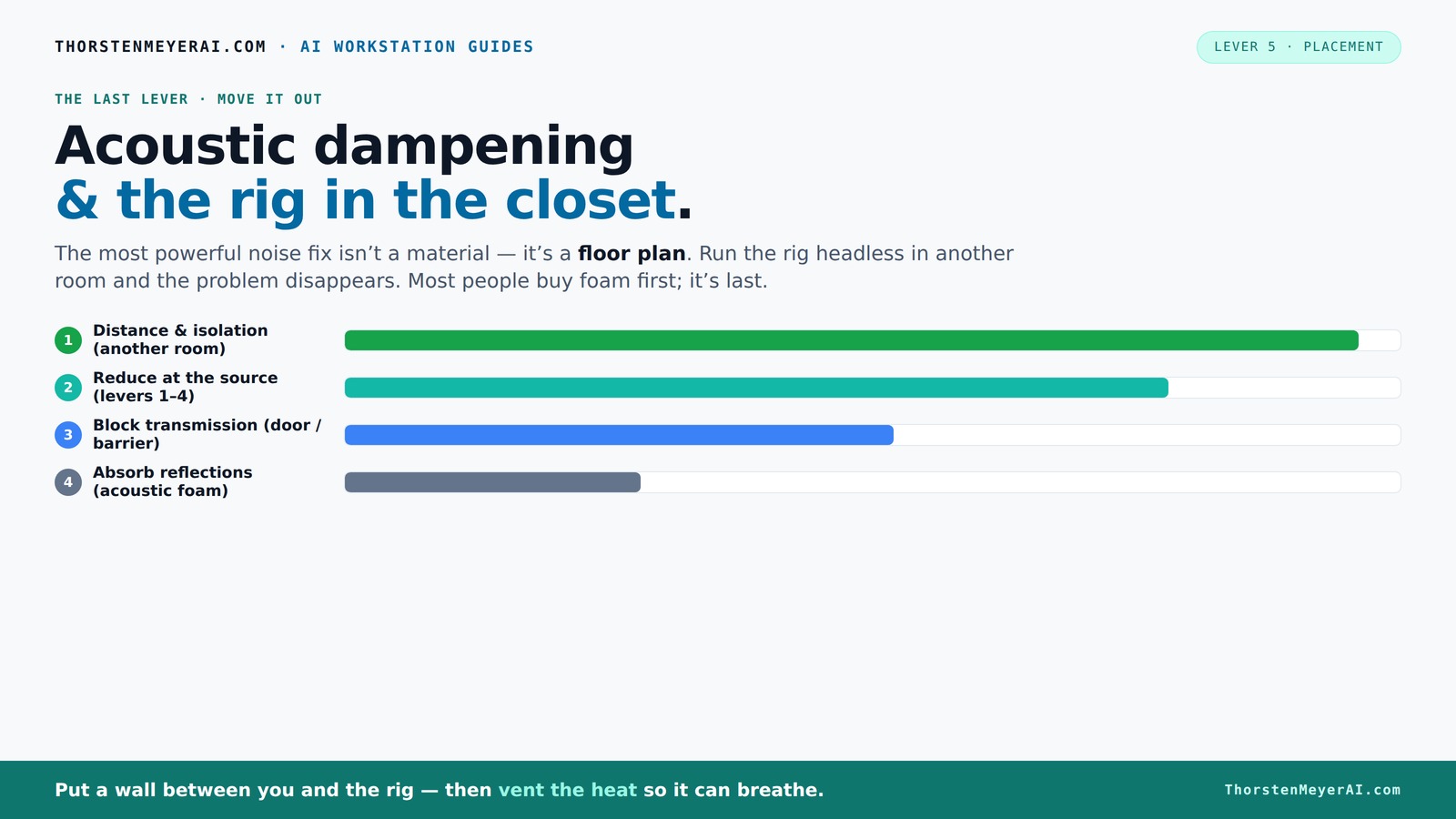
Acoustic dampening
& the rig in the closet.
The most powerful noise fix isn’t a material — it’s a floor plan. A rig you can’t hear because it’s in another room beats any amount of foam. Tap the approaches in Part 1 to see what actually works.
(another room)
(levers 1–4)
(door / barrier)
(acoustic foam)
Contain the noise, not the heat
Key Takeaways
- Moving your rig into another room is the most effective noise control—networking makes this easy.
- Treat the main reflection points—walls behind the mic, ceiling, and desk—using affordable materials like foam or blankets.
- Ensure proper ventilation in closet setups to prevent heat buildup and gear damage.
- Use bass traps or corner treatments to tame low-frequency resonance common in small spaces.
- DIY solutions—blankets, rugs, foam—are effective, budget-friendly, and easy to reconfigure.
soundproofing foam panels for studio
As an affiliate, we earn on qualifying purchases.
As an affiliate, we earn on qualifying purchases.
Why Moving Your Rig Beats Foam and Barriers Every Time
Moving your machine into another room is the most effective noise reduction trick. It’s simple, cheap, and powerful. A rig in the closet can be silent to your ears, even if it roars inside.
Think of your rig as a noisy neighbor. If you can put it behind a wall or in a different building, the sound barely reaches your workspace. Networked workflows make this easier than ever—SSH or remote desktop, and you’re golden.
For example, a friend installed his GPU server in a basement. On his desk, it’s whisper-quiet. The extra step? A wired Ethernet connection and a small ventilation fan. That’s all it took to isolate noise completely.
acoustic isolation pads for microphones
As an affiliate, we earn on qualifying purchases.
As an affiliate, we earn on qualifying purchases.
The 'Rig in the Closet' Setup: How to Do It Right Without Cooking Your Hardware
Putting a hot, demanding machine in a closet? It works—if you breathe. The key is airflow. A sealed closet traps heat, which makes the machine throttle and noise spike. That’s the trap to avoid.
The fix? Active ventilation. A quiet exhaust fan pulling hot air out, combined with a vent or passive airflow, keeps your rig cool and quiet. For more on this, see this guide on cooling your high-load rig. Some DIY creators even build simple ducted systems with soundproofing materials.
For instance, one user installed a small, ducted exhaust vent with a thermostat. When the room hits 75°F, the fan kicks on. The result: a cool, silent rig running 24/7 without overheating. Want more? Check out [this guide on cooling your high-load rig](https://thorstenmeyerai.com/reduce-heat-noise-ai-workstation/).
As an affiliate, we earn on qualifying purchases.
Treating Reflections and Echo in Tiny Spaces: What Really Works
Acoustic dampening isn’t about soundproofing; it’s about controlling reflections. In a small closet, sound bounces between surfaces—causing echo and a boxy tone. The goal: break up those reflections.
Start by identifying the main reflection points: behind the mic, the ceiling, and the desk surface. Use foam panels, blankets, or rugs—whatever sticks—and cover about 20-30% of reflective surfaces.
For example, a voice actor lined her closet with 2-inch foam panels on the walls and ceiling, plus a thick rug on the floor. The echo disappeared, and her recordings sounded warm and clear. Remember, treating the reflection points is more effective than just sealing corners.
Understanding why this matters: reflections cause comb filtering, which can muddy your recordings and reduce clarity. You can learn more about controlling reflections. Properly controlling these reflections ensures your sound stays natural and detailed. The tradeoff is that over-treating can deaden the sound, making it dull, so balance is key.
high-density soundproofing blankets
As an affiliate, we earn on qualifying purchases.
As an affiliate, we earn on qualifying purchases.
Where to Place Acoustic Treatments for Maximum Impact
Placement is everything. Start by treating the reflection points—these are spots where sound bounces directly from your source to your ears. Use a mirror or a reflection map if needed.
Focus on the wall behind the mic, the ceiling directly above, and the desk surface. Installing foam or blankets at these points minimizes echo and reverb effectively. Don’t forget the door gaps and edges—seal cracks with weatherstripping or acoustic sealant.
For example, one home streamer used a mirror to find the main reflection points on her closet ceiling and walls. She added foam panels there and on her desk, and the difference was night and day. Her voice sounded richer, less echoey.
Why this matters: Proper placement of treatments ensures that sound waves are absorbed at the most critical points, preventing reflections from bouncing around and creating a cluttered, boxy sound. Find out more about optimal acoustic treatment placement. The tradeoff is that improper placement can leave you with uneven absorption, so take your time to identify these key spots.
Handling Low-End Buildup and Standing Waves in Small Closets
Low-frequency buildup is common in tiny closets because parallel walls create standing waves. For solutions, see this roundup on acoustic treatments for low-end issues. That bass boom can make your recordings muddy or cause your rig to overheat from extra heat generated by the amp and speakers.
The best fix: bass traps or extra absorption in the corners. Even a few thick rugs or DIY foam bass traps stuffed into corners can tame these resonances. For example, a podcaster added homemade bass traps in every corner, and her low-end clarity improved dramatically.
Understanding why this matters: standing waves and bass buildup can cause uneven frequency response, making your recordings sound boomy or muffled. They can also lead to increased heat in your gear because of the additional energy in these low frequencies, stressing your equipment and potentially reducing lifespan. The tradeoff is that neglecting bass treatment can compromise your sound quality and cause thermal issues.
Remember: thick, dense materials work best for bass. Aim to cover at least 10-15% of the space with bass trapping if you notice boomy lows.
DIY Tricks: Cheap, Easy Ways to Treat Your Closet Without Breaking the Bank
You don’t need expensive panels to make a closet sound better. Use blankets, thick curtains, rugs, and foam mattress toppers. For DIY ideas, check this guide on acoustic treatments. These are portable, removable, and affordable.
For example, draping a thick blanket over the closet door and lining the walls with foam mats can cut echo significantly. Adding a rug on the floor and some hanging blankets creates a cozy, controllable sound environment.
Pro tip: Use removable hooks or thumbtacks so you can reconfigure or remove treatment as needed. This flexibility is perfect for renters or hobbyists. Remember, the goal is to reduce reflections and echo without deadening the sound completely. Combining different materials allows you to tailor the absorption to your specific needs, balancing clarity and warmth.
Common Mistakes That Ruin Your Closet Soundproofing Efforts
Don’t just slap foam on walls and call it a day. Over-treating can deaden the sound and create a dull, boxy tone. Also, ignoring gaps around the door or vents allows sound leaks.
Another mistake: sealing your closet completely without ventilation. This traps heat and damages your gear. Always plan for airflow, even if it means installing a small exhaust fan or vent duct.
Finally, relying solely on bass traps without addressing mid and high reflections leaves your recordings echoey. Balance is key. Properly addressing all reflection points and maintaining ventilation ensures your space remains acoustically tuned without risking heat damage or sound leaks.
When a Closet Is Enough and When You Need More
A closet can be a great, budget-friendly booth for voiceovers, podcasts, and casual recording. However, it may not be suitable for singing or high-fidelity music production if it’s too small or poorly treated.
If you notice boxiness or bass resonance even after treatment, consider upgrading to a dedicated room with better acoustics. But for most home projects, a well-treated closet is a solid starting point.
For example, a YouTuber found his closet perfect for voice work after adding some foam and sealing gaps. But when he tried singing, the room’s low-end issues became apparent, prompting a move to a larger, better-treated space.
Understanding the limitations: small, untreated spaces can cause uneven response and acoustic issues that are hard to fully correct without more space or professional treatment. Knowing when to upgrade depends on your fidelity needs and the scope of your projects.
Frequently Asked Questions
What is the difference between acoustic dampening and soundproofing?
Acoustic dampening reduces echoes and reverb inside a space by absorbing sound waves, making recordings clearer. Soundproofing blocks noise from leaking out or coming in, often through sealing gaps or adding mass to walls. They work together but serve different purposes.
Where should I place acoustic panels in a closet booth?
Place panels at reflection points—behind the mic, ceiling directly above, and the desk surface. Use a mirror or reflection map to find these spots. Cover about 20-30% of these key areas for a noticeable difference.
Do I need bass traps in a tiny closet?
Yes, if you notice a boomy or muddy low end. Small closets often develop low-frequency resonances. Installing bass traps or dense foam in corners can dramatically improve clarity.
How thick should foam or panels be in a small closet?
For most small spaces, 2-inch panels are enough. Larger rooms or problematic low-end areas might benefit from 4-inch thick panels. Focus on reflection points first for maximum impact.
Will blankets help, or do I need real panels?
Blankets are a quick, cheap solution that can significantly reduce echo. For more effective and professional sound, combine blankets with foam panels or purpose-built acoustic treatments.
Conclusion
In the end, your best bet isn’t just foam or barriers—it's strategic placement and ventilation. A well-treated closet can serve as a surprisingly good studio, provided you manage heat and reflections smartly.
Think of it like tuning a musical instrument: small adjustments in placement, absorption, and airflow can turn a boxy echo chamber into a warm, clear sound space. Your rig’s noise and heat are manageable, you just need to be clever about it.
Fall Picks
fall essentials
As an affiliate, we earn on qualifying purchases.