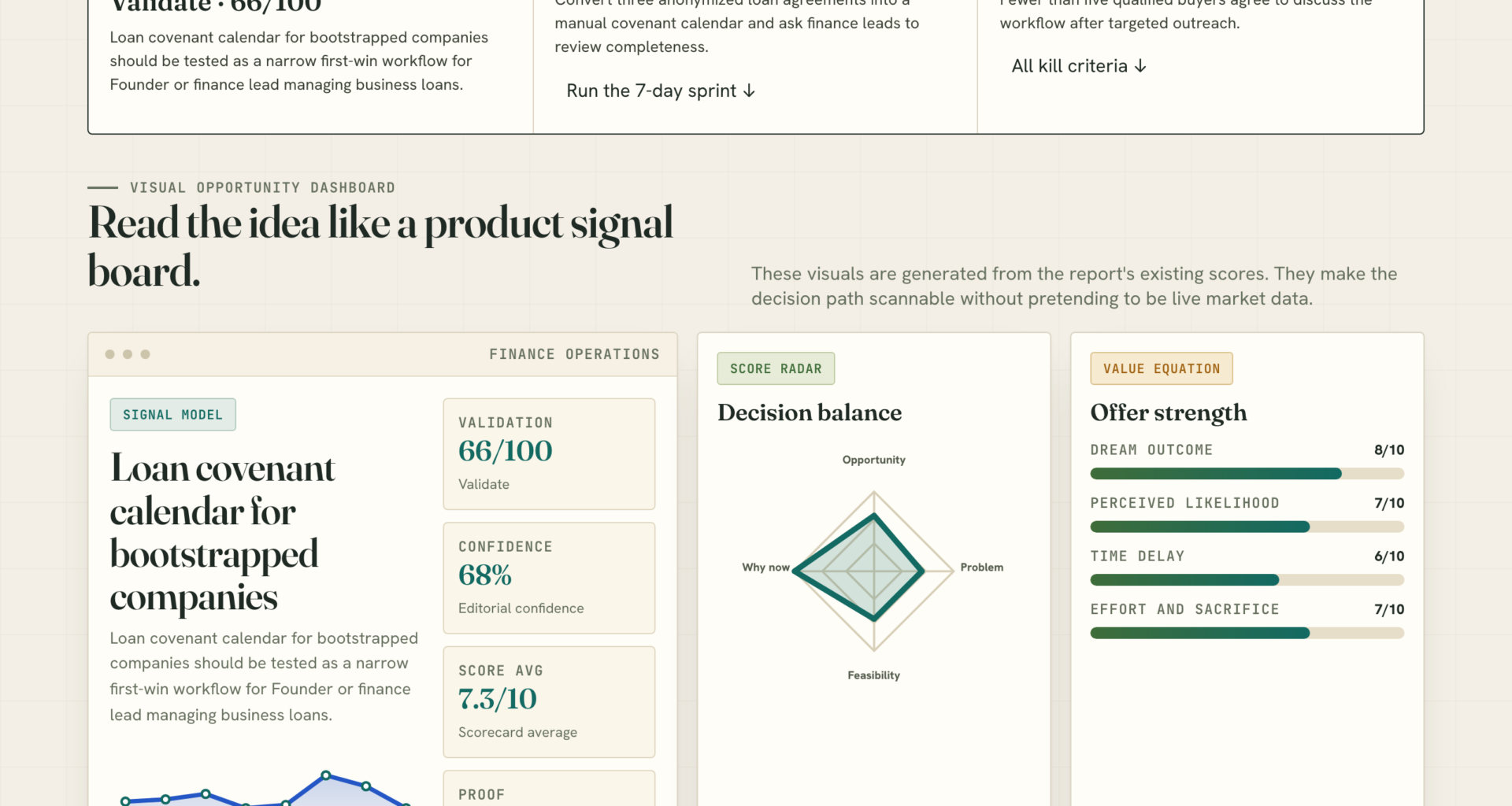

📊 Full opportunity report: Loan covenant calendar for bootstrapped companies on IdeaNavigator AI — validation score, market gap, and execution plan.

Get business pricing on tech for your team
- Business-only prices and quantity discounts
- Tax-exempt purchasing
- Multiple users, one account, clear invoices
TL;DR
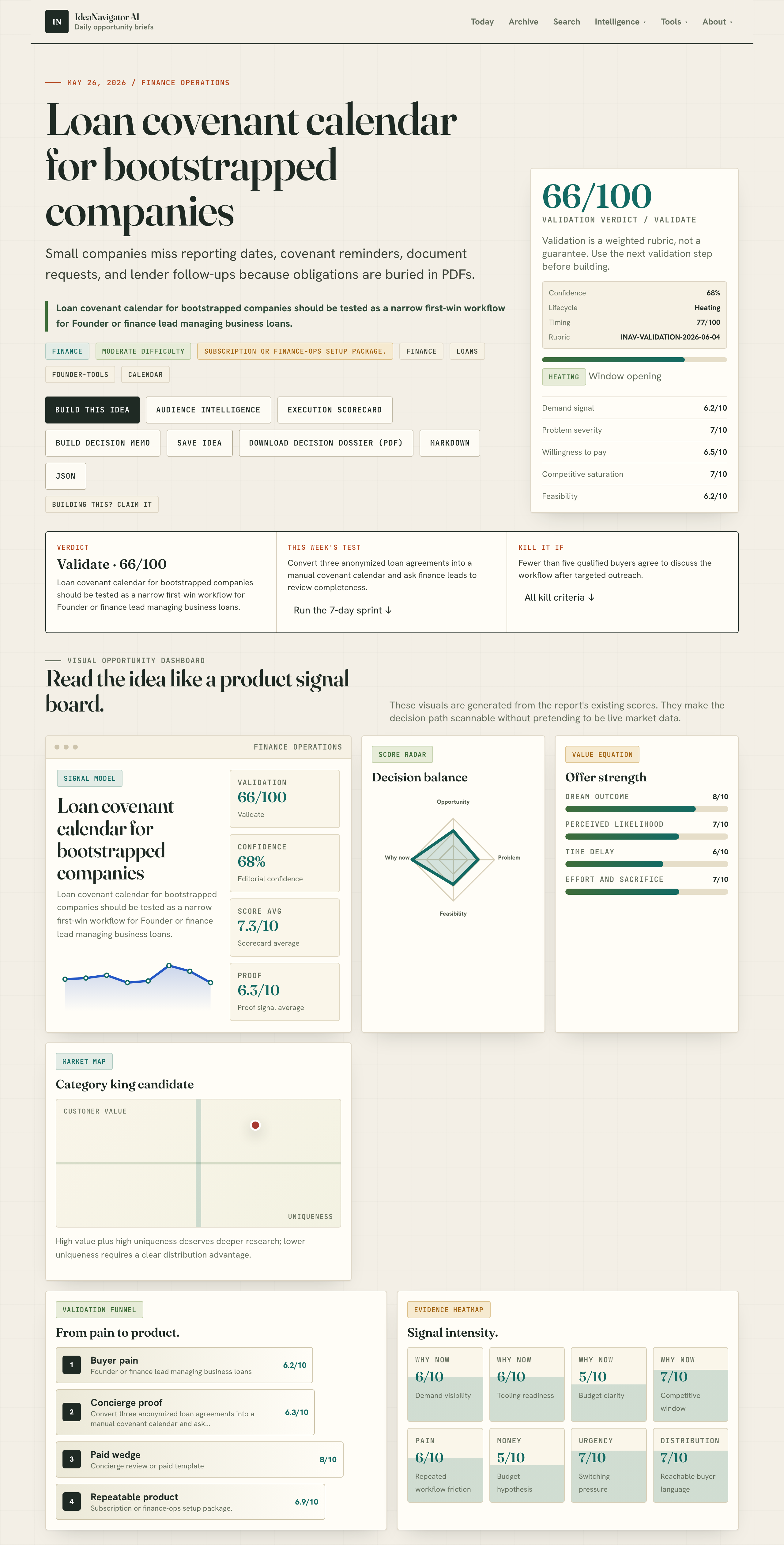
A prototype for a loan covenant calendar tailored for bootstrapped companies is in testing. It aims to help small firms manage loan obligations more effectively amid increasing financing scrutiny.
A prototype of a loan covenant calendar specifically designed for bootstrapped companies is currently being tested to improve compliance management. This tool aims to help founders and finance leads track loan obligations more efficiently, addressing a common challenge for small businesses managing multiple loans amid rising scrutiny from lenders.
The proposed covenant calendar extracts key loan obligations, including due dates, responsible owners, required evidence files, and communication history with lenders. It is intended as a workflow tool to prevent missed reporting dates, covenant breaches, and document requests, which are frequent issues for small companies managing loans buried in PDFs and scattered communications. The initiative is driven by the recognition that as small businesses face increased lender scrutiny, operational follow-through on loan covenants becomes more critical. The initial validation involves converting three anonymized loan agreements into manual covenant calendars and having finance leads review their completeness and usability. The goal is to develop a minimum viable product (MVP) that can be adopted via subscription or as part of a finance operations setup package. This testing phase is considered a first step toward creating a standardized, scalable workflow for small firms to manage their loan covenants proactively, reducing the risk of non-compliance and associated penalties. The approach emphasizes automation of obligation extraction and user-friendly tracking, tailored to the needs of bootstrapped companies with limited internal resources.Why a Covenant Calendar Matters for Small Businesses
This development addresses a significant operational gap for small, bootstrapped companies that often lack dedicated financial staff or sophisticated systems. By providing a clear, automated way to track loan covenants, the calendar can reduce compliance risks and improve lender relationships. It also responds to the broader trend of increasing financial regulation and scrutiny, which makes diligent covenant management more urgent for small firms. Successful implementation could set a new standard for operational efficiency in small business finance, potentially lowering the costs and risks associated with borrowing.
As an affiliate, we earn on qualifying purchases.
Growing Lending Scrutiny Elevates Operational Demands on Small Firms
Small companies frequently rely on loans for growth, but managing loan covenants can be challenging due to scattered documentation and manual tracking processes. As lenders tighten scrutiny and demand more frequent reporting, the risk of missed obligations rises. Historically, many small firms have overlooked covenant deadlines, risking penalties or loan default. Recent trends show a push toward more structured operational tools for finance management, but few solutions are tailored specifically for bootstrapped businesses with limited resources. This initiative by IdeaNavigator AI aims to fill that gap with a focused, easy-to-use covenant calendar prototype.
“Managing loan covenants is often a manual, error-prone process for small firms, which increases their compliance risk.”
— an anonymous researcher
small business loan tracking tools
As an affiliate, we earn on qualifying purchases.
As an affiliate, we earn on qualifying purchases.
Unclear Details on Full Implementation and Adoption
It is not yet confirmed how widely the prototype will be adopted or how effectively it will integrate with existing financial systems of small companies. The validation is still in early stages, and user feedback from finance leads is pending. Additionally, the scalability and customization options for different types of loans and lender requirements remain to be determined. Further testing results are expected to clarify these aspects, but for now, the project is in the initial validation phase with limited data.
financial compliance calendar for small business
As an affiliate, we earn on qualifying purchases.
As an affiliate, we earn on qualifying purchases.
Next Steps Include Broader Testing and Refinement
The next phase involves expanding testing to more small companies and refining the calendar based on user feedback. IdeaNavigator AI plans to develop an automated extraction process for covenant obligations and explore integration with existing financial management tools. Success in these steps could lead to a wider rollout, subscription offerings, and potential partnerships with fintech providers targeting small business finance. Monitoring how early users respond will be key to shaping the final product and assessing its market viability.
loan obligation tracking spreadsheet
As an affiliate, we earn on qualifying purchases.
As an affiliate, we earn on qualifying purchases.
Key Questions
What is a loan covenant calendar?
A loan covenant calendar is a tool that tracks the obligations, deadlines, and required documentation associated with a company’s loan agreements. It helps ensure compliance and timely reporting to lenders.
Why is this tool important for small, bootstrapped companies?
Small companies often lack dedicated finance staff and struggle with scattered documentation. A covenant calendar simplifies tracking obligations, reducing the risk of missed deadlines and penalties, especially as lender scrutiny increases.
How is the calendar being tested?
Initial validation involves manually converting three anonymized loan agreements into covenant calendars and having finance leads review their completeness and usability to inform future automation features.
When might this tool become widely available?
If validation proves successful and refinement is completed, a broader rollout could occur within the next year, with subscription or package options for small businesses.
Will this replace existing financial management systems?
The calendar is designed as a supplementary workflow tool, not a replacement. It aims to integrate with or complement existing systems to improve covenant management.
Source: IdeaNavigator AI
Fall Picks
fall essentials
As an affiliate, we earn on qualifying purchases.