
TL;DR
This article explores 15 AI tools revolutionizing workflow automation, highlighting the most effective platforms for different skill levels and needs. Confirmed developments include the rise of open-source options like n8n and specialized guides for no-code and developer audiences.
Artificial intelligence is significantly reshaping workflow automation in 2026, with 15 key tools emerging as essential for businesses and developers. These tools range from no-code platforms to advanced coding assistants, offering tailored solutions for various skill levels and operational needs. The widespread adoption of AI-driven automation is changing how organizations streamline processes, improve efficiency, and integrate AI models with existing systems.
Recent evaluations of workflow automation resources reveal that n8n remains the most widely adopted open-source platform, with guides like Mastering n8n in Practice providing practical, API-rich integrations suitable for real business automation. For beginners, Agentic AI Made Simple offers effective no-code automation tutorials, while developers benefit from Agentic Coding with Claude Code (5-in-1), which offers depth in coding AI models.
Industry experts emphasize the importance of choosing tools aligned with existing ecosystems, such as Microsoft 365 or open-source platforms, to avoid costly platform switching later. The trend toward local AI solutions, like Google Gemma 4 AI, highlights growing concerns around data privacy and security, especially for sensitive or confidential workflows.
While the landscape is rapidly evolving, these 15 tools represent a curated snapshot of the most practical, current options for automating workflows with AI in 2026. The main tradeoff remains between depth—focused mastery of a single platform—and breadth—surveying multiple tools for a broad overview.
The Impact of AI on Business Workflow Efficiency
The adoption of these 15 AI tools marks a pivotal shift in how organizations automate tasks, reduce manual effort, and enhance operational accuracy. For businesses, integrating AI-driven automation can lead to significant cost savings, faster decision-making, and improved compliance, especially with role-specific guides addressing regulatory constraints. For developers, these tools open new avenues for building customized AI integrations, while non-technical users gain access to powerful automation without coding skills.
Overall, this transformation influences competitive dynamics across industries, making AI-enabled workflows a key factor in organizational agility and resilience in 2026 and beyond.
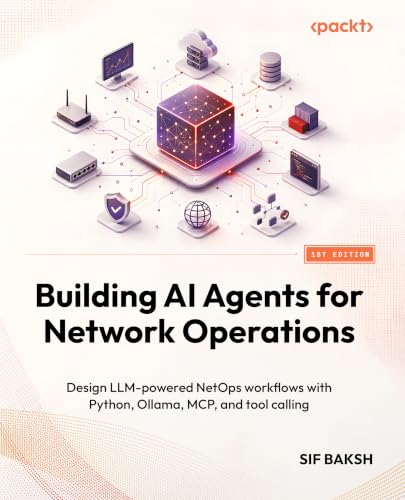
Building AI Agents for Network Operations: Design LLM-powered NetOps workflows with Python, Ollama, MCP, and tool calling
As an affiliate, we earn on qualifying purchases.
As an affiliate, we earn on qualifying purchases.
Evolution of AI Tools for Workflow Automation in 2026
The landscape of AI-driven workflow automation has expanded rapidly over recent years, driven by advances in open-source platforms like n8n and the proliferation of AI models capable of integration with existing business systems. Early tools focused on simple chat prompts, but recent developments emphasize API connectivity, role-specific automation guides, and privacy-focused local AI solutions.
Industry reports and expert reviews, such as those compiled by Thorsten Meyer, highlight that practical, hands-on manuals and platform-specific guides now dominate the market, reflecting a shift toward real-world applicability rather than theoretical overviews. The focus on secure, compliant, and scalable automation solutions is also a response to increasing data privacy regulations and enterprise security demands.
Key recent milestones include the rise of open-source platforms like n8n, and the emergence of local AI options like Google Gemma 4 AI, which keeps data off cloud servers, addressing privacy concerns for sensitive workflows.
“Mastering n8n in Practice goes beyond basics into APIs and AI integrations that real business automations require.”
— Thorsten Meyer
As an affiliate, we earn on qualifying purchases.
Unanswered Questions About AI Workflow Tools in 2026
While these 15 tools are currently leading the market, it remains unclear how rapidly new platforms will emerge or how existing tools will evolve to meet future security, compliance, and integration demands. The long-term effectiveness of local AI solutions versus cloud-based models in large-scale enterprise settings is still under evaluation. Additionally, the precise impact of these tools on organizational productivity and employee workflows requires further empirical study.

AI-Augmented Software Engineering: Coding Assistants, LLM-Driven Code Review, Automated Testing, and the Future Developer Workflow (Production AI Engineering Series)
As an affiliate, we earn on qualifying purchases.
As an affiliate, we earn on qualifying purchases.
Future Developments in AI Workflow Automation
In the coming months, expect further refinement of AI automation guides, with more role-specific and security-focused tools entering the market. Industry analysts anticipate increased integration of AI models with enterprise resource planning (ERP) and customer relationship management (CRM) systems. Additionally, ongoing developments in local AI solutions may challenge cloud-based platforms, especially as privacy regulations tighten. Organizations should monitor these trends to adapt their automation strategies accordingly.
open-source workflow automation tools
As an affiliate, we earn on qualifying purchases.
As an affiliate, we earn on qualifying purchases.
Key Questions
Which AI tools are best for non-technical users?
Tools like Agentic AI Made Simple and platforms such as Copilot Studio are designed for beginners, offering no-code automation capabilities without requiring programming skills.
How important is platform ecosystem when choosing an AI automation tool?
Extremely important. Selecting a platform aligned with your existing systems (e.g., Microsoft 365, open-source n8n) reduces switching costs and integration challenges later.
Are local AI solutions safe for sensitive data?
Yes, local AI options like Google Gemma 4 AI keep data off third-party servers, making them suitable for confidential workflows, though they may require more technical setup.
Will AI tools replace human roles in workflow management?
While AI automation enhances efficiency and reduces manual tasks, human oversight remains essential for complex decision-making, compliance, and ethical considerations.
Source: ThorstenMeyerAI.com