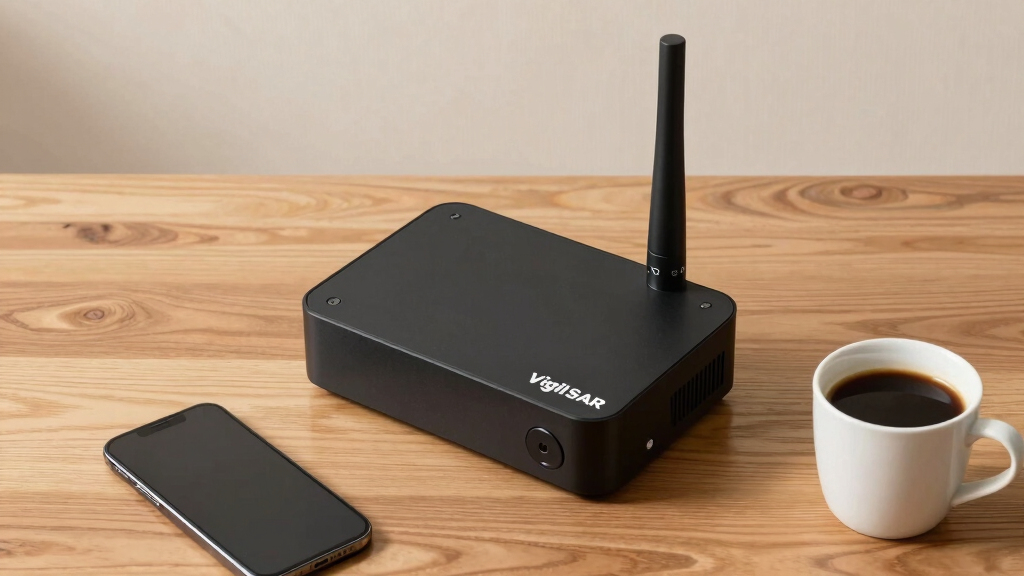

📊 Full opportunity report: VigilSAR: The Object That Isn’t Transmitting on ThorstenMeyerAI.com — validation score, market gap, and execution plan.
TL;DR
VigilSAR is a radar-based platform that detects ships not broadcasting transponder signals, crucial for maritime security, law enforcement, and rescue operations. Its core capability relies on SAR imagery fused with other signals, but full deployment details remain undisclosed.
VigilSAR has confirmed its ability to detect vessels that do not broadcast transponder signals, a development that enhances maritime domain awareness, especially in challenging weather or darkness. The platform integrates SAR imagery with other signals to identify suspicious or unreported vessels, a capability relevant to defense, coast guard, and law enforcement agencies.
The core technology of VigilSAR relies on synthetic-aperture radar (SAR) data, which can image the surface regardless of weather or lighting conditions. Its detection process involves identifying anomalous radar returns that differ from the background—such as large metal objects on water. The system then pairs these detections with signals like AIS or ADS-B transponders, which most vessels broadcast. When a radar detection has no corresponding transponder signal, it becomes a point of interest, indicating a vessel that may be attempting to evade detection or operate covertly.
Current demonstrated capability is based on analysis of Sentinel-1 satellite data, provided by the European Space Agency’s Copernicus program, which is publicly accessible. The platform’s broader commercial and operational deployment remains in the roadmap phase, with no public pricing or detailed capability claims beyond the initial demonstration. VigilSAR’s approach emphasizes the fusion of radar detections with other signals to filter out known, compliant vessels and highlight anomalies.
VigilSAR — the object that isn’t transmitting
Radar sees through cloud and darkness, when cameras can’t. Fuse it with transponder data and the signal is the one detection no transponder explains.
Independent commentary on public positioning, produced with AI assistance under human editorial oversight. The views are the author’s own and may change. This does not verify or endorse VigilSAR’s capabilities, contracts, or performance. Capabilities on Sentinel-1 / Copernicus reflect a free, public data foundation; commercial-constellation and air-gapped-deployment references reflect stated positioning, not independently demonstrated fact. ISR and related technologies may be subject to export controls and dual-use regulations — lawful, ethical use is solely the operator’s responsibility. Nothing here is an offer, pricing, or operational/safety/legal advice. AI detection and classification can err and require human verification. Product and company names are trademarks of their respective owners; mention does not imply endorsement.
Potential Impact on Maritime Security and Compliance
This technology addresses a critical gap in maritime surveillance by enabling detection of vessels that go dark or disable transponders, which is common in illegal fishing, smuggling, sanctions evasion, and distress scenarios. Its ability to operate in all weather and darkness makes it a valuable tool for coast guards, law enforcement, and humanitarian agencies. The detection of non-transmitting vessels can improve the enforcement of maritime laws, enhance safety, and support broader security efforts.

Furuno 1815 8.4 Color Lcd Ra Radar 19 4kw Dome
- Display Size: 8.4-inch color LCD screen
- Antenna Size: 19-inch radome antenna
- Power Output: 4 kW transmitter
As an affiliate, we earn on qualifying purchases.
As an affiliate, we earn on qualifying purchases.
Advances in SAR and Fusion for Maritime Monitoring
Traditional optical satellite imagery is limited by weather and lighting, while SAR provides all-weather, day-night imaging capabilities. The use of SAR for maritime domain awareness has been growing, but the challenge has been interpreting radar signals to reliably identify vessels and distinguish between legitimate and suspicious activity. VigilSAR’s approach combines classical detection algorithms with neural classifiers and signal fusion, building on publicly available Sentinel-1 data. The concept of detecting anomalies—objects that appear on radar but lack transponder signals—is a known principle, but VigilSAR’s integration into a usable platform marks a significant step forward.
“VigilSAR’s ability to detect vessels without transponders, especially in adverse conditions, could significantly change maritime surveillance and law enforcement.”
— Thorsten Meyer, remote sensing expert
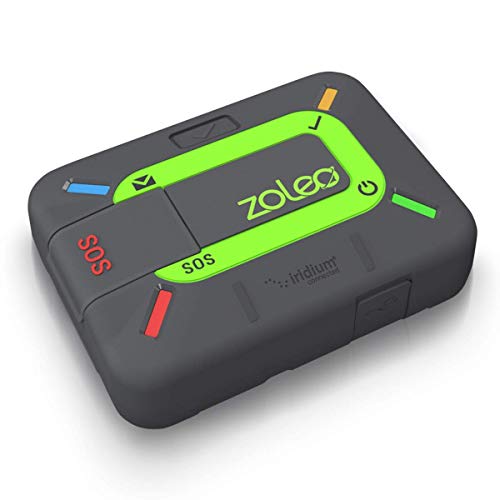
ZOLEO Satellite Communicator – Two-Way Global SMS Text Messenger & Email, Emergency SOS Alerting, Check-in & GPS Location – Android iOS Smartphone Accessory
- Global Satellite Messaging: Text and email via satellite, cellular, Wi-Fi
- Emergency SOS Alerts: Send GPS location SOS to emergency center
- Medical Assist Access: Non-emergency medical help available
As an affiliate, we earn on qualifying purchases.
As an affiliate, we earn on qualifying purchases.
Capabilities and Deployment Still Under Development
While the detection capability based on Sentinel-1 data has been demonstrated, the full scope of VigilSAR’s operational deployment, commercial availability, and integration with other surveillance systems remains unclear. Details about pricing, specific use cases, and how widely it has been adopted are not publicly available. The extent to which the platform can reliably distinguish benign from suspicious vessels in complex scenarios is also still to be validated.
As an affiliate, we earn on qualifying purchases.
Next Steps Include Broader Testing and Market Engagement
Further testing using diverse datasets and operational environments is expected to validate VigilSAR’s detection and classification performance. The company is likely to engage with potential clients through briefing sessions and pilot programs, with eventual commercial rollout contingent on these results. Monitoring these developments will clarify how VigilSAR’s technology will be integrated into existing maritime security frameworks.

GREATBIGCANVAS Two P 3 Orion Maritime Surveillance Unframed Poster Print
- SIZE: 24" W x 18" H….
- SHIPS ROLLED: Poster print will ship rolled…
- MADE IN USA: Poster print is made-to-order in…
As an affiliate, we earn on qualifying purchases.
As an affiliate, we earn on qualifying purchases.
Key Questions
How does VigilSAR detect vessels that are not broadcasting transponder signals?
It uses synthetic-aperture radar (SAR) imagery to identify anomalous objects on the surface, then fuses these detections with signals like AIS or ADS-B. When a detection has no corresponding transponder signal, it indicates a vessel that may be operating covertly.
What are the main advantages of SAR over optical satellite imagery in maritime surveillance?
SAR can image the surface in all weather conditions and during night, making it more reliable for continuous monitoring, especially in adverse weather or darkness when optical imagery fails.
Is VigilSAR currently available for operational use?
Not yet. The core detection capability has been demonstrated using publicly available Sentinel-1 data, but commercial deployment, pricing, and full operational features are still in development.
Who benefits most from VigilSAR’s technology?
Maritime law enforcement agencies, coast guards, fisheries regulators, and humanitarian organizations stand to benefit by better detecting vessels that attempt to evade detection or operate covertly.
What are the limitations of VigilSAR’s current technology?
Its effectiveness in complex scenarios, such as distinguishing benign vessels from malicious ones, remains to be fully validated. Also, broader operational deployment details are not yet confirmed.
Source: ThorstenMeyerAI.com