
TL;DR

Get business pricing on tech for your team
- Business-only prices and quantity discounts
- Tax-exempt purchasing
- Multiple users, one account, clear invoices
AtomicChat has published an edited DeepSeek-V4.1-Flash-1017 model that it says removes refusals and can run on a PC with one 12 GB GPU, given substantial system memory and storage. Its test results and hardware claims have not been independently verified, and the edit removes refusals across topics rather than distinguishing harmful requests from political ones.
AtomicChat has published an edited version of DeepSeek-V4.1-Flash-1017 that it says removes the model’s refusals and can run locally with a single 12 GB graphics card. The release matters because it combines broad removal of safety refusals with a large open model packaged for consumer hardware, but the publisher’s performance figures and hardware claims have not been independently verified.
The Hugging Face repository, named DeepSeek-V4.1-Flash-1017-Uncensored-GSQ-RCO-GGUF, combines DeepSeek’s open model, compression work from ISTA-DASLab at the Institute of Science and Technology Austria, and AtomicChat’s refusal-removal edit. AtomicChat says its JailbreakBench refusal rate fell from 85.2% to 0.0% while reasoning scores held. Those results are self-reported; no independent replication is provided in the source material.
The hardware claim comes with substantial requirements. The developers say the compressed model needs a 12 GB GPU plus 46 to 64 GB of system RAM and about 250 GB of downloads, and runs at roughly 5 to 10 tokens per second in their tests. The compression work is separate from the refusal edit: ISTA-DASLab’s methods reduce model size, while AtomicChat says it changed a shared part of the model associated with refusals. That account has not been checked by an outside party.
AtomicChat’s model card says the edit removes refusals across topics rather than preserving a narrower set. It also warns that its refusal classifier checks the start of an answer, so a soft refusal later in the response may be counted as an answer. As of November 3, the repository was openly accessible, listed under an MIT license, and showed 30,284 downloads in the past month and 221 likes, according to the source material.
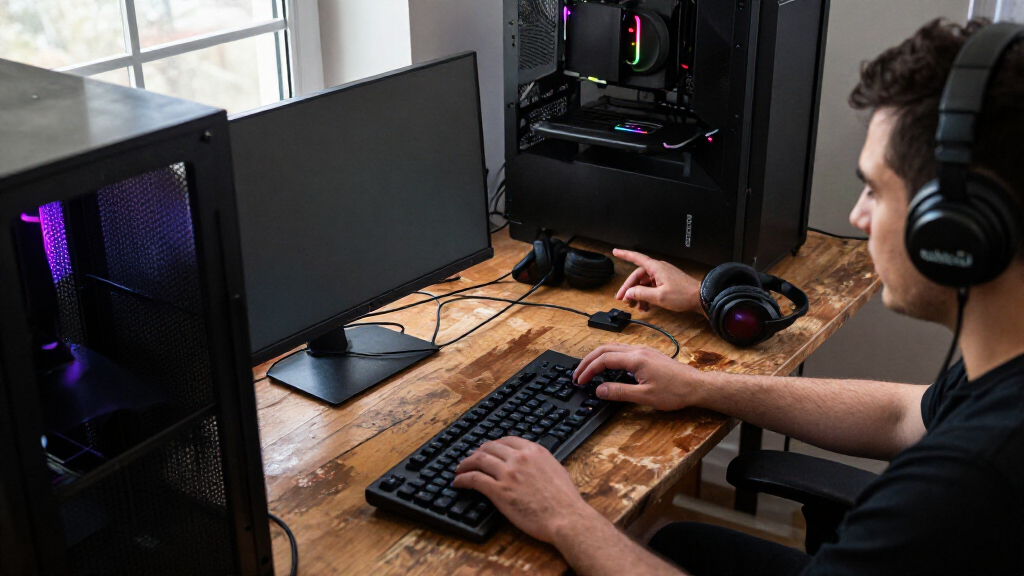
DeepSeek’s uncensored gaming PC release one switch, broad effects
AtomicChat says its edited model removes refusals and can run locally with a 12 GB GPU. Its test results and hardware claims have not been independently verified.
Three parts make the release
The model, compression and refusal edit are separate contributions.
V4.1-Flash-1017 provides the underlying open model.
Compression reduces model size to support a smaller hardware footprint.
AtomicChat says it changed the model to remove refusals across topics.
What local access changes
Running offline shifts both control and responsibility to the user or organization.
- Prompts and outputs can stay on a desktop.
- Users gain more control over platform restrictions.
- Use may bypass AI gateways, logging and usage policies.
- Broad refusal removal also removes a built-in safeguard.
Claims still need independent checks
The published figures come from AtomicChat’s own tests, with no independent replication in the source material.
Test performance
The refusal-rate drop and claim that reasoning scores held have not been independently reproduced.
Hardware and speed
The memory needs and reported 5 to 10 tokens per second come from the developers’ tests.
Political bias
The source does not measure whether the edit changes political content or other bias.
Local Access, Fewer Built-In Brakes
A capable model running offline on a desktop can give users more control over where prompts and outputs are processed. That may appeal to people concerned about privacy or platform restrictions. The same setup can also operate outside an organization’s AI gateway, logging and usage policies, making it harder for employers to track or govern model use.
Removing refusals also changes the model’s behavior, but the label “uncensored” does not establish that its answers are accurate, neutral or safe. The publisher says the edit removes refusals across topics. That means the release does not, on the evidence supplied, separate refusals to harmful requests from refusals tied to political content. The source says older DeepSeek versions were found by US government evaluators to carry Chinese Communist Party censorship; whether this edit changes political bias in answers has not been measured.
For companies, the concern described in the source is unmanaged use and the loss of one internal safeguard against prompt injection. Legal duties under the EU AI Act depend on how a system is used, the source notes, rather than who made the refusal edit. The details of any particular deployment would determine the obligations that apply.
Products Worth Considering

Apple MacBook Air 13-inch with M5 chip, 16GB memory, 512GB SSD, and 12MP Center Stage camera

Samsung 34-Inch Odyssey G5 Ultra-Wide Curved Gaming Monitor

Amazon Kindle Scribe (64GB) with Premium Pen, Metallic Jade
As an affiliate, we earn on qualifying purchases.
Three Parts Behind the Release
DeepSeek released V4.1-Flash on September 10, 2026, followed by the V4.1-Flash-1017 update on October 17. DeepSeek described the update as “a Pareto improvement in performance and cost”; its announcement, as summarized in the source, did not address safety. The model weights are listed under an MIT license, and the model card has no safety section or acceptable-use policy. The card’s model tree lists dozens of fine-tunes and hundreds of compressed versions.
The second component is ISTA-DASLab’s compression research, which uses Gumbel-Softmax Quantization and a per-tensor bit budget to reduce file size. The lab says its Strata engine can run each build on one GPU while holding the rest in system memory. The third component is AtomicChat’s edit to reduce refusals. These are distinct contributions: compression enables smaller hardware requirements, while the refusal edit changes how the model responds.
Refusal-removal edits are not new. The source cites a 2024 research paper describing refusal behavior as linked to a single direction in chat models and reports that Hugging Face’s “abliterated” tag filter listed 12,613 models on November 3, 2026. That broader activity puts this release in an established community practice; its claimed combination of model size and consumer hardware is the development highlighted by the publisher.
““The edit removes refusals across topics; it does not keep a narrower set of them.””
— AtomicChat model card
Test Results Still Need Replication
The source provides no independent reproduction of AtomicChat’s 0.0% refusal figure, its claim that reasoning scores held, or its hardware and speed measurements. The refusal classifier’s stated limitation also means its result may not capture every refusal later in an answer. File-size comparisons are described as making the claim that large model blocks were left unchanged plausible, but that has not been externally checked.
It is also unknown whether the edit changes political bias or censorship in the model’s answers. The source reports findings about older DeepSeek versions, not a measured evaluation of this specific edited build. Download and like counts are snapshots reported for November 3 and do not show who used the model or for what purposes.
Independent Checks Would Clarify Claims
The immediate next step for readers evaluating the release is independent testing of its refusal behavior, reasoning performance and hardware requirements. A separate evaluation of political content and other forms of bias would be needed to determine whether the edit changes those outputs. The source material does not identify a scheduled audit or response from DeepSeek, AtomicChat or ISTA-DASLab beyond the claims in their published materials.
Organizations considering local deployment will need to assess the model and its use under their own security, monitoring and legal policies. For now, the release is available to download, while its headline test results and practical performance remain publisher claims awaiting outside verification.
Key Questions
What did AtomicChat publish?
It published an edited, compressed build of DeepSeek-V4.1-Flash-1017 on Hugging Face. The build combines DeepSeek’s model, ISTA-DASLab compression work and AtomicChat’s refusal-removal edit.
Does it run on a PC with only 12 GB of memory?
The claim is about 12 GB of GPU memory, not total system memory. The developers say the setup also needs 46 to 64 GB of RAM and about 250 GB of downloads; their reported speed is roughly 5 to 10 tokens per second.
Is the reported zero refusal rate independently confirmed?
No independent replication is included in the source material. AtomicChat reports a drop from 85.2% to 0.0% on JailbreakBench, but the figures are self-reported, and the publisher describes a limitation in its refusal classifier.
Does the edit remove political bias?
That has not been measured in the material provided. AtomicChat says the edit removes refusals across topics, but that statement does not show whether political bias in the model’s answers changes.
Source: Thorsten Meyer AI