🔍 Read the full analysis: What Anthropic’s Memory Research Reveals About AI Agents on ThorstenMeyerAI.com

Get business pricing on tech for your team
- Business-only prices and quantity discounts
- Tax-exempt purchasing
- Multiple users, one account, clear invoices
TL;DR
Anthropic published a research post on November 6 describing how AI agents can save, organize and correct information between sessions. Its company-run tests suggest that selective, structured memory can help on some tasks, but the results include single runs and do not establish broad performance gains.
Anthropic published a research post on November 6 outlining how AI agents can retain information between conversations, organize it for later use and revise mistakes in stored notes. The post, titled “The components of agent memory,” presents the company’s framework and results from internal evaluations; it is a research post, not a peer-reviewed paper, and some reported comparisons are single runs.
Anthropic distinguishes an agent’s context window—the information available during a current session—from memory saved between sessions. Its definition covers knowledge gained through user interactions and assigned tasks that the agent stores in a form it can read later. The company excludes model-weight changes, learning within one conversation and summaries used to compress a conversation.
The framework describes several linked functions. An agent creates memory notes, decides which details are worth keeping, and may later review session logs to correct or reorganize those notes. Anthropic calls this later review “dreaming.” Memory can also be arranged into representations such as linked wiki pages, with a small top-level index loaded at the start of a session and other material retrieved only when needed.
In a Pokémon Red test, Anthropic compared one run each of Claude Sonnet 3.7 and Claude Fable 5 at about 10,000 game steps. Sonnet 3.7 created 413 files across 225 folders and had earned one badge; Fable 5 created nine files in two folders, plus a top-level dashboard, and had earned four. The post also reports a company-document task in which a self-built wiki raised results from 13% to 48% of graded criteria across 128 sessions. These figures come from Anthropic’s own evaluations, not independent trials.
Infographic 01 · Remember less, remember the right things
What the screen shows does not belong in memory
Money and position can be read off the screen every turn. Plans, strategy and tested rules exist only if the agent writes them down.
Claude Fable 5 wrote nine files in two folders, plus one top-level dashboard file (global.md) with its goal, plan and rules for using memory.
Memory files at about 10,000 steps
One run each, Pokémon Red, a memory folder the model could read and write
Over 17 steps, Sonnet 3.7 created six files, deleted nine others and took no actions in the game.
Source: Anthropic, The components of agent memory (research post, 6 Nov 2026). One run per model, Anthropic’s own evaluation.
Powered by Thorsten Meyer AI
Memory Design Shapes Agent Performance
The research addresses a practical limit of conversational AI: information from one session may not be available in the next unless an agent deliberately saves it. That makes memory design relevant to agents expected to handle ongoing projects, repeat tasks or learn user-specific procedures over time. A system that stores too little may lose useful plans; one that stores too much can clutter retrieval with redundant or outdated details.
Anthropic’s examples suggest that how information is selected and organized may matter as much as the amount retained. The game comparison points to a compact dashboard and strategic notes rather than a detailed record of every visible event. The company-document result suggests linked subject pages can help locate relevant information across repeated sessions. Neither result establishes that the same approach will work across different models, tasks or users.
Memory also creates a reliability concern. If an agent saves a mistaken inference as a fact, it may carry that error into later work. Anthropic’s “dreaming” concept is an attempt to address this by checking notes against original transcripts and revising them. The post’s account makes clear that persistent memory is not simply a longer context window: it is a separate system that must decide what to retain, when to retrieve it and how to correct it.
Products Worth Considering

Apple MacBook Air 13.6-inch Laptop with M5 Chip, 16GB Memory, 512GB SSD, Sky Blue
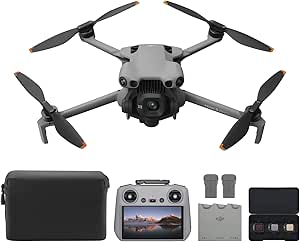
DJI Mini 5 Pro Fly More Combo with DJI RC 2

Amazon Kindle Paperwhite (12th Generation, 2024), 16 GB, 7-inch Display, Black
As an affiliate, we earn on qualifying purchases.
From Chat History to Saved Notes
Many chat systems have historically treated each conversation as separate: the model responds using material available in the current context, while later sessions may not contain earlier details. Anthropic’s post focuses on an agent-level approach in which information is written to files or another store and made available in subsequent sessions. It does not describe a change to the underlying model weights.
The post draws an analogy with human memory, arguing that some organization can happen outside the immediate task, during a later review period. It connects that idea to “sleep-time compute,” a concept previously proposed by researchers at Letta and UC Berkeley. Anthropic’s version describes an architecture rather than evidence that AI systems remember in the same way people do.
The source article also reports operational lessons from its own small fleet of agents, which it says run on Claude. Those experiences include problems with crowded indexes, stale notes, information crossing between contexts and loss of detail during handoffs. The publisher says Anthropic did not review or sponsor that account, so these observations are separate from the company’s research claims.
““knowledge that Claude gains from experience—including interactions with users and tasks it’s been assigned—and that it retains between sessions, saved as context it can read later.””
— Anthropic, in “The components of agent memory”
How Well the Results Generalize
The results do not establish how consistently the memory approaches improve performance. Anthropic says several evaluations were single runs, including the Pokémon comparison, and the findings come from company-run tests published in a research post rather than a peer-reviewed study. The post’s reported gains therefore should not be treated as a general benchmark for AI agents.
It is also unclear how performance changes with different memory stores, retrieval methods, task types or longer deployments. The source material does not provide enough detail to determine how the tests control for other differences between the models, or how often stored errors are successfully identified and corrected. The extent to which these methods are available in products, and what safeguards govern personal or sensitive information in memory, is not specified here.
More Testing Across Agent Tasks
The next useful evidence would be repeatable evaluations across multiple runs, tasks and model versions, with enough methodological detail for outside researchers to compare results. Tests that track both task performance and memory errors over time could show whether compact notes and later review remain useful as an agent’s stored information grows.
Anthropic’s post lays out a framework, but it does not announce a specific product release or a timetable for one. For now, readers and developers should treat the findings as an account of design ideas and early company evaluations, while watching for additional testing and clearer information about deployment, privacy and error correction.
Key Questions
What did Anthropic publish?
Anthropic published a research post on November 6, 2026, titled “The components of agent memory.” It describes ways an AI agent can save, organize, retrieve and revise information between sessions.
How is agent memory different from a context window?
A context window contains information the model can use during a current session. Agent memory is information saved separately so it can be read in a later session.
What does Anthropic mean by “dreaming”?
Anthropic uses “dreaming” for a process in which an agent reviews earlier logs and transcripts between sessions. The goal is to correct mistakes, create or revise notes and prepare information for future use.
Do the reported results prove that agent memory improves performance?
No. The results are from Anthropic’s own evaluations, and the post says several were single runs. They suggest possible benefits in the tested settings but do not prove that the approach will improve performance across agents and tasks.
What risks come with persistent AI memory?
Stored information can be wrong, stale or difficult to retrieve. Anthropic describes reviewing notes against earlier transcripts as one way to correct errors, but the post does not establish how reliably that works in longer-term use.
Source: ThorstenMeyerAI.com