
🔍 Read the full analysis: What Makes The Scroll-Driven Rotor In “TURBINE — WERK 9” Tick? on ThorstenMeyerAI.com

Get tech for your team delivered free — and shop member deals
- Fast, free delivery on millions of items
- Access to Prime Big Deal Days deals on October 6–7
- Prime Video, Amazon Music and more included
TL;DR
TURBINE — WERK 9 is an interactive browser experience built around a rotor made from SVG vector paths that responds to scrolling. The available project description presents it as a way to connect navigation with the mechanics of an industrial setting, but does not provide technical implementation details or performance data.
TURBINE — WERK 9 is presented as a live, interactive browser experience in which a scroll-driven SVG rotor connects movement through a web page with the mechanics of an industrial setting. The project is framed as a field guide rather than a conventional brochure, using scrolling as its central interaction; the published description does not identify the team or spell out the rotor’s underlying code.
The project description says the rotor is built from carefully constructed vector paths and responds to a simple input: the visitor’s scroll. That gives page navigation a visible mechanical counterpart, making the motion of the interface part of the experience rather than a separate decorative effect. The description does not specify whether the rotor follows every scroll increment, moves through discrete states, or uses additional inputs.
Field-guide framing gives the interaction a purpose beyond visual display. Visitors are invited to explore the page as if moving through a place, while the visual system is described as keeping that exploration legible. The project is also positioned for readers interested in AI tools and automation, though the published account does not say that AI or automation powers the interaction itself.
A project feature points readers to a live room and a fuller design teardown. The teaser says that the case study covers how the rotor’s motion was shaped, how the visual system was organized and how a physical-feeling space was translated for a browser. Those details are not included in the available description, so the specific design decisions and technical methods cannot yet be confirmed.
Interactive Field Guide / Design Anatomy
What Makes the Scroll-Driven Rotor in “TURBINE — WERK 9” Tick?
A page becomes part of the machine. TURBINE — WERK 9 is described as a live browser experience where scrolling connects a visitor’s movement through a page with the visible motion of an SVG rotor. The concept is clear; the published description leaves its implementation details open.
01 / The interaction
Scroll becomes part of the machine
The project pairs a familiar browser action with an industrial visual element, giving navigation a mechanical counterpart.
A familiar gesture
The visitor scrolls through the page. The description presents this as the central input, without specifying whether movement is continuous, stepped, or combined with other controls.
A vector rotor
Carefully constructed SVG paths form the rotor. SVG represents shapes as vectors, which can stay crisp across display sizes; the actual path design is not shown in the description.
Navigation with meaning
Page movement is given a visible mechanical companion. The field-guide framing invites exploration while keeping the browser’s ordinary scroll gesture at the center.
02 / The experience model
A field guide made for browsers
The metaphor suggests moving through a place. It does not confirm that the page models a specific facility or operating turbine.
Enter
Meet an industrial visual atmosphere framed as a field guide.
Scroll
Use a familiar browser input to move through the experience.
See motion
The SVG rotor responds, linking page movement to machinery.
Explore
Read the page as a designed environment, not only a brochure.
03 / What is known
Concept confirmed. Mechanics undisclosed.
The project feature establishes the central pairing of scroll input and rotor motion, while leaving important technical and evaluative details unanswered.
What the description says
TURBINE — WERK 9 is presented as a live, interactive browser field guide. Its rotor is made from SVG vector paths and responds to the visitor’s scroll.
A fuller design teardown is said to cover the rotor’s motion, the organization of the visual system, and the translation of a physical-feeling space into a browser.
What remains open
The description does not explain how scroll position becomes rotor movement or whether the behavior changes on touch screens. It gives no animation code, performance results, accessibility review, or user research.
It also does not identify the designer or developer, provide a publication date, or document release history. These are unanswered questions, not confirmed shortcomings.
04 / Quick reference
Key questions
A concise guide to what the project is, what powers the stated interaction, and where more detail is promised.
What is TURBINE — WERK 9?
An interactive browser field guide combining industrial visual design with a scroll-responsive rotor.
What makes the rotor respond?
The description names SVG vector paths and the visitor’s scroll, but does not explain the code or exact motion mapping.
Does AI or automation power it?
The project is positioned for readers interested in AI tools and automation. The description does not say either powers the interaction.
Where can readers learn more?
ThorstenMeyerAI.com points readers to a live room and a fuller teardown of the rotor and visual system.
Scroll Becomes Part of the Machine
The idea matters as an example of how a web interface can make navigation communicate something about its subject. In TURBINE — WERK 9, the scroll is not described as a neutral way to move between blocks of text: it is tied to the visible movement of a rotor. That connection can help visitors understand the page as a designed environment with a mechanical identity, rather than as a static presentation about one.
The approach also highlights a practical design choice: a familiar browser input can support an experience that feels spatial without requiring visitors to learn a new control scheme. The description says the interaction is intended to remain clear, but offers no usability research or visitor feedback. For designers, the project is a prompt to consider how motion can carry meaning; it is not, on the available evidence, proof that scroll-linked effects work better than other forms of navigation.
There is a boundary between what the project description establishes and what it suggests. It establishes the pairing of scroll input and SVG rotor motion as the central concept. Broader claims about the experience’s accessibility, technical efficiency or effect on engagement would require evidence not provided in the published account.
As an affiliate, we earn on qualifying purchases.
A Field Guide Built for Browsers
The project is described as a response to a design question: could a web page behave less like a brochure and more like a machine a visitor can move around? Its answer is to frame the page as an interactive field guide, combining an industrial visual atmosphere with an input already familiar to most browser users. The metaphor is useful for understanding the concept, but the description does not establish that the page models a particular physical facility or operating turbine.
At the center of the described visual system is an SVG rotor. SVG, or Scalable Vector Graphics, represents shapes as paths and other vector elements rather than as a single fixed-size image. That format can support crisp graphics at different display sizes and lets a design treat individual shapes as part of a composition. The description confirms that vector paths form the rotor, but it does not explain how they are animated or how the page’s scroll position is translated into motion.
The feature is presented by ThorstenMeyerAI.com, which invites readers to view the live room and a fuller design teardown. No named designer, developer or client is identified in the project description. It also gives no publication date, release history or comparison with earlier versions, limiting what can be said about the project’s development over time.
“What if a web page behaved less like a brochure and more like a machine you could walk around?”
— ThorstenMeyerAI.com project description
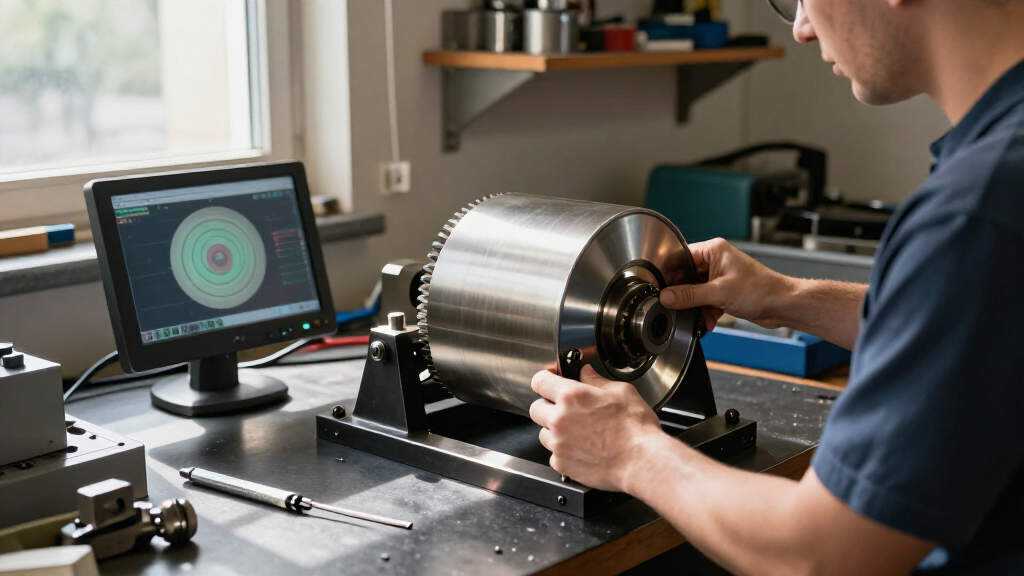
scroll-driven interactive SVG rotor
As an affiliate, we earn on qualifying purchases.
As an affiliate, we earn on qualifying purchases.
How the Rotor Actually Moves
The available description does not disclose the animation logic, the relationship between scroll distance and rotor movement, or whether the interaction behaves differently on touch screens. It also does not say how the page accounts for reduced-motion preferences, keyboard navigation, or visitors who cannot use a scroll wheel or touch gesture. These are open questions, not confirmed shortcomings.
No performance results, accessibility review, user testing, or engagement figures are provided. The project’s claims about clarity and responsiveness are presented as design aims; independent evidence of how the experience performs is not included. It is also unclear who designed or built the page, when it launched, and whether the live room has changed since the description was written.
As an affiliate, we earn on qualifying purchases.
The Teardown Holds the Details
The next step offered to readers is to visit the live room and consult the promised design teardown. That case study is described as covering the rotor’s motion, the organization of the visual system and the translation of a physical-feeling space into a browser. Until those details are available, the project can be described by its stated concept and components, but not by a verified account of how its interaction was engineered.
No further release, update or public demonstration is announced in the project description. Any clearer account of technical choices, accessibility support or visitor response depends on information from the full teardown or additional project documentation.
Source: ThorstenMeyerAI.com
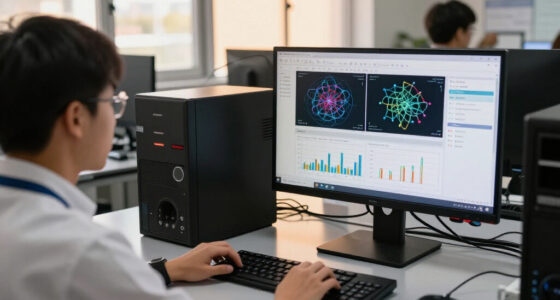
web page scroll animation software
As an affiliate, we earn on qualifying purchases.
As an affiliate, we earn on qualifying purchases.
Key Questions
What is TURBINE — WERK 9?
It is described as an interactive browser field guide that uses industrial visual design and a scroll-responsive rotor to shape how visitors explore the page.
What makes the rotor respond to scrolling?
The project description says the rotor is made from SVG vector paths and responds to the visitor’s scroll. It does not explain the code or the exact relationship between scrolling and rotor movement.
Does the project use AI or automation?
The project is presented as relevant to people interested in AI tools and automation, but the description does not say that AI or automation powers the rotor or the page interaction.
Where can readers learn more?
ThorstenMeyerAI.com points readers to a live room and a fuller design teardown. The teardown is described as covering the rotor’s motion and the page’s visual system.
Source: ThorstenMeyerAI.com
Halloween Picks
halloween
As an affiliate, we earn on qualifying purchases.