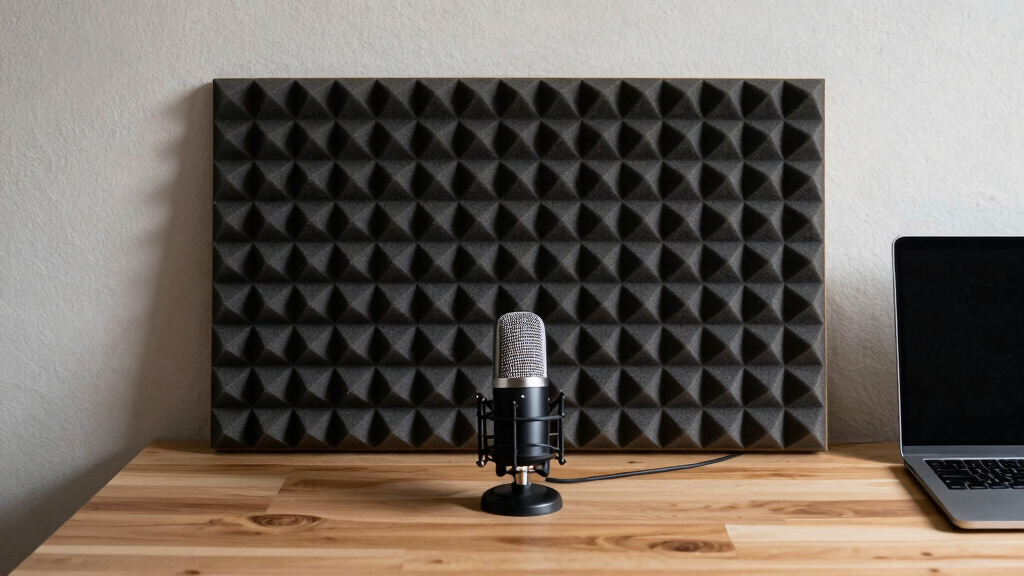

📊 Full opportunity report: Acoustic Dampening, Placement, and the “Rig in the Closet” Setup on ThorstenMeyerAI.com — validation score, market gap, and execution plan.

Get business pricing on tech for your team
- Business-only prices and quantity discounts
- Tax-exempt purchasing
- Multiple users, one account, clear invoices
TL;DR
This article explains proven methods to minimize noise from AI workstations by strategic placement and proper ventilation. Moving the rig out of the workspace and using dedicated enclosures are key. The ‘rig in the closet’ approach is effective but requires careful heat management.
Moving high-power AI workstations out of the immediate workspace is the most effective way to reduce noise, according to experts. Placing the rig in another room or a dedicated enclosure can eliminate sound transmission entirely, making acoustic treatment unnecessary. The ‘rig in the closet’ setup is a popular solution but requires proper ventilation to prevent overheating.
Experts emphasize that the most effective noise reduction strategy is to increase distance between the workstation and the user. Moving the rig into a separate room, such as a closet, basement, or spare office, can make noise virtually disappear from the main workspace. This approach leverages network-based access, as most AI inference tasks are performed remotely via SSH or APIs, so the physical proximity is less critical.
However, placing a high-performance machine in an enclosed space introduces heat management challenges. Sealed closets or cabinets can trap heat, causing temperatures to rise and potentially damaging hardware or causing thermal throttling. To mitigate this, proper ventilation is essential, including passive vents or active exhaust fans. Purpose-built soundproof cabinets with integrated cooling systems are designed to handle both noise and heat dissipation effectively.
Additionally, other measures such as mechanical decoupling—using rubber feet or grommets—are recommended to reduce structure-borne noise. Acoustic foam and barriers are less effective alone and should be used in conjunction with placement and ventilation strategies.
Acoustic dampening
& the rig in the closet.
The most powerful noise fix isn’t a material — it’s a floor plan. A rig you can’t hear because it’s in another room beats any amount of foam. Tap the approaches in Part 1 to see what actually works.
(another room)
(levers 1–4)
(door / barrier)
(acoustic foam)
Contain the noise, not the heat
Why Proper Placement and Ventilation Matter for AI Workstations
Implementing effective placement and cooling strategies is crucial for maintaining hardware longevity and ensuring a quiet workspace. The 'rig in the closet' approach offers a significant reduction in noise pollution, improving comfort and productivity. Proper heat management is essential to prevent hardware failure and maintain consistent performance, especially as AI workloads grow more demanding.
This knowledge empowers users to design quieter, more efficient work environments, particularly in shared or limited-space settings where noise can be disruptive.
soundproof computer enclosure for high-performance workstation
As an affiliate, we earn on qualifying purchases.
As an affiliate, we earn on qualifying purchases.
Background on Noise Reduction Techniques for High-Power PCs
Traditional noise mitigation for high-performance PCs often relies on acoustic dampening, placement, and the 'rig in the closet' setup. However, these methods have limited effectiveness compared to strategic placement and ventilation solutions. The hierarchy of noise control emphasizes distance and isolation as most effective, followed by source reduction, barriers, and acoustic treatment.
Recent discussions in AI hardware communities highlight that many users overlook the benefits of physically relocating their rigs. The rise of network-based AI inference makes it feasible to operate powerful hardware remotely, reducing the need for noise-sensitive environments.
The 'rig in the closet' setup has gained popularity as a practical solution, but it requires careful planning to avoid thermal issues, which is a common oversight.
"Moving the rig into another room or a dedicated enclosure is the most effective way to eliminate noise from your workspace."
— Thorsten Meyer, AI hardware expert
ACOUSTIC DAMPENING panels for PC noise reduction
As an affiliate, we earn on qualifying purchases.
As an affiliate, we earn on qualifying purchases.
Remaining Challenges in Noise and Heat Management
While placement and ventilation are proven strategies, the optimal design of soundproof cabinets and the best practices for active cooling in enclosed spaces are still evolving. The effectiveness of different cooling solutions varies depending on hardware configurations and room conditions. Additionally, the long-term reliability of sealed enclosures with advanced cooling remains under study, and cost considerations may limit widespread adoption.
As an affiliate, we earn on qualifying purchases.
Next Steps for Implementing Noise-Reducing AI Workstation Setups
Users should evaluate their workspace for potential room-based placement solutions and invest in proper ventilation systems when considering a 'rig in the closet' setup. Manufacturers of soundproof enclosures are likely to refine designs that better balance noise suppression and heat dissipation. Ongoing research will clarify best practices for thermal management in sealed environments, making these setups more accessible and reliable.
In the near term, expect to see more detailed guides and commercial products tailored for quiet, high-performance AI hardware deployment in shared or limited spaces.
high airflow server cabinet with cooling
As an affiliate, we earn on qualifying purchases.
As an affiliate, we earn on qualifying purchases.
Key Questions
Is placing my AI rig in a closet safe?
It can be safe if proper ventilation and cooling are implemented. Ensuring airflow and temperature regulation is critical to prevent overheating and hardware damage.
What cooling methods are recommended for enclosed setups?
Active exhaust fans, passive vents, and purpose-built soundproof cabinets with integrated cooling are effective options. Using radiators or liquid cooling can also help manage heat more efficiently.
How much noise reduction can I expect from a closet setup?
Properly designed and ventilated enclosures can reduce noise levels by up to 36 dB or more, significantly improving workspace comfort.
Do I need special equipment for a 'rig in the closet' setup?
While not mandatory, using soundproof enclosures, rubber feet for vibration isolation, and quiet exhaust fans can optimize noise and heat management.
Will this setup affect my hardware's performance?
It can if heat isn't properly managed. Ensuring adequate ventilation prevents throttling and hardware failure, maintaining consistent performance.
Source: ThorstenMeyerAI.com
Halloween Picks
halloween
As an affiliate, we earn on qualifying purchases.