
TL;DR
Thorsten Meyer AI has framed the “AGI adjacency problem” as the infrastructure gap between smarter AI models and the physical systems needed to run them at scale. The report argues that chips, power, cooling, advanced packaging, networks, data centers and policy access now shape which AI systems can become widely used products.
Thorsten Meyer AI has identified the “AGI adjacency problem” as a growing infrastructure constraint on advanced AI deployment, arguing that the ability to run models at scale now depends on chips, electricity, cooling, packaging, networks, data centers and political access, not model capability alone.
The analysis says model intelligence becomes a business advantage only when physical systems can support it. In the source’s framing, a frontier model limited by scarce compute may remain a demonstration, while a slightly weaker model with cheaper and more available capacity can become the service users actually encounter.
The source divides the problem into three layers: compute, industrial capacity and political access. The compute layer includes GPU supply, custom accelerators, high-bandwidth memory and cluster networking. The industrial layer includes high-density electricity, thermal design, water planning and grid upgrades. The political layer includes export controls, sovereign cloud rules and supply-chain exposure.
Thorsten Meyer AI points to several pressure points: a cited $602 billion hyperscaler infrastructure spending signal for 2026, projected global data center electricity use of 945 TWh by 2030, GPU allocation limits, slow grid interconnects, advanced packaging capacity such as CoWoS, cooling constraints and rules that can redirect deployment plans. The source does not identify a single company failure or policy decision as the trigger; it presents the development as a structural shift in the AI market.
AI Advantage Moves To Infrastructure
The analysis matters because it reframes the AI race as a capacity problem as well as a software problem. If the source’s thesis holds, the winners in advanced AI may be companies and governments that can secure power, chips, sites, cooling and regulatory clearance, even if their models are not always the strongest on public benchmarks.
For readers, the issue affects which AI services become available, how expensive they are to run and where they can be deployed. A company may train a capable model but still face delays if GPU allocations arrive late, if cloud costs make inference too expensive, if a data center site lacks power and cooling, or if country-specific rules block rollout.
The analysis also ties AI growth to public infrastructure. Substations, grid interconnects, water permits and energy contracts often move slower than software roadmaps. That mismatch could affect local communities, utilities, cloud pricing and national technology policy.

AI Systems Performance Engineering: Optimizing Model Training and Inference Workloads with GPUs, CUDA, and PyTorch
As an affiliate, we earn on qualifying purchases.
As an affiliate, we earn on qualifying purchases.
From Benchmarks To Buildouts
The “AGI adjacency problem” is not presented as a claim that artificial general intelligence has arrived. It is a label for the systems surrounding advanced AI: semiconductors, memory, packaging, data centers, power supply, cooling, networking and access rules. The source argues those adjacent systems now determine whether model capability can become reliable service.
Thorsten Meyer AI describes the AI hardware chain as a sequence that starts with processor design by companies such as NVIDIA, AMD and custom chip teams, moves through advanced fabrication, and then depends on packaging, high-bandwidth memory, construction, power contracts, cooling and grid connections. The analysis says a break in any one link can slow the full plan.
The source contrasts software timelines with infrastructure timelines. Model updates can arrive in weeks, while substations, grid connections, chip allocations and water permits can take months or years. That timing gap is central to the argument.
“Model intelligence becomes advantage only when physical systems can carry it.”
— Thorsten Meyer AI

Data Center Cooling Engineering: Data Center Cooling Engineering
As an affiliate, we earn on qualifying purchases.
As an affiliate, we earn on qualifying purchases.
Capacity Claims Need Confirmation
Several details remain unclear from the source material. The analysis cites a $602 billion hyperscaler infrastructure spending signal for 2026 and a 945 TWh projection for global data center electricity use by 2030, but the provided material does not identify the underlying datasets, methodology or whether those figures refer to announced, planned or forecast spending and demand.
It is also not yet clear how evenly the constraints will affect AI companies. Large cloud providers may be better positioned to secure chips, land and power, while smaller companies may rely on partners or narrower deployments. The source’s argument is structural, not a confirmed ranking of firms by readiness.
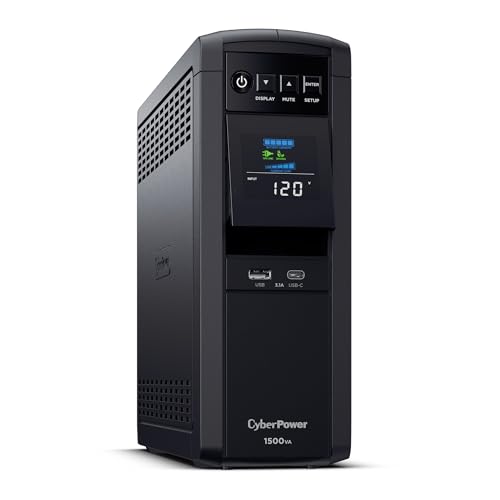
CyberPower CP1500PFCLCD PFC Sinewave UPS Battery Backup and Surge Protector, 1500VA/1000W, 12 Outlets, AVR, Mini Tower, UL Certified
- Power Capacity: 1500VA/1000W PFC sine wave UPS
- Number of Outlets: 12 outlets with surge protection
- Outlet Types: Six battery backup, six surge protected
As an affiliate, we earn on qualifying purchases.
As an affiliate, we earn on qualifying purchases.
Watch Power, Packaging And Rules
The next indicators are likely to come from cloud capital spending plans, GPU supply updates, advanced packaging capacity, data center power agreements, grid interconnection queues and export-control changes. Those signals will show whether AI deployment capacity is catching up with model ambition or becoming a larger bottleneck.
Readers should also watch whether AI companies report lower inference costs, faster regional rollouts, stronger sovereign cloud partnerships or delays tied to power and hardware access. Those details will test whether the AGI adjacency problem is becoming a broad market constraint or remains a useful framework for tracking infrastructure risk.

Semiconductor Advanced Packaging
As an affiliate, we earn on qualifying purchases.
As an affiliate, we earn on qualifying purchases.
Key Questions
What is the AGI adjacency problem?
It is the gap between building more capable AI models and having the chips, power, cooling, packaging, networks, data centers and policy access needed to run them reliably at scale.
Does this mean AGI has been achieved?
No. The source material does not claim AGI has arrived. It uses the term to describe infrastructure around advanced AI systems.
Why do GPUs matter in this analysis?
GPU supply, custom accelerators, high-bandwidth memory and networking determine how much training and inference capacity a company can use. Limited access can slow deployment even when models are capable.
Why are power and cooling part of an AI story?
Dense AI data centers require large, stable electricity supplies and thermal systems. Grid upgrades, water planning and permits can take longer than software development cycles.
What should readers watch next?
Watch cloud spending, chip allocation, advanced packaging capacity, energy deals, data center permits and export rules. Those areas will show whether infrastructure is keeping pace with AI demand.
Source: Thorsten Meyer AI