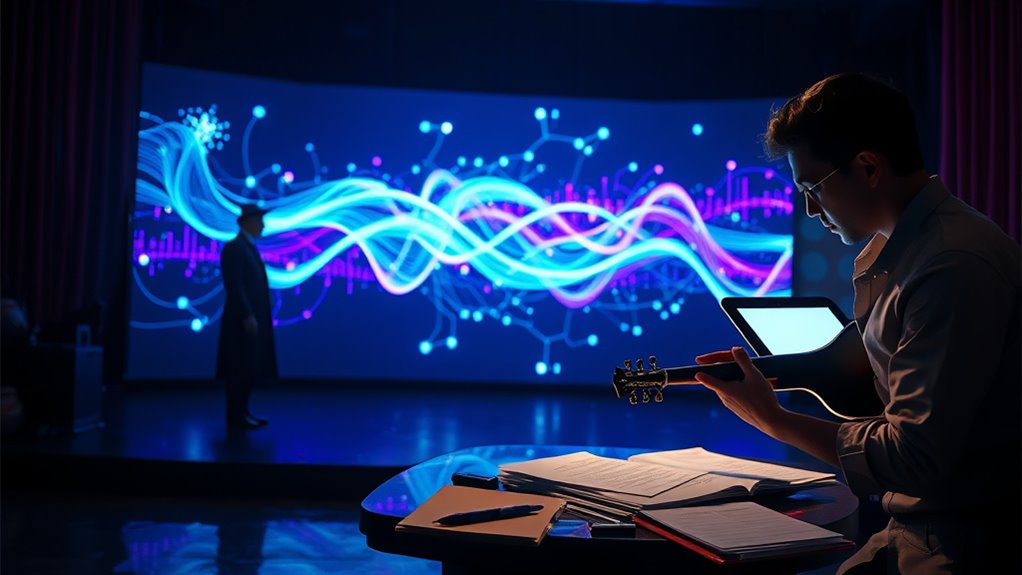

AI is revolutionizing performance arts and media by enabling actors, musicians, and writers to create and perform in innovative ways. Algorithms assist with auditions, compose music, generate scripts, and even produce realistic deepfake performances. While these tools expand artistic possibilities, they also raise ethical questions about authenticity and consent. If you want to explore how this blend of talent and technology shapes the future, there’s much more to discover.

Get business pricing on tech for your team
- Business-only prices and quantity discounts
- Tax-exempt purchasing
- Multiple users, one account, clear invoices
Key Takeaways
- AI tools analyze and assist actors, musicians, and writers, enhancing creativity while raising concerns about authenticity and originality.
- Deepfake technology enables realistic performances but poses ethical issues regarding consent and identity manipulation.
- Virtual auditions and AI-generated content democratize access but challenge traditional notions of performance and emotional depth.
- AI-driven platforms support innovation in storytelling, composition, and performance, expanding artistic possibilities.
- The balance between human creativity and algorithmic assistance shapes the evolving landscape of performance arts and media.

Artificial intelligence is transforming performance arts and media by enabling creators to push boundaries and explore new forms of expression. One notable shift is how virtual auditions are changing the way actors and performers break into the industry. Instead of traveling to audition locations, you can now submit recordings online, making the process more accessible and efficient. AI tools help casting directors analyze these submissions quickly, identifying nuances in acting and suitability for roles. This technology streamlines talent discovery and gives performers a broader platform to showcase their skills without geographical limitations. However, it also raises questions about authenticity and the future of in-person auditions, as AI becomes more integrated into casting decisions. Personalized wishes or messages can also be crafted to encourage performers during auditions, boosting their confidence and morale. Deepfake performances exemplify the dramatic potential and ethical dilemmas of AI in media. You might have seen videos where the faces of famous actors are superimposed onto other bodies, creating seemingly realistic performances. These deepfake performances open exciting opportunities for filmmakers and content creators to resurrect legendary actors or explore alternate storylines without the physical presence of the performers. It allows for creative experimentation, giving you the ability to see performances that would have been impossible or prohibitively expensive otherwise. But at the same time, deepfakes pose significant concerns about consent, misinformation, and the manipulation of identity. As an audience, you must navigate the blurred lines between genuine performances and AI-generated content, questioning what authenticity truly means in this new landscape. For musicians and writers, AI offers tools that enhance creativity rather than replace human talent. You can leverage algorithms to compose music, generate lyrics, or even assist in editing manuscripts. These AI-powered platforms analyze trends, suggest improvements, and inspire new ideas, helping you push creative boundaries. Virtual performances have also become more prevalent, where AI-driven avatars or digital environments allow artists to perform in immersive settings or reach audiences worldwide without physical constraints. This democratizes access to performance spaces, giving you more opportunities to experiment and connect with your audience. Still, these innovations challenge traditional notions of artistry, raising questions about originality and emotional depth when machines play a role in the creative process. As AI continues to evolve within the performance arts and media, your role as a creator, performer, or viewer shifts. You’re invited to embrace new tools that expand possibilities but also remain vigilant about ethical considerations. Whether it’s virtual auditions, deepfake performances, or AI-assisted creativity, the future of performance arts is a dynamic landscape where human ingenuity and technological innovation intersect. Additionally, understanding the best wishes you can send to support colleagues or loved ones in these evolving artistic fields can foster stronger connections and morale. Your engagement with these developments will shape how art evolves in this digital age, balancing innovation with integrity.
As an affiliate, we earn on qualifying purchases.
Frequently Asked Questions
How Does AI Impact the Emotional Authenticity of Performances?
AI can both enhance and challenge the emotional authenticity of performances. It helps actors, musicians, and writers achieve greater emotional depth by analyzing and mimicking genuine human expressions. However, relying too much on algorithms might threaten authenticity preservation, risking performances that feel less genuine. To maintain emotional authenticity, you must balance AI’s benefits with your innate human intuition, ensuring performances remain heartfelt and true to real human experience.
Can AI Truly Replicate Human Creativity in Arts and Media?
You might be surprised to learn that 78% of creative professionals believe AI can enhance, but not replace, human creativity. While machine learning and creative algorithms can generate impressive works, they lack genuine emotional depth and intuition. AI can assist in brainstorming or refining ideas, but it can’t fully replicate the nuanced, authentic human experience that fuels true artistic innovation. So, AI complements rather than replaces human creativity in arts and media.
What Ethical Issues Arise From Ai-Generated Art and Performances?
You should consider the ethical issues surrounding AI-generated art and performances, especially copyright concerns and artistic ownership. When AI creates, questions arise about who owns the work—yourself, the programmer, or the AI? You might worry about valid attribution and whether AI diminishes the value of human creativity. Ensuring fair recognition and protecting original artists’ rights become vital as AI continues to shape the arts landscape.
How Are Performers Adapting to Ai’s Influence in Their Industries?
You’re embracing change by exploring virtual auditions and AI training programs. While algorithms reshape casting and skill development, you adapt by honing your unique talents and staying flexible. Instead of resisting AI’s influence, you leverage it to expand your opportunities, showcase your artistry, and stay competitive. This balance allows you to harness technology’s power while maintaining your authentic voice in a rapidly evolving industry.
Will AI Replace Human Artists or Complement Their Work?
AI will mainly complement your work through machine learning and artistic collaboration rather than replace you. It can help generate ideas, refine techniques, and inspire new creations, but your unique human touch remains irreplaceable. You’ll find AI acting as a tool to enhance your creativity, not overshadow it. Embrace these innovations to expand your artistic possibilities and deepen your connection with your audience.
deepfake performance creation tools
As an affiliate, we earn on qualifying purchases.
As an affiliate, we earn on qualifying purchases.
Conclusion
As you see, AI is transforming the world of performance arts and media, blurring the line between human creativity and algorithmic precision. While machines can mimic and even enhance artistic expression, can they truly capture the soul of a performer or the depth of a writer’s heart? Ultimately, the question isn’t just about technology—it’s about what makes art meaningful. Will we embrace these innovations or let them diminish the human spirit behind every creation?
As an affiliate, we earn on qualifying purchases.
As an affiliate, we earn on qualifying purchases.
Fall Picks
fall essentials
As an affiliate, we earn on qualifying purchases.