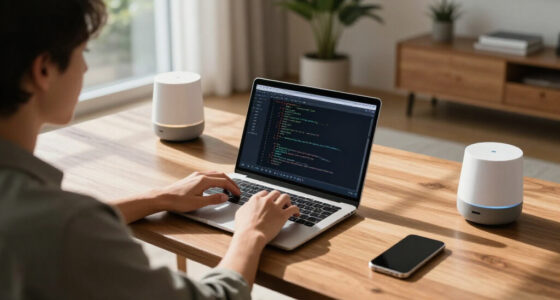

TL;DR

Get tech for your team delivered free — and shop member deals
- Fast, free delivery on millions of items
- Access to Prime Big Deal Days deals on October 6–7
- Prime Video, Amazon Music and more included
Industry analysts assert that AI should be understood as a technology embedded within products, not as a standalone product itself. This distinction impacts how companies develop and market AI-driven innovations.
Industry experts confirm that artificial intelligence (AI) is a technology that underpins various products, rather than being a single, standalone product itself. This clarification is important as companies and consumers navigate the AI transformation, emphasizing experiences over specific devices.
Recent commentary from industry analysts, including Steven Levy and Apple executives, highlights that AI is best understood as an underlying technology. Apple’s approach, as explained by their leadership, is to focus on delivering experiences and features rather than shipping AI as a discrete product. For example, Apple’s executives have stated that AI is an ‘immense inflection point’ but should be integrated seamlessly into existing and future products without making it the focal point of marketing or development. This perspective contrasts with hype suggesting AI will lead to entirely new devices or ecosystems that replace current ones, such as phones or cars. Instead, AI is seen as a pervasive layer embedded within existing hardware, much like wireless networking, which is present across all Apple devices.
Why It Matters
Understanding AI as a technology rather than a product influences how companies develop their strategies, prioritize features, and communicate with consumers. It underscores that AI’s impact will be felt through enhanced experiences across multiple devices and services, rather than through the launch of a single ‘killer’ AI device. For consumers, this means AI will likely be integrated into familiar products, shaping future interactions without necessarily introducing new gadgets. This distinction also affects investment, innovation, and regulatory considerations, as the focus shifts from standalone products to technological infrastructure.
AI integrated smart home devices
As an affiliate, we earn on qualifying purchases.
As an affiliate, we earn on qualifying purchases.
Background
The debate about AI’s role in technology has intensified, with some industry figures and media suggesting AI will revolutionize entire ecosystems, such as smartphones and transportation. Historically, Apple’s product philosophy has centered on delivering experiences rather than technology for its own sake, exemplified by products like the iPod and iPhone, which focused on music and communication experiences, respectively. Recent statements from Apple executives reinforce this approach, emphasizing that AI should serve as an experience enhancer embedded within existing products. This aligns with Apple’s history of integrating new technologies seamlessly into their ecosystem without making them the primary marketing focus.
“We never think about shipping a technology. We want to ship amazing products, features, and experiences, and we don’t want our customers to think about what technology makes it possible.”
— Apple’s leadership
“AI is an immense kind of inflection point, but it’s one of many leaps that Apple has navigated, and it should be integrated into products rather than marketed as a separate entity.”
— Steven Levy
AI-powered virtual assistant devices
As an affiliate, we earn on qualifying purchases.
As an affiliate, we earn on qualifying purchases.
What Remains Unclear
It remains unclear how exactly future AI integrations will manifest across different devices and services, and whether new hardware specifically dedicated to AI will emerge. The pace of technological development and consumer acceptance also introduce uncertainty about how pervasive AI will become in everyday life.
As an affiliate, we earn on qualifying purchases.
What’s Next
Industry experts anticipate continued integration of AI into existing products, with companies focusing on enhancing user experiences. Future product announcements and updates will clarify how AI is embedded and marketed, but the core message remains that AI is a technology layer rather than a standalone device.
AI experience enhancement gadgets
As an affiliate, we earn on qualifying purchases.
As an affiliate, we earn on qualifying purchases.
Key Questions
Will AI ever be a standalone product?
Current industry perspectives suggest that AI will primarily remain a technology embedded within products, rather than a standalone device. However, new hardware dedicated to AI could still emerge in the future.
How will AI change existing devices like smartphones?
AI is expected to enhance features and experiences, making devices smarter and more intuitive, rather than replacing the core hardware like phones. It will serve as an underlying layer that improves user interactions.
Why is it important to distinguish AI as a technology rather than a product?
This distinction influences development, marketing, and regulatory strategies, emphasizing integrated experiences over standalone gadgets, and shaping consumer expectations about AI’s role in daily life.
Halloween Picks
halloween
As an affiliate, we earn on qualifying purchases.