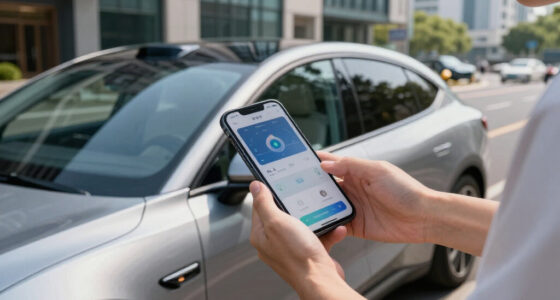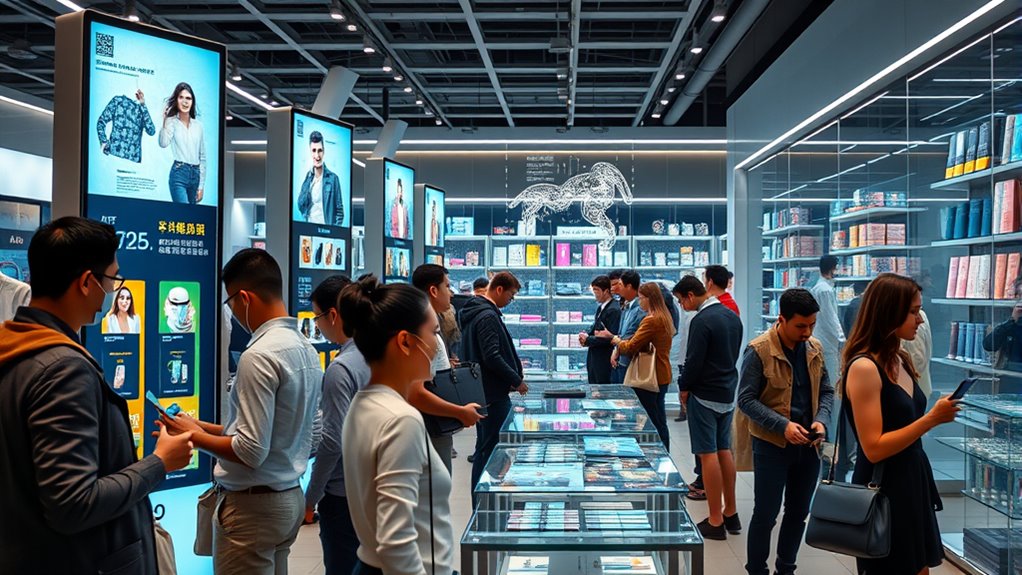

AI is changing retail rapidly, streamlining operations and enhancing customer experiences through personalization and automation. Nearly all retail leaders are investing heavily in AI, seeing benefits like faster service, better supply chain management, and increased sales. However, human connection still matters—shoppers want empathy, creativity, and complex interactions that AI can’t replicate. By understanding how AI and humans work together, you can stay ahead in this evolving landscape—there’s more to explore on balancing tech with human touch.
Key Takeaways
- AI enhances operational efficiency and personalization but cannot fully replace human empathy and complex emotional interactions.
- Retailers still rely on human staff for nuanced in-store service and emotional engagement with customers.
- AI-driven insights assist decision-making, yet human judgment remains essential for interpreting nuanced data.
- The integration of AI and human elements creates a balanced retail experience that meets diverse customer needs.
- Human creativity and empathy are vital for building brand loyalty and delivering personalized experiences beyond AI capabilities.
Artificial Intelligence is revolutionizing the retail industry, transforming how businesses engage with customers, manage operations, and boost sales. You’ll find that 85% of retail executives have already developed AI capabilities, with 60% actively expanding them. Nearly all global retail leaders are either adopting or evaluating AI solutions, with only 1% not involved. This rapid adoption reflects a clear trend: 53% of retailers plan to invest more in AI in the coming years, and 89% have AI projects underway or scheduled within the next two years. As a result, retail companies now allocate about 20% of their tech budgets to AI, up from 15% in 2024.
AI’s influence on customer experience is profound. Hyper-personalization, driven by recommendation engines, has become an expectation. Consumers trust AI suggestions nearly as much as influencer endorsements—27% prefer AI recommendations, highlighting a shift in perception. Shoppers primarily value AI for practical functions like price comparison, shipping updates, availability alerts, and wishlist price drops. Speed is critical for 69% of consumers, and AI helps meet this demand by streamlining the shopping journey.
Operationally, AI enables smarter decision-making through advanced data capture and analytics. Retailers use AI to optimize supply chains and forecast inventory needs, reducing overstocking by an average of 18%. AI systems are integrated into both back-end processes and customer interactions, making supply chains more resilient and efficient. These improvements are essential as retailers seek to adapt to changing market demands and ensure continuity. AI adoption has accelerated due to fierce e-commerce competition and supply chain needs, emphasizing its strategic importance across the industry.
When it comes to sales and conversions, AI proves its value. During Black Friday 2024, retailers using AI-powered chatbots saw a 15% increase in conversions. AI tools are no longer experimental—they deliver tangible benefits like demand forecasting, which helps boost sales and enhance customer satisfaction. Retailers investing in AI are better positioned to compete in e-commerce, balancing automation with personalized service.
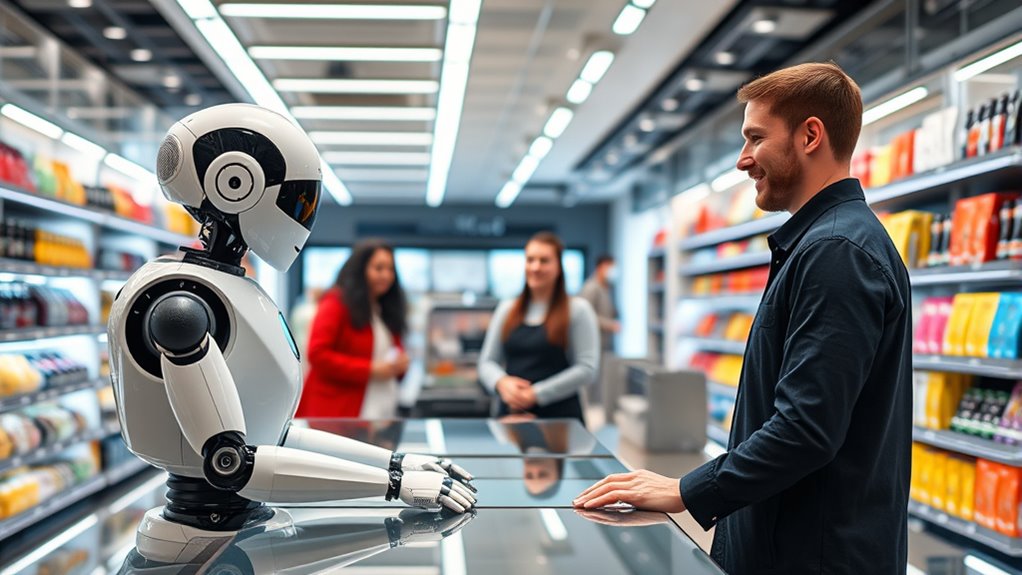
However, AI has its limits. While advanced analytics can predict buying behavior, they often miss nuanced human needs like in-store service or emotional engagement. Despite technological advances, shoppers still crave human connection, empathy, and creativity, which AI cannot replicate. The evolving retail landscape demands a blend of AI’s efficiency and human insight. Humans remain essential for complex decisions, emotional interactions, and nuanced judgment, ensuring retail remains a space where technology supports, rather than replaces, human touch.
AI-powered retail recommendation engine
As an affiliate, we earn on qualifying purchases.
As an affiliate, we earn on qualifying purchases.
Frequently Asked Questions
How Does AI Impact Retail Job Security?
AI impacts your retail job security by automating routine tasks like checkout and inventory management, which can lead to job cuts. However, it also creates new opportunities for roles focused on managing AI systems, analyzing customer data, and providing personalized service. To stay secure, you need to upskill, embrace technology, and focus on human-centric skills like customer relationships and complex decision-making that AI can’t replace.
What Ethical Concerns Arise From AI in Retail?
Imagine losing trust in the very brands you love—that’s the risk AI in retail poses. You face ethical concerns like invasive data collection, algorithmic bias, and lack of transparency, which can erode confidence and fuel suspicion. You deserve honest communication and fair treatment. Retailers must prioritize responsible AI use, ensuring privacy, fairness, and ethical marketing, so you feel valued and protected in every shopping experience.
How Can Small Retailers Implement AI Effectively?
You can implement AI effectively by starting small with marketing and sales analytics, which give you quick wins. Use AI-powered content creation and SEO to boost your online presence. Gradually add chatbots and virtual assistants to improve customer service and cut costs. Partner with AI platforms that offer tailored insights to manage orders and data efficiently. Keep learning about AI to overcome barriers and maximize its benefits for your retail business.
What Are the Limitations of AI in Customer Service?
AI struggles with emotional intelligence, making it hard to handle sensitive situations where empathy matters. You’ll find it less personal and sometimes inaccurate, especially with complex issues. Customers still prefer talking to humans, trusting them more for understanding and support. Integration can be costly and challenging, and AI’s rigidity limits problem-solving. In the end, human oversight is vital to build trust, offer genuine connection, and ensure quality customer service.
How Do Retailers Balance AI Use With Privacy Concerns?
You can balance AI use with privacy concerns by being transparent about data collection and usage. Clearly explain your AI-driven processes in privacy policies, obtain explicit consumer consent, and give customers control over their data. Regularly update privacy statements and guarantee compliance with regulations like GDPR. Prioritizing ethical AI practices builds trust, so focus on enhancing user experience while respecting privacy boundaries and minimizing intrusive data collection for a balanced approach.

The No-BS Guide to AI for Small Business: Put AI Agents to Work in Your Shop, Studio, or Service Firm — Automate Bookings, Invoicing, Customer Service, … Required (The No-BS AI Playbooks Book 17)
As an affiliate, we earn on qualifying purchases.
As an affiliate, we earn on qualifying purchases.
Conclusion
While AI revolutionizes retail, don’t forget your unique human touch. Studies show 85% of customers still prefer interacting with real people for personalized service. Your empathy and intuition can’t be replaced by algorithms. As technology streamlines operations, your role becomes even more essential in building genuine connections. Embrace AI as a tool to enhance your skills, and you’ll stay ahead in this evolving landscape. After all, it’s the human element that truly creates memorable shopping experiences.

in My Engaged Era Fiance Engagement Bachelorette Party T-Shirt
- Perfect for Bachelorette Parties: In My Engaged Era design for women
- Versatile for Bridal Events: Suitable for brides, bridesmaids, girls
- Comfortable Fit: Lightweight, classic fit, durable construction
As an affiliate, we earn on qualifying purchases.
As an affiliate, we earn on qualifying purchases.

Supply Chain Management For Dummies
As an affiliate, we earn on qualifying purchases.
As an affiliate, we earn on qualifying purchases.