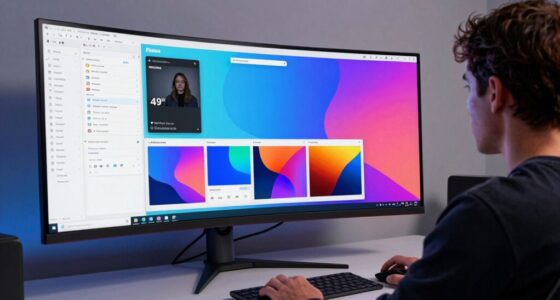

In today’s workplace, algorithms increasingly act as bosses, managing tasks like scheduling, monitoring performance, and making decisions. They promise efficiency and consistency, but can also reduce your control, create stress, and impact fairness. Relying on bots raises concerns about job security, bias, and transparency. If you want to understand how this shift affects your organization and what you can do about it, stay with us to explore more.

Get business pricing on tech for your team
- Business-only prices and quantity discounts
- Tax-exempt purchasing
- Multiple users, one account, clear invoices
Key Takeaways
- Algorithms automate managerial tasks like scheduling, monitoring, and performance evaluation, influencing workplace dynamics.
- AI-driven management can reduce employee autonomy and trust due to opaque decision-making and surveillance.
- Increased reliance on algorithms raises fairness, privacy, and bias concerns, impacting organizational culture.
- Leaders need to develop AI literacy and transparency strategies to effectively manage human-AI collaboration.
- Ethical oversight and continuous employee training are essential to balance AI benefits with workforce well-being.
AI workplace management software
As an affiliate, we earn on qualifying purchases.
As an affiliate, we earn on qualifying purchases.
The Rise of Algorithmic Management in the Workplace

The rise of algorithmic management in the workplace reflects a swift shift toward automating managerial tasks through software and AI. In many countries, over 6,000 firms now use these tools to organize, assign, monitor, supervise, and evaluate work. These systems are becoming common across industries, driven by the promise of increased efficiency, consistency, and objectivity. Managers report better decision quality and higher job satisfaction, but concerns about accountability and transparency persist. As these tools expand, workers face increased surveillance, reduced direct interaction with supervisors, and potential threats to their privacy and well-being. This trend underscores the importance of establishing ethical guidelines to ensure fair and responsible use of these technologies. Additionally, the use of transparent algorithms can help build trust between employees and management, fostering a healthier work environment. The integration of algorithmic decision-making into daily operations can also influence organizational culture and employee morale. As organizations adopt these systems, understanding workplace dynamics becomes crucial for managing change effectively. Incorporating skincare patches in the context of employee wellbeing strategies is an emerging area worth exploring, as targeted health interventions can support overall productivity. Policymakers and industry leaders are paying closer attention, recognizing the need for governance frameworks to address issues like fairness and trust, while technology continues to evolve rapidly. Widespread adoption of these systems indicates their significant role in modern organizational structures.
employee performance monitoring tools
As an affiliate, we earn on qualifying purchases.
As an affiliate, we earn on qualifying purchases.
How AI Enhances Decision-Making and Efficiency

AI transforms decision-making and boosts efficiency by providing data-driven insights that help you make smarter choices quickly. It analyzes vast amounts of data to reveal patterns and trends you might miss, allowing for more informed decisions. Predictive analytics forecast possible outcomes, giving you a strategic advantage. Automated reporting saves time by generating reports faster, so you can focus on implementation. AI’s risk assessment tools identify potential issues with greater accuracy, reducing errors. Pattern recognition uncovers hidden connections in data, leading to better insights. By automating routine tasks and optimizing workflows, AI frees you and your team to concentrate on complex, value-added activities. Additionally, understanding store hours and other operational data can further improve planning and efficiency. For example, some AI systems adapt to relationship patterns within team dynamics to enhance collaboration. Recognizing emotional support needs in team members can foster a more resilient and productive work environment. Incorporating content clusters helps organize information effectively, making it easier to target specific audience segments. Furthermore, integrating Personality Test insights can help tailor team management strategies to improve overall performance. Overall, AI streamlines operations, accelerates decision-making, and enhances organizational efficiency, making your work more effective and responsive to changing conditions. Specialized AI tools are increasingly being integrated into business processes to further enhance these capabilities.
As an affiliate, we earn on qualifying purchases.
Challenges and Concerns of Relying on Bots
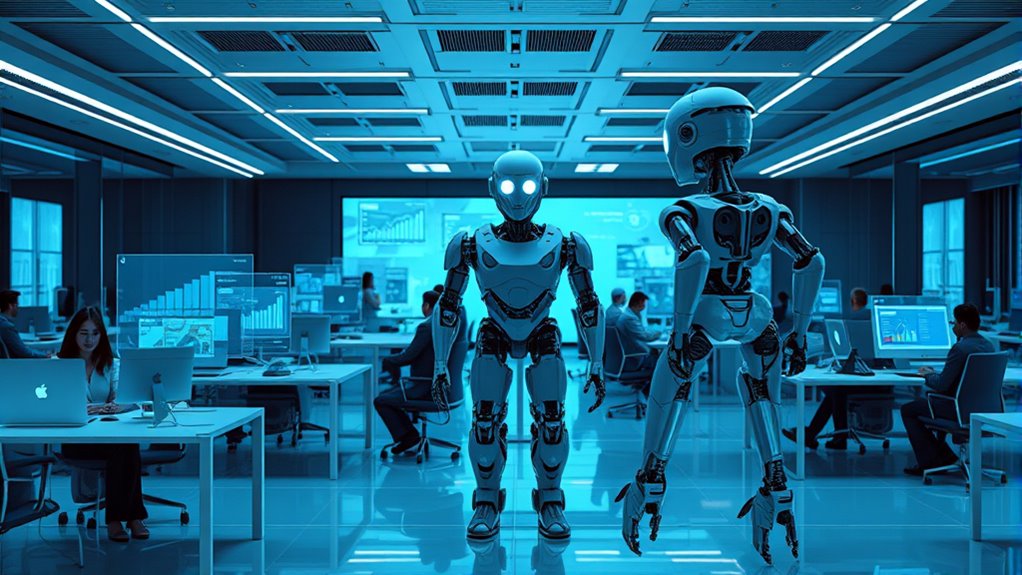
While AI boosts decision-making and efficiency, relying heavily on bots introduces significant challenges and concerns. Job displacement is a major issue, especially for roles involving repetitive tasks, with writing jobs decreasing by over 30%. Nearly half of workers worry about being replaced by AI, fueling job insecurity and anxiety. Biases embedded in AI training data can lead to unfair treatment or discrimination, while privacy issues arise from extensive data collection. Limited transparency makes it hard to challenge or understand automated decisions, weakening accountability. Overdependence on AI also risks system failures, cyberattacks, and erosion of human skills. AI’s rapid development has led to widespread adoption across industries, and these issues contribute to worker stress and mistrust, highlighting the need for careful oversight, ethical frameworks, and robust contingency plans to manage AI’s risks effectively. Additionally, the lack of comprehensive regulatory frameworks can leave gaps in oversight, increasing the potential for misuse and unintended consequences. Ensuring proper ethical guidelines are in place is crucial to prevent misuse and safeguard worker rights, especially as the reliance on automated decision-making continues to grow. Moreover, the increasing integration of AI can intensify cybersecurity vulnerabilities if not properly managed, risking data breaches and malicious attacks. Promoting awareness around creative practice and human ingenuity can help balance AI’s influence with the need for human-centered work.
employee privacy protection devices
As an affiliate, we earn on qualifying purchases.
As an affiliate, we earn on qualifying purchases.
Impact on Workers and Organizational Culture

Algorithmic management has become widespread across industries, automating core managerial tasks like scheduling, performance tracking, and decision-making. This shift aims to boost productivity, ensure consistency, and increase objectivity. As a worker, you’ll notice less control over your work processes and schedules, with continuous algorithmic surveillance creating pressure to perform. Strict performance metrics limit your discretion, which can lead to job dissatisfaction and higher stress levels. These practices often undermine trust, as transparency about how decisions are made remains unclear. Control shifts from human managers to automated systems, altering traditional power dynamics. This environment can foster resistance and affect organizational cohesion, while raising concerns about health and safety protections. Additionally, the use of vetted Halloween product reviews insights highlights how consumer trust is built through transparency, contrasting with the opaque nature of algorithmic decision-making. The increasing reliance on high-tech innovations in workplaces may also influence employee perceptions of safety and fairness. Understanding the role of advanced techniques in these systems can help workers better navigate and adapt to this evolving landscape. For example, diverse designs of workplace tools and management systems are being introduced to address different employee needs and improve engagement. Overall, algorithmic management impacts not only your autonomy but also the culture and trust within your workplace.
Preparing for a Future Dominated by Automated Leadership

As automation becomes more integrated into workplaces, preparing for a future led by autonomous digital systems is essential. You should focus on developing AI literacy, as nearly all employees and leaders are familiar with generative AI tools by 2025. Leaders tend to underestimate how much employees rely on AI, so fostering open communication about AI’s role can build trust. Embrace AI agents that handle specific tasks like communication, planning, and decision-making to boost efficiency. Leaders need to learn how to interpret AI outputs and manage AI-driven workflows while maintaining ethical oversight. Continuous upskilling and flexible leadership styles will help you adapt to rapid technological changes. Investing in employee training and transparent strategies guarantees your organization remains competitive and resilient in an AI-dominated future. AI is estimated to create $4.4 trillion in productivity gains long-term, emphasizing the importance of proactive adaptation.
Frequently Asked Questions
How Do Employees Perceive Working Under Algorithmic Management?
You might see working under algorithmic management as limiting your creativity and making things less transparent, which can cause confusion and frustration. While some feel more satisfied due to less stress, others worry about trust and fairness. You may develop strategies to understand and follow algorithms better, but overall, the lack of clarity and perceived rigidity can impact your motivation, collaboration, and sense of control at work.
What Legal Rights Do Workers Have With Ai-Driven Oversight?
Imagine you’re under watchful eyes, with every move scrutinized by AI. Your legal rights protect you from unfair treatment, bias, and discrimination. You can report biased decisions, gather evidence, and seek legal advice under laws like ADA or ADEA. Regulations are evolving to guarantee transparency and fairness. Stay alert—knowing your rights helps you challenge unfair AI-driven oversight and maintain your workplace dignity.
How Transparent Are the Decision Processes of Workplace Algorithms?
You might wonder how transparent workplace algorithms really are. Often, these decision processes are complex and not fully understandable without specialized knowledge. While some companies provide explanations through model transparency and regular audits, many algorithms still lack complete clarity. This opacity can lead to mistrust and concern among employees. Efforts like legislation and employee involvement aim to improve transparency, but overall, the level varies widely across organizations.
What Measures Protect Worker Privacy in Ai-Managed Environments?
Protecting your privacy in AI-managed environments requires proactive practices. Implement data minimization, reducing the amount of personal info shared and stored. Push for transparency by requesting clear explanations of AI decisions. Promote bias prevention by advocating for fair algorithms, and keep detailed records of AI interactions. Stay informed about evolving regulations, and collaborate with HR and legal teams to ensure compliance. Prioritizing privacy protections keeps your personal data safe and secure.
Can AI Systems Be Biased or Discriminatory in Management Decisions?
You should know that AI systems can indeed be biased or discriminatory in management decisions. Since AI learns from human data, it can pick up and perpetuate existing social biases, leading to unfair hiring, evaluations, or task assignments. Without proper oversight, these biases can go unnoticed and worsen workplace inequalities. That’s why implementing transparency, diverse data, and regular audits are essential to guarantee AI makes fair, unbiased decisions.
Conclusion
Even if it feels unsettling to work under algorithms, embracing this shift can boost fairness and productivity. Yes, some worry about losing human touch, but AI can handle routine tasks, freeing you to focus on creativity and connection. Instead of resisting, adapt and learn to work alongside these tools. This isn’t about replacing humans but empowering you to perform better, so stay open and proactive—your future workplace depends on it.
Fall Picks
fall essentials
As an affiliate, we earn on qualifying purchases.