
TL;DR
Bonsai revealed the 27B-Class model, a large AI model that can operate directly on a phone. This development could reshape AI accessibility and deployment. Details about performance and limitations remain emerging.
Bonsai has introduced the 27B-Class model, a large language model capable of running directly on a standard smartphone. This represents a significant shift in AI deployment, potentially enabling more widespread access to advanced AI functionalities without relying on cloud servers.
The 27B-Class model, developed by Bonsai, is a 27-billion-parameter AI model that can operate on a typical mobile device, according to the company’s official statement. This is the first known instance of such a large language model being optimized for and demonstrated on a phone, breaking the usual dependence on cloud-based infrastructure for models of this size.
Bonsai claims that the model maintains competitive performance levels for tasks like text generation and understanding, despite running locally. The company has not yet released detailed benchmarks or technical specifications but emphasizes the model’s efficiency and potential for real-time applications.
Experts caution that while the development is promising, the model’s actual capabilities, limitations, and power consumption are still under evaluation. The announcement has garnered attention from industry analysts and AI researchers, who see it as a potential game-changer for mobile AI applications.
Implications for AI Accessibility and Deployment
The introduction of a 27B-Class model that runs on a phone could democratize access to advanced AI, removing the need for expensive cloud infrastructure. This could enable a new wave of AI-powered apps, especially in regions with limited internet connectivity or for users concerned with data privacy.
Additionally, this development challenges the notion that large models require centralized data centers, potentially reducing costs and latency for end-users. However, questions about the model’s performance, energy consumption, and security implications remain as the technology is further tested and refined.

More Efficient Emergency Assistance for the Visually Impaired Through AI-Powered Smartphone Apps
As an affiliate, we earn on qualifying purchases.
As an affiliate, we earn on qualifying purchases.
Previous Trends in Model Size and Mobile AI
Prior to this announcement, most large language models—such as GPT-3 and GPT-4—were exclusively run on cloud servers due to their size and computational demands. Efforts to optimize models for mobile devices have primarily focused on smaller, distilled versions, but these often sacrifice some performance.
Bonsai’s claim to have developed a 27-billion-parameter model capable of functioning on a phone marks a notable departure from previous limitations. This aligns with industry trends toward edge AI, where processing occurs locally rather than in the cloud, driven by advances in model compression, hardware acceleration, and efficient algorithms.
The company has not disclosed whether this model is a new architecture or an optimized version of existing large models, nor how it compares in benchmarks to other mobile-friendly AI models.
“The 27B-Class model demonstrates that advanced AI can be accessible on everyday devices, opening new possibilities for innovation.”
— Bonsai spokesperson
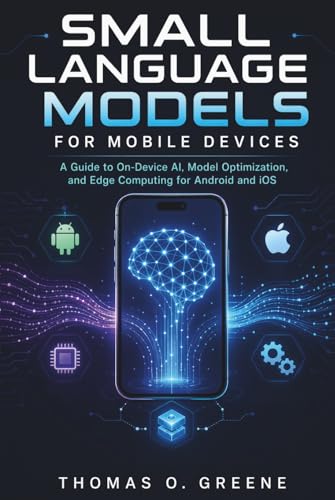
Small Language Models for Mobile Devices: A Guide to On-Device AI, Model Optimization, and Edge Computing for Android and iOS
As an affiliate, we earn on qualifying purchases.
As an affiliate, we earn on qualifying purchases.
Technical Performance and Practical Limitations Still Unclear
Details about the model’s actual performance metrics, energy consumption, and real-world applicability are not yet publicly available. It is unclear how the model compares to cloud-based counterparts in terms of accuracy, speed, and resource efficiency. Experts caution that further testing and peer review are needed to validate these claims.

Practical Deep Learning for Cloud, Mobile, and Edge: Real-World AI & Computer-Vision Projects Using Python, Keras & TensorFlow
As an affiliate, we earn on qualifying purchases.
As an affiliate, we earn on qualifying purchases.
Further Testing, Benchmarking, and Industry Adoption Expected
Bonsai is expected to release more technical details and possibly a developer toolkit in the coming months. Industry observers will be watching for independent benchmarks and real-world application demonstrations. The broader AI community will assess whether this approach can be scaled or adapted for other models and use cases.
Additionally, regulatory and security considerations regarding local processing of large models will likely influence adoption and development in this space.
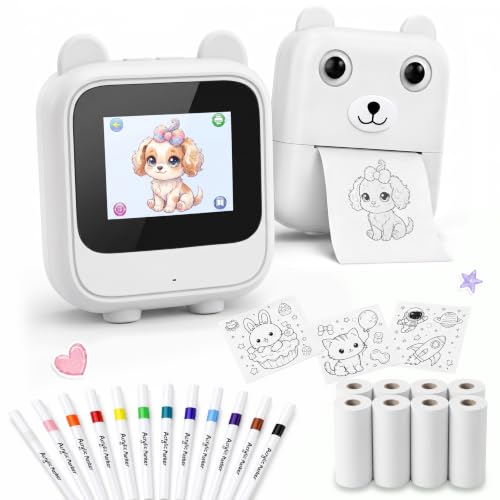
AI Voice Sticker Maker for Kids, Built-In AI Thermal Printer, No Phone App
- Built-In AI Creation: Create, preview, and print without an app
- WiFi Connectivity: Connects via 2.4GHz WiFi, no phone needed
- Safety and Privacy: COPPA-compliant, BPA/BPS-free materials
As an affiliate, we earn on qualifying purchases.
As an affiliate, we earn on qualifying purchases.
Key Questions
Can the Bonsai 27B model run on all smartphones?
The company states it is optimized for typical smartphones, but specific hardware requirements are not yet detailed. Performance may vary depending on device specifications.
How does the 27B model compare to cloud-based models like GPT-4?
Exact performance comparisons are not yet available. Bonsai claims comparable capabilities for certain tasks, but independent benchmarks are pending.
Will this development reduce AI costs?
Potentially, by enabling local processing, it could decrease reliance on cloud services and associated costs, especially for developers and users in remote areas.
What are the security implications of running large models locally?
Local processing may enhance privacy, but it also raises questions about data security and model updates, which need further exploration.
When will developers be able to access the Bonsai 27B model?
Bonsai has not announced a public release date; further details are expected in upcoming developer tools and SDKs.
Source: hn