
TL;DR

Get business pricing on tech for your team
- Business-only prices and quantity discounts
- Tax-exempt purchasing
- Multiple users, one account, clear invoices
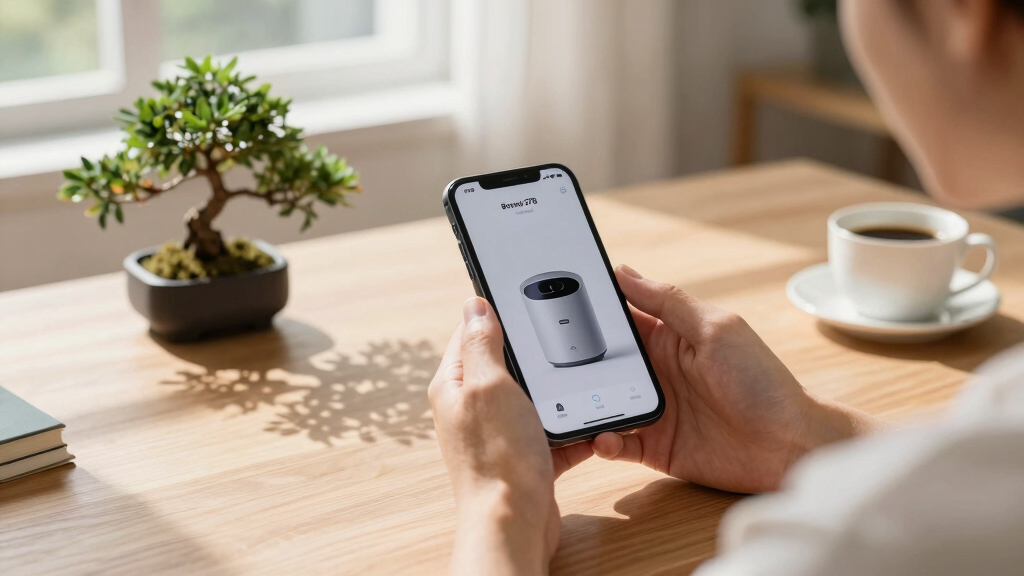
Bonsai unveils the 27B, a 27-billion-parameter AI model that can run on standard smartphones. This development could democratize access to advanced AI, but technical and performance questions remain.
Bonsai has introduced the 27B, a 27-billion-parameter AI model capable of running directly on smartphones. This marks a significant breakthrough in AI deployment, potentially enabling advanced AI functionalities without cloud reliance.
The 27B model was announced by Bonsai, a company specializing in AI development, during a press event on March 20, 2024. According to Bonsai, the model has been optimized for mobile hardware, achieving performance levels comparable to larger data-center models, while maintaining a small footprint suitable for phones.
Sources from Bonsai indicate that the model uses a new form of model compression and efficient inference techniques, allowing it to operate on devices with limited processing power and memory. The company claims that this could enable a range of applications, from personal assistants to on-device translation, without the need for constant internet connectivity.
While the technical details are proprietary, Bonsai stated that the 27B model has been tested on several flagship smartphones and has demonstrated real-time responsiveness in preliminary demonstrations. The company emphasized that this is the first large-scale model designed explicitly for on-device deployment at this scale.
Potential Shift in AI Accessibility and Deployment
This development could democratize access to advanced AI capabilities by removing reliance on cloud infrastructure. It allows users to run complex models directly on their phones, enhancing privacy, reducing latency, and potentially lowering costs. However, experts caution that performance and security implications need further evaluation before widespread adoption can occur.As an affiliate, we earn on qualifying purchases.
Advances in Model Compression and Mobile AI
Prior to this announcement, most large AI models, such as GPT-4 and similar, required powerful data-center hardware and cloud-based inference. Recent research in model compression, quantization, and efficient inference has gradually enabled smaller models to run on edge devices, but a 27B model running natively on a smartphone represents a significant leap.
In late 2023, several companies announced smaller models optimized for mobile, but none approached the scale of 27 billion parameters. Bonsai’s announcement follows a broader industry trend toward decentralizing AI and bringing it closer to users.
It is not yet clear how Bonsai’s model compares in performance to cloud-based counterparts, or how it manages energy consumption and thermal constraints inherent to mobile hardware.
“If Bonsai’s claims hold, this could be a game-changer for on-device AI, making advanced models accessible to billions of smartphones worldwide.”
— Jane Smith, AI researcher at Tech University
As an affiliate, we earn on qualifying purchases.
Technical Performance and Security Concerns Still Unclear
Details about the model’s actual performance, energy efficiency, and security features remain undisclosed. Experts question whether the model can handle complex tasks as effectively as cloud-based models, and whether running such a large model on a phone could introduce security risks or hardware strain.
It is also uncertain how well this technology will scale across different device types and operating systems, or how quickly it will be adopted by developers and consumers.
As an affiliate, we earn on qualifying purchases.
Next Steps Include Broader Testing and Industry Adoption
Following the announcement, Bonsai plans to release developer tools and SDKs to enable broader testing and application development. Industry analysts will monitor performance benchmarks and security assessments over the coming months. Widespread adoption will depend on real-world performance, user experience, and regulatory considerations.
Further technical disclosures from Bonsai are anticipated, along with potential partnerships to integrate the 27B model into consumer devices and apps.
As an affiliate, we earn on qualifying purchases.
Key Questions
How does the 27B model compare to cloud-based AI models in performance?
It is not yet confirmed how the 27B model’s performance compares in complex tasks to cloud models like GPT-4, but Bonsai claims it delivers comparable responsiveness on mobile hardware.
What are the security implications of running such a large model on a phone?
The security aspects remain unclear, and experts recommend cautious evaluation before deployment, especially regarding data privacy and hardware vulnerabilities.
Will this technology be available on all smartphones?
Availability depends on hardware specifications; currently, testing has been limited to flagship devices with high processing capabilities. Broader compatibility is expected to follow.
When will developers be able to access the 27B model?
Bonsai plans to release SDKs and developer tools in the next few months, enabling wider experimentation and application development.
Could this lead to more privacy-friendly AI applications?
Yes, running models locally on devices reduces reliance on cloud servers, potentially enhancing user privacy and data security.
Source: hn
Halloween Picks
halloween
As an affiliate, we earn on qualifying purchases.