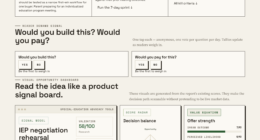
📊 Full opportunity report: Build vs Buy a Prebuilt AI Workstation on ThorstenMeyerAI.com — validation score, market gap, and execution plan.

Get business pricing on tech for your team
- Business-only prices and quantity discounts
- Tax-exempt purchasing
- Multiple users, one account, clear invoices
TL;DR
In 2026, the traditional cost advantage of building a custom AI workstation has diminished due to component shortages and price hikes. Buyers now need to consider thermal management, time, and warranty factors alongside cost when choosing between building and buying.
In 2026, the long-held assumption that building a custom AI workstation is cheaper than buying a prebuilt has been challenged by recent market developments, including component shortages and price spikes. This shift affects professionals and hobbyists alike, who must now weigh cost, thermal management, and time when making their decision.
The rising costs of key components such as GPUs, DDR5 RAM, and SSDs have significantly increased the price of DIY AI workstations, often surpassing prebuilt options. Major vendors like BIZON, Puget Systems, and Lambda now offer prebuilt systems with validated thermals, water cooling, and extended warranties, reducing the thermal and stability risks associated with DIY builds. These prebuilt systems undergo rigorous testing, including burn-in and thermal validation, and often include support and warranty coverage, making them appealing for users prioritizing reliability and time savings. Conversely, building your own rig provides precise control over components, customization, and upgradeability, which remains attractive for hobbyists and those seeking deep understanding of their hardware. The decision now hinges less on cost alone and more on factors like thermal optimization, time investment, and risk management, especially as component shortages and price volatility persist.Build vs buy
an AI workstation.
The real question behind this whole series: do you pull the five heat-and-noise levers yourself, or buy a prebuilt where the vendor pulled them for you? And in 2026, the old “building is cheaper” rule has broken. Match your situation in Part 3.
Implications of Rising Component Costs on Build Decisions
With component prices increasing sharply in 2026, the traditional cost advantage of DIY AI workstations has eroded. This development prompts a reassessment of build-vs-buy, emphasizing the importance of thermal management, warranty, and time savings. For professionals, this shift could influence procurement strategies, while hobbyists may find the cost-benefit balance shifting toward prebuilt options. Overall, the decision now involves a more complex trade-off among cost, control, and reliability, impacting how AI researchers and enthusiasts approach their hardware investments.
prebuilt AI workstation with warranty
As an affiliate, we earn on qualifying purchases.
As an affiliate, we earn on qualifying purchases.
Market Changes Driving the Build vs Buy Debate
Over the past year, shortages and price spikes in GPUs, DDR5 RAM, and SSDs have disrupted the traditional economics of building high-power AI workstations. Historically, DIY builds were cheaper because individuals sourced components directly, often at lower prices. However, bulk purchasing by major vendors like Lambda and Puget Systems before the shortages allowed them to offer systems at prices competitive with or even below what a DIY build could cost today. These prebuilt systems are tested for thermal stability and come with warranties, reducing the risk of thermal throttling or hardware failure during demanding AI workloads. Meanwhile, the AI boom has increased demand for high-performance hardware, further straining supply chains and elevating prices across the board.
"The traditional rule that building is always cheaper no longer holds in 2026; component shortages and bulk buying have flipped the script."
— Thorsten Meyer, AI hardware expert
high performance GPU for AI workstations
As an affiliate, we earn on qualifying purchases.
As an affiliate, we earn on qualifying purchases.
Uncertainties in Long-Term Cost and Performance
It remains unclear how ongoing supply chain disruptions and potential future price fluctuations will influence the cost-effectiveness of building versus buying over the next year. Additionally, the long-term upgradeability and thermal performance of prebuilt systems compared to custom builds are still under evaluation, especially as new components and cooling technologies emerge.
As an affiliate, we earn on qualifying purchases.
Next Steps for Buyers and Builders in 2026
Buyers should now carefully compare current prices of prebuilt systems and component costs for DIY builds, factoring in thermal validation and warranty coverage. Manufacturers may update their offerings as supply stabilizes, and new cooling or component innovations could influence future options. For DIY enthusiasts, gaining expertise in thermal tuning and component selection remains valuable, especially if they plan to upgrade or customize in the future. Overall, the decision will increasingly depend on individual priorities around cost, time, reliability, and control.
customizable AI workstation components
As an affiliate, we earn on qualifying purchases.
As an affiliate, we earn on qualifying purchases.
Key Questions
Has the cost advantage of building a DIY AI workstation disappeared in 2026?
Yes, due to component shortages and price hikes, prebuilt systems are often now competitively priced or even cheaper than DIY builds for similar specifications.
Are prebuilt AI workstations more reliable in thermal management?
Most reputable vendors validate and test their systems for thermal stability, offering warranties and support, which can reduce risks compared to DIY builds.
Can I upgrade a prebuilt AI workstation later?
It depends on the system design, but many prebuilt systems allow upgrades, especially in storage and RAM; GPU upgrades may be more restricted.
Is building my own AI workstation still worth it for control and learning?
Yes, if you enjoy the process, want precise customization, or plan to upgrade regularly, DIY remains a valuable option despite higher costs in some cases.
Source: ThorstenMeyerAI.com
Fall Picks
fall essentials
As an affiliate, we earn on qualifying purchases.