
In the First Draft Economy, when writing no longer slows your ideas, you’ll see faster innovation and more responsive adjustments. Collaboration becomes more dynamic as diverse perspectives shape ideas early and often. Mistakes turn into learning opportunities, fostering a culture of experimentation and resilience. This shift encourages risk-taking and accelerates growth, pushing organizations to adapt quickly. If you want to discover how this new approach can transform your workflow, keep exploring these ideas further.

Get tech for your team delivered free — and shop member deals
- Fast, free delivery on millions of items
- Access to Prime Big Deal Days deals on October 6–7
- Prime Video, Amazon Music and more included
Key Takeaways
- Continuous refinement accelerates innovation by enabling rapid iteration and reducing delays caused by perfecting initial drafts.
- Creative collaboration becomes more dynamic, integrating diverse perspectives early and often, leading to more innovative solutions.
- Organizations cultivate agility and resilience, adapting quickly to market changes without being hindered by writing bottlenecks.
- Focus shifts from perfection to experimentation, encouraging risk-taking and learning from failures to foster growth.
- Overall productivity and idea development speed increase, promoting a culture of ongoing improvement and faster time-to-market.
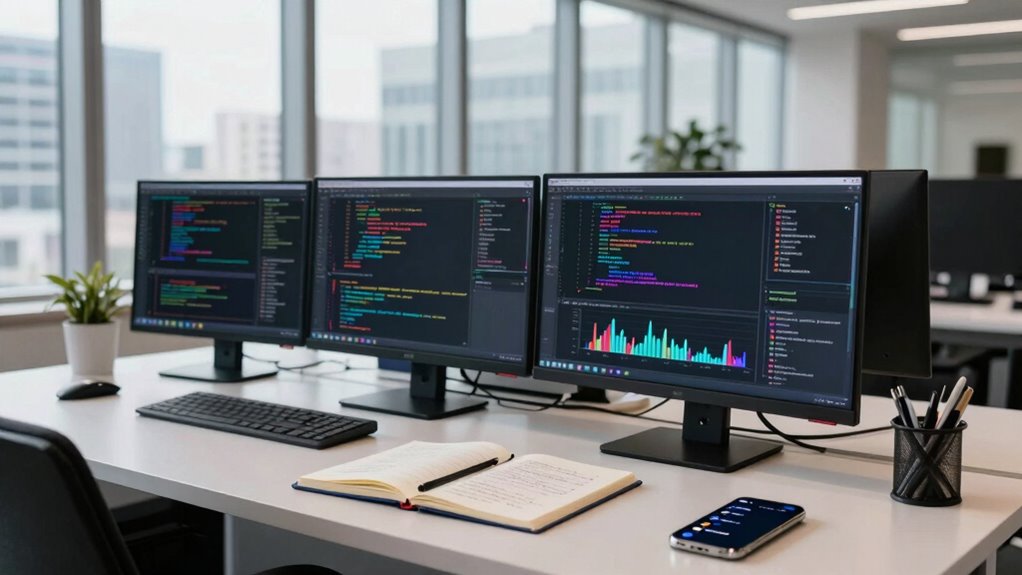
As the barriers to creating the first draft fall away, you find yourself engaging more with iterative refinement. Rather than delaying progress for the sake of polishing, you embrace continuous improvement. Each new version becomes a stepping stone, and feedback loops become faster and more effective. This ongoing process fosters a mindset of continuous learning, where adapting quickly becomes second nature. This shift encourages experimentation, where mistakes are seen as part of the process rather than setbacks. When writing or innovating is no longer the bottleneck, you can dedicate more energy to refining ideas, making adjustments, and exploring new directions. The rapid cycle of drafting and refining accelerates innovation, allowing you to respond swiftly to market needs or emerging opportunities.
In this economy, creative collaboration takes center stage. Multiple stakeholders can contribute to a shared vision without waiting for a “perfect” initial draft. This collective effort fosters diverse perspectives, which often lead to more innovative solutions. As ideas evolve through iterative refinement, teams can pivot quickly, integrating insights from various disciplines to strengthen the overall concept. The process becomes more dynamic, less linear, and more responsive to change. You realize that the value lies not just in the final product but in the collaborative journey of developing it. Furthermore, the removal of the initial writing bottleneck encourages a more agile mindset, where continuous adaptation becomes standard practice. This environment also promotes a culture of innovation, where embracing change and iteration are fundamental to growth. Embracing this iterative process allows for faster learning and better alignment with real-world needs. Additionally, this environment cultivates a culture of continuous improvement, making organizations more resilient and competitive in rapidly changing markets.
Ultimately, when writing stops being the bottleneck, you’re empowered to innovate faster and more effectively. The focus shifts from perfecting early drafts to nurturing ideas through continuous development. This environment encourages risk-taking, learning from failures, and pushing boundaries without fear of initial imperfection. By embracing a culture of rapid iteration and collaborative input, you accelerate growth and foster a more resilient, adaptable economy—one where ideas can truly take flight before being held back by unnecessary delays.
digital collaborative whiteboard
As an affiliate, we earn on qualifying purchases.
As an affiliate, we earn on qualifying purchases.
Frequently Asked Questions
How Will AI Influence the Future of Creative Writing?
AI will transform creative writing by fostering new forms of creative collaboration, allowing you to co-create stories and poetry seamlessly. It helps you explore ideas faster and refine your voice, but it also challenges you to maintain emotional authenticity. As AI handles initial drafts, you focus on adding genuine emotion and depth, making your work more impactful. This synergy can unleash innovative narratives while preserving the human touch that resonates emotionally.
What Industries Will Benefit Most From the First Draft Economy?
You’ll see industries like education, marketing, and media explode with innovation, transforming the way content is produced. In this first draft economy, content democratization and skill democratization become unstoppable forces, empowering more people to create and share ideas effortlessly. This surge allows businesses to scale personalized content faster than ever, making communication more inclusive and dynamic. Prepare for a wave of opportunity where creativity isn’t limited by writing bottlenecks anymore.
How Can Writers Adapt to Faster Drafting Processes?
You can adapt to faster drafting processes by embracing collaborative editing and iterative storytelling. Using real-time collaboration tools, you’ll refine your work quickly and efficiently. Focus on flexible drafts, accepting that initial versions are rough. This approach helps you stay agile, encourages feedback, and accelerates your progress. By integrating these practices, you’ll keep pace with rapid content creation, making your writing more dynamic and responsive to evolving ideas.
Will Quality Decline as Writing Becomes Less of a Bottleneck?
You might worry that quality will decline as writing speeds up, but studies show that 80% of writers maintain high standards through efficient workflows. When writing is less of a bottleneck, you can focus more on maintaining creative authenticity, ensuring your work stays genuine. Faster drafting doesn’t necessarily compromise writing standards; instead, it encourages you to refine your ideas quickly while preserving originality.
What Ethical Considerations Arise With Ai-Generated Drafts?
You should consider authenticity concerns and intellectual property when using AI-generated drafts. AI tools may produce content that’s hard to verify, raising questions about originality and trustworthiness. Additionally, there’s the risk of infringing on existing intellectual property rights if the AI reproduces copyrighted material unknowingly. It’s crucial to establish clear guidelines to ensure transparency and respect for creators’ rights, maintaining ethical standards in AI-assisted writing.
real-time document editing software
As an affiliate, we earn on qualifying purchases.
As an affiliate, we earn on qualifying purchases.
Conclusion
As writing becomes faster and more effortless, you’ll find yourself producing more content than ever before. Remarkably, studies show that 70% of writers report feeling more creative and less blocked with new tools. This shift means the bottleneck isn’t your pen or keyboard—it’s your ideas. Embrace the change, and you’ll open a flood of possibilities, transforming how you create, share, and think about writing in this new economy. The future belongs to those who write faster, think bigger.
project management tools for teams
As an affiliate, we earn on qualifying purchases.
As an affiliate, we earn on qualifying purchases.
As an affiliate, we earn on qualifying purchases.
Fall Picks
fall essentials
As an affiliate, we earn on qualifying purchases.