TL;DR

Get tech for your team delivered free — and shop member deals
- Fast, free delivery on millions of items
- Access to Prime Big Deal Days deals on October 6–7
- Prime Video, Amazon Music and more included
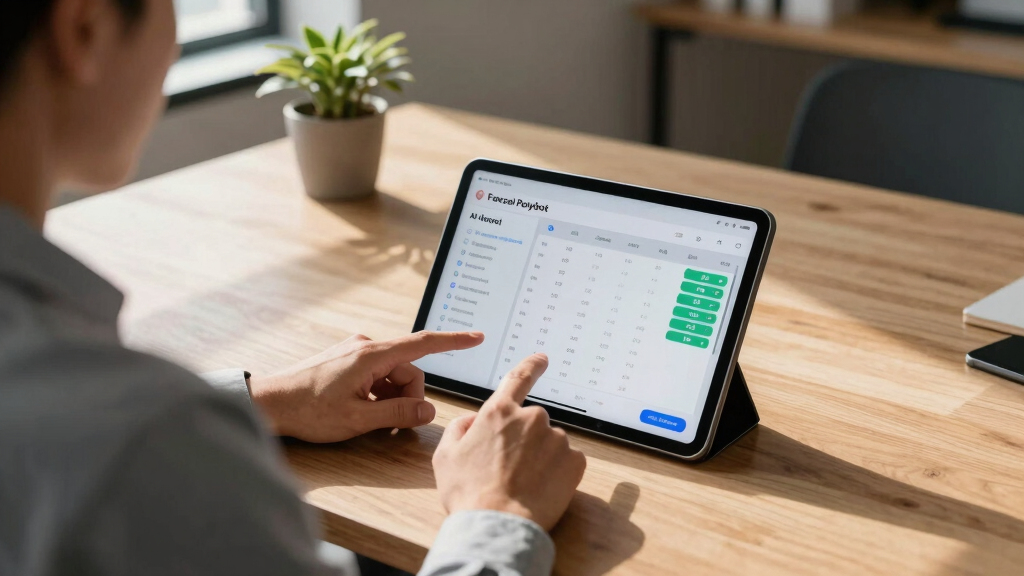
Thorsten Meyer AI has published Forezai Polybot, a private experiment for comparing AI probability estimates with Polymarket prices. The project is framed as a research tool rather than a trading system, with repeated warnings about legal limits, automated trading risk and the lack of any profit record.
Thorsten Meyer AI has released Forezai Polybot, a private experiment that tests whether an AI agent can form probability estimates that differ from Polymarket prices and decide whether a gap is large enough to act on. The project matters because it places AI forecasting inside a live market setting, while its own release materials stress that it is not financial advice, not a recommendation to trade and not backed by any stated performance record.
According to the source material, Polybot is designed for Polymarket and compares an AI-generated probability estimate with a market-implied probability. If the difference clears thresholds for size, confidence and cost, the system may mark a small, risk-capped trade; otherwise, the default decision is to skip. The examples provided in the release are described as illustrative logic, not a track record.
The project is presented as open and auditable. The release says each estimate records the reasoning behind the disagreement, allowing a user to inspect why the system reached a conclusion rather than only seeing an executed action. It is also described as provider-agnostic, meaning the forecasting model can be swapped rather than treating one model as an authority on future events.
The release repeatedly limits its claims. It says prediction markets are difficult to beat because prices already aggregate the views and capital of traders. It also warns that automated trading can lead to losses, including total loss of capital, and that prediction-market access is restricted or prohibited in some jurisdictions, including for U.S. persons.
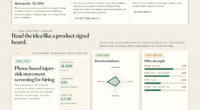
Polybot — when the AI disagrees with the odds
A prediction market puts a price on the future. Polybot asks: can an AI’s own estimate diverge from that price for real — and should it ever act on the gap?
Not financial, investment, legal or tax advice; not a recommendation or solicitation to trade, invest or use any software. Forezai · Polybot is experimental software, provided “as is” without warranty of accuracy or profitability. Trading and automated trading carry a substantial risk of loss including total loss of capital; past or backtested performance does not indicate future results. Prediction-market participation is restricted or prohibited in some jurisdictions (including for US persons) — you are solely responsible for compliance with applicable law. Consult a licensed professional before any financial decision. Produced with AI assistance under human editorial oversight; independent commentary, the author’s own views. Product and company names are trademarks of their respective owners; mention does not imply endorsement.
AI Forecasting Meets Market Prices
Polybot is part of a broader test of whether AI systems can produce useful independent judgments in settings where a market already assigns a price to uncertain outcomes. A Polymarket contract trading at 62 cents can be read as a rough market-implied probability of 62%, though market structure, liquidity and fees can complicate that reading.
The release frames the central question narrowly: not whether an AI can reliably beat a market, but when, if ever, its estimate diverges enough from the price to justify further attention. That distinction matters for readers following AI agents, forecasting systems and automated finance tools because the highest-risk claims in this area often come from treating model outputs as tradable certainty.
By emphasizing skipped trades, audit trails and risk caps, the project positions itself closer to research infrastructure than a retail trading pitch. Even so, any tool that can connect forecasts to trading decisions raises practical questions about loss controls, legal access, user understanding and how quickly markets react to widely available strategies.
prediction market analysis software
As an affiliate, we earn on qualifying purchases.
As an affiliate, we earn on qualifying purchases.
Built In Public Markets Entry
Polybot was introduced as Day 13 of 19 in Thorsten Meyer AI’s Built in Public series and is described as the first node in the portfolio’s Markets family. The broader portfolio is presented as a collection of products built on local-first and provider-agnostic principles.
In this release, those principles are applied to prediction markets. The source material says Polybot can run on owned compute and can use swappable forecasting models. That design choice is meant to make the system inspectable and reduce dependence on a single AI provider.
The source also grounds the project in a skeptical view of markets. It says market prices are information-dense because they reflect the views of participants with money at stake. For Polybot, that means the starting assumption is that most apparent opportunities should be rejected, not acted upon.
“A prediction market puts a price on the future.”
— Thorsten Meyer AI release material
As an affiliate, we earn on qualifying purchases.
No Performance Record Yet
It is not clear from the supplied material whether Polybot has been tested with real capital, how it has performed over time, or what loss limits are implemented in code beyond the stated design intent. The examples in the release are explicitly illustrative and should not be read as evidence of profitability.
It is also unclear how the system handles thin markets, fast-changing news, model errors, prompt sensitivity, transaction costs, liquidity limits or resolution disputes. Those details matter because prediction-market prices can move quickly, and small theoretical edges can disappear once costs and execution constraints are included.
Legal access remains a separate issue. The release says participation is restricted or prohibited in some jurisdictions, including for U.S. persons, but readers would need jurisdiction-specific legal advice before using any prediction-market trading software.
automated trading risk management software
As an affiliate, we earn on qualifying purchases.
As an affiliate, we earn on qualifying purchases.
Code Review And Live Testing
The next stage for readers and developers is likely inspection of the public code, the decision logs and any future tests the project publishes. The most useful evidence would include transparent backtests, out-of-sample results, cost assumptions, skipped-market counts and examples of failed forecasts as well as successful ones.
For now, Polybot should be treated as an experimental AI forecasting and trading research project. Its main claim is that model-generated probability estimates can be compared with market prices in an auditable way; whether those estimates can support lawful, durable and risk-controlled trading remains unproven.
prediction market trading platform
As an affiliate, we earn on qualifying purchases.
As an affiliate, we earn on qualifying purchases.
Key Questions
What is Forezai Polybot?
Forezai Polybot is an experiment from Thorsten Meyer AI that compares AI-generated probability estimates with Polymarket prices and records the reasoning behind any disagreement.
Is Polybot presented as financial advice?
No. The release states that it is not financial advice and not a recommendation to trade, invest or use the software. It also warns that automated trading can lead to total loss of capital.
Does the release show Polybot is profitable?
No. The supplied examples are described as illustrative logic, not a track record. The release does not establish profitability or accuracy in live trading.
Why does Polybot skip most markets?
The project’s stated logic is that most differences between an AI estimate and a market price are too small, too uncertain or too costly to act on. Its default decision is no trade.
Can U.S. users trade with Polybot?
The release warns that prediction-market access is restricted or prohibited in some jurisdictions, including for U.S. persons. Users would need to check applicable law before taking any action.
Source: Thorsten Meyer AI
Halloween Picks
halloween
As an affiliate, we earn on qualifying purchases.