
🔍 Read the full analysis: Inside The AI Tower: A Closer Look At Safe AI Integration In Twelve Rooms on ThorstenMeyerAI.com

Get business pricing on tech for your team
- Business-only prices and quantity discounts
- Tax-exempt purchasing
- Multiple users, one account, clear invoices
TL;DR
The AI Tower showcases twelve distinct rooms demonstrating how AI can be safely integrated into various workflows. This development highlights practical approaches to AI safety, retrieval, and automation, with ongoing questions about reliability and oversight.
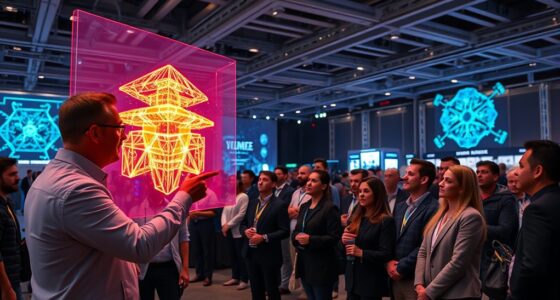
The AI Tower, a series of twelve interactive modules demonstrating AI integration, has been unveiled to showcase practical safety measures and effective deployment strategies. Developed by Thorsten Meyer, it provides a hands-on look at how AI can be safely used across various applications, from document retrieval to autonomous agents. This development is significant because it offers a transparent, accessible framework for understanding real-world AI safety practices.
The AI Tower is accessible directly in users’ browsers, with no sign-up, cookies, or tracking, emphasizing privacy and ease of use. It features twelve rooms, each focused on a specific aspect of AI deployment, such as retrieval-augmented generation (RAG), prompt engineering, autonomous agents, and automation workflows. These modules are designed to help users understand both the capabilities and limitations of current AI systems.
Confirmed features include the demonstration of retrieval-based answering from personal documents, the setup of custom AI assistants without programming, and the construction of automated workflows for repetitive tasks. The series also emphasizes the importance of testing AI responses against source documents and establishing clear operational limits for autonomous agents. However, the accuracy of AI outputs and the potential for errors or misinterpretations remain areas of ongoing concern, with some claims about perfect safety still unverified.
Field guide · Practical AI safety
Inside the AI Tower: A Closer Look at Safe AI Integration in Twelve Rooms
Twelve interactive rooms turn AI safety principles into practical workflows—from retrieving answers from documents to setting limits for autonomous agents. The guide shows what users can try today and where human oversight still matters.
One building, twelve ways to work with AI
Each room focuses on a practical part of deployment. Together, they show how to build useful workflows while making limits, sources, and checks visible.
Retrieval
Find relevant information in personal documents.
Source checks
Compare generated answers with the material behind them.
Prompt design
Shape clearer instructions and more useful responses.
Custom assistants
Configure an assistant without writing code.
Automation
Connect routine steps into repeatable workflows.
Autonomous agents
Explore agent capabilities alongside operational limits.
Applied practice
Additional modules extend the series across AI use and safety.
Build, check, then keep watch
Safety is presented as a continuing process. A workflow needs evidence, limits, and follow-up checks—not just a well-written prompt.
Use sources
Retrieve relevant documents and keep the evidence close to the answer.
Set the task
Write clear prompts that define the job and expected output.
Set boundaries
Give agents operational limits and define when people must intervene.
Test and monitor
Check responses against sources and revisit performance over time.
Useful safeguards still need validation
The series makes safety practices tangible, while acknowledging that current systems can still make mistakes—especially when information is complex or unfamiliar.
RAG errors reported in legal research
The article cites Stanford studies reporting errors in roughly 17–33% of legal research questions. Treat this range as a reminder to verify outputs, not as a universal rate for every RAG system or task.
Accuracy, scale, and oversight
Reliability may vary with the data and setting. The guide leaves open how these practices perform in high-stakes environments, how to handle persistent errors or malicious inputs, and how well safeguards hold up in uncontrolled real-world use. Claims of perfect safety remain unverified.
Make responsible use visible
Developed by Thorsten Meyer, the AI Tower builds on earlier modules about AI’s inner workings and engineering principles. Its browser-based format emphasizes accessibility, privacy, and user empowerment.
“The AI Tower aims to make complex AI safety practices accessible and practical for everyday users, showing both what works and what still needs work.”
— Thorsten Meyer
Better retrieval. Ongoing monitoring. Clearer standards.
Future work points toward broader testing, automated oversight tools, and updates as research and AI capabilities evolve.
What users should know
Interactive demonstrations can make responsible practices easier to learn, but they do not remove the need to evaluate each use case.
How does the tower teach AI safety?
Through interactive examples of source verification, prompt engineering, and operational limits.
Are the safeguards foolproof?
No. AI can still produce errors, so continuous testing and human oversight remain essential.
Can I build an assistant without programming?
Yes. The modules guide users through custom assistants using prompts and linked documents. Test the result before deployment.
Where do current methods fall short?
They may produce inaccurate answers with complex or unfamiliar data and cannot fully prevent misuse or critical errors.
Will the series address future challenges?
Planned updates are expected to reflect new modules, research, and practical insights as AI develops.
Implications of Practical AI Safety Demonstrations
This series matters because it provides a transparent, user-friendly view of how AI safety principles are applied in practice. By illustrating concrete steps—such as source verification, prompt design, and limit setting—it helps organizations and individuals understand how to mitigate risks associated with AI deployment. As AI becomes more integrated into daily workflows, these insights are critical for ensuring responsible use and avoiding unintended consequences.
As an affiliate, we earn on qualifying purchases.
Background and Development of the AI Tower Series
The AI Tower is part of Thorsten Meyer’s ongoing series aimed at demystifying AI technology and safety. The third installment builds on previous modules that explored AI’s inner workings and engineering principles. It reflects current industry trends toward transparency, privacy, and user empowerment, emphasizing that AI safety is an active area of development rather than a solved problem. The modules incorporate recent research, including studies from Stanford indicating that retrieval-augmented systems still produce errors in about 17-33% of legal research questions, underscoring the need for ongoing vigilance.
“The AI Tower aims to make complex AI safety practices accessible and practical for everyday users, showing both what works and what still needs work.”
— Thorsten Meyer
As an affiliate, we earn on qualifying purchases.
Unresolved Questions About AI Reliability and Oversight
While the AI Tower demonstrates effective safety practices, it remains unclear how these methods scale in high-stakes environments or with more complex data. The accuracy of retrieval-augmented responses varies, and the series does not fully address how to handle persistent errors or malicious inputs. Additionally, the long-term effectiveness of these safety measures in real-world, uncontrolled settings is still under study, and further validation is needed to confirm their robustness.
As an affiliate, we earn on qualifying purchases.
Next Steps for AI Safety and User Adoption
Moving forward, developers and users will need to focus on refining retrieval accuracy, integrating ongoing monitoring, and establishing standardized safety protocols. The series suggests expanding testing in diverse environments and developing automated oversight tools. Expect updates from Thorsten Meyer and the broader AI community as new research and practical insights emerge, aimed at making AI deployment safer and more reliable across sectors.
As an affiliate, we earn on qualifying purchases.
Key Questions
How does the AI Tower help users understand AI safety?
It offers interactive modules demonstrating key safety practices, such as source verification, prompt engineering, and setting operational limits, making complex concepts accessible and practical.
Are the safety measures shown in the AI Tower foolproof?
No, the series emphasizes that while these practices improve safety, AI systems can still produce errors. Continuous testing and oversight are essential.
Can I build my own AI assistant using these methods?
Yes, the modules guide users on creating custom assistants without programming, using simple prompts and document linking, but testing before deployment is recommended.
What are the main limitations of current AI safety practices?
Current methods can still produce inaccurate answers, especially with complex or unfamiliar data, and may not fully prevent misuse or errors in critical applications.
Will the AI Tower address future safety challenges?
Thorsten Meyer plans to update the series with new modules and insights as AI technology evolves and more research becomes available.
Source: ThorstenMeyerAI.com
Fall Picks
fall essentials
As an affiliate, we earn on qualifying purchases.