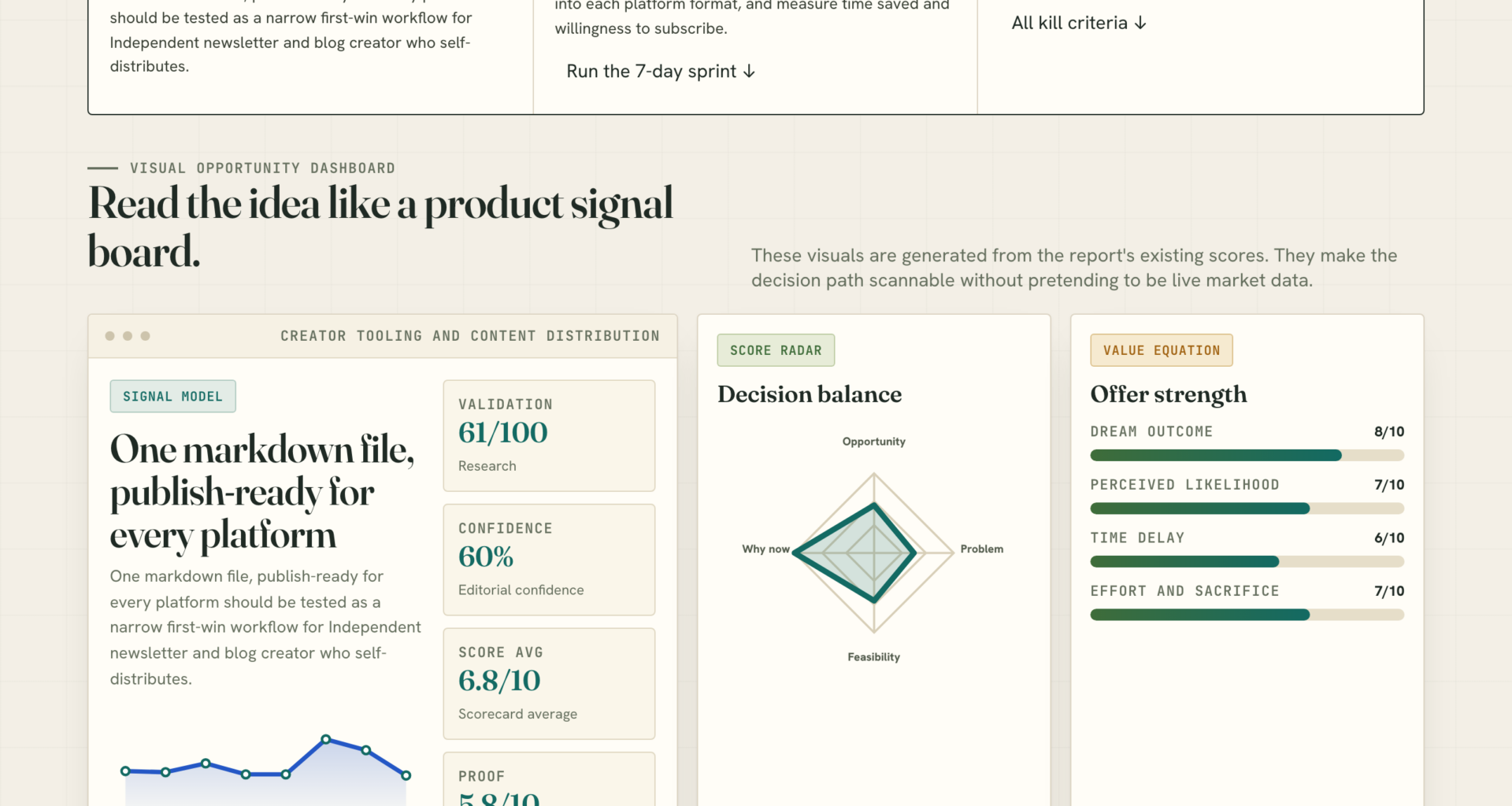

📊 Full opportunity report: One markdown file, publish-ready for every platform on IdeaNavigator AI — validation score, market gap, and execution plan.
Open a free Amazon Business account
Business pricing, bulk buying and tax-exempt orders.
Create a free accountAs an affiliate, we earn on qualifying purchases.
TL;DR

A new web-based tool enables creators to paste one markdown file and receive ready-to-publish versions for blogs, newsletters, and social media. This innovation aims to reduce manual reformatting, saving time and effort for independent content creators.
A new web tool is being tested that allows creators to input one markdown file and instantly generate platform-specific content formats, such as HTML for blogs, plain text for newsletters, and character-limited versions for social media. This development aims to streamline content distribution for independent creators who currently spend significant time reformatting posts for different platforms.
The tool is designed for independent newsletter and blog creators who self-distribute content across multiple channels. Currently, these creators often manually reformat their writing to meet the formatting and character limits of platforms like blogs, LinkedIn, and Twitter, which is time-consuming and inefficient.
According to IdeaNavigator AI, the MVP (minimum viable product) of this web tool will allow users to paste a single markdown file and receive three ready-to-publish versions: an HTML version suitable for blogs, a plain-text version optimized for newsletters, and a condensed, character-limited version for social media posts such as LinkedIn threads.
The project is still in the validation phase, with plans to recruit ten creators to test the tool by converting their next three posts. The goal is to measure time saved and assess willingness to subscribe to a service offering unlimited conversions and saved files for a monthly fee.
Efficiency Impact for Independent Content Creators
This tool could significantly reduce the manual workload for independent creators, allowing them to focus more on content creation rather than formatting. By automating the conversion process, it addresses a key pain point in the creator economy, especially as content distribution becomes more fragmented across platforms.
If successful, it can lead to increased productivity, faster publishing cycles, and potentially lower costs for creators managing multiple channels. It also exemplifies how automation can streamline the creator economy, making independent publishing more sustainable and scalable.
As an affiliate, we earn on qualifying purchases.
Growing Fragmentation in Content Distribution
Over recent years, the creator economy has seen a rise in multi-platform distribution, with independent creators sharing content across blogs, newsletters, LinkedIn, Twitter, and other social media. This fragmentation increases the manual effort required to adapt content to each platform’s formatting rules and character limits.
Currently, creators often reformat their work by hand, which is time-consuming and prone to inconsistency. While tools exist for specific tasks like markdown to HTML, a comprehensive solution that automates multi-platform formatting from a single source has been lacking.
This new tool aims to fill that gap by providing a simple, unified workflow, reducing the need for manual reformatting and enabling faster, more consistent publishing.
“Automating content conversion from a single markdown source can save creators hours each week and improve consistency across platforms.”
— an anonymous researcher
content formatting automation software
As an affiliate, we earn on qualifying purchases.
As an affiliate, we earn on qualifying purchases.
Development Stage and Adoption Uncertainties
It is not yet clear how widely the tool will be adopted by independent creators or how effectively it will handle complex formatting nuances across different platforms. The current testing phase involves a small user group, and broader market acceptance remains to be seen.
Additionally, questions remain about the pricing model, long-term stability, and whether the tool will support more advanced formatting needs in the future.
multi-platform content publishing tool
As an affiliate, we earn on qualifying purchases.
As an affiliate, we earn on qualifying purchases.
Next Steps and Future Development Plans
The developers plan to recruit ten creators for early testing and gather feedback on usability and effectiveness. Based on this, they aim to refine the tool, expand platform support, and establish a subscription model. Future updates may include integration with popular writing platforms and additional export formats to further streamline content distribution.
The team also plans to monitor user engagement and satisfaction, with the goal of launching a full version accessible to a broader audience within the next few months.
social media content shortening tool
As an affiliate, we earn on qualifying purchases.
As an affiliate, we earn on qualifying purchases.
Key Questions
Will the tool support other content formats besides markdown?
Currently, the focus is on markdown as a universal source format. Future updates may include support for other formats based on user demand.
Is the tool free or paid?
The initial plan is to offer a monthly subscription for unlimited conversions and saved files, but details are still being finalized.
Can the tool handle complex formatting, such as nested lists and tables?
Early testing suggests basic formatting will be supported, but complex elements may require further development before full support is available.
Will the tool integrate with existing publishing platforms?
Integration plans are under consideration, with initial focus on manual copy-paste workflows. Future versions may include direct platform publishing options.
When will the full version be available?
The developers aim to launch a broader beta within the next few months, with a full release targeted later this year.
Source: IdeaNavigator AI
Evergreen bestsellers Picks
bestsellers
As an affiliate, we earn on qualifying purchases.