
TL;DR
Pollen Robotics has released Microduck, an AI-enabled robot, on the Hugging Face platform. This development highlights advancements in robotics and AI accessibility. Details about its capabilities and applications are still emerging.
Pollen Robotics, a leading robotics company, has announced the release of Microduck, an AI-powered robot, on the Hugging Face platform. This launch marks a significant step in making advanced robotics technology more accessible to researchers, developers, and AI enthusiasts worldwide. The company states that Microduck is designed to facilitate experimentation and development in areas such as autonomous navigation, machine learning, and human-robot interaction, with potential applications across education, research, and industry.
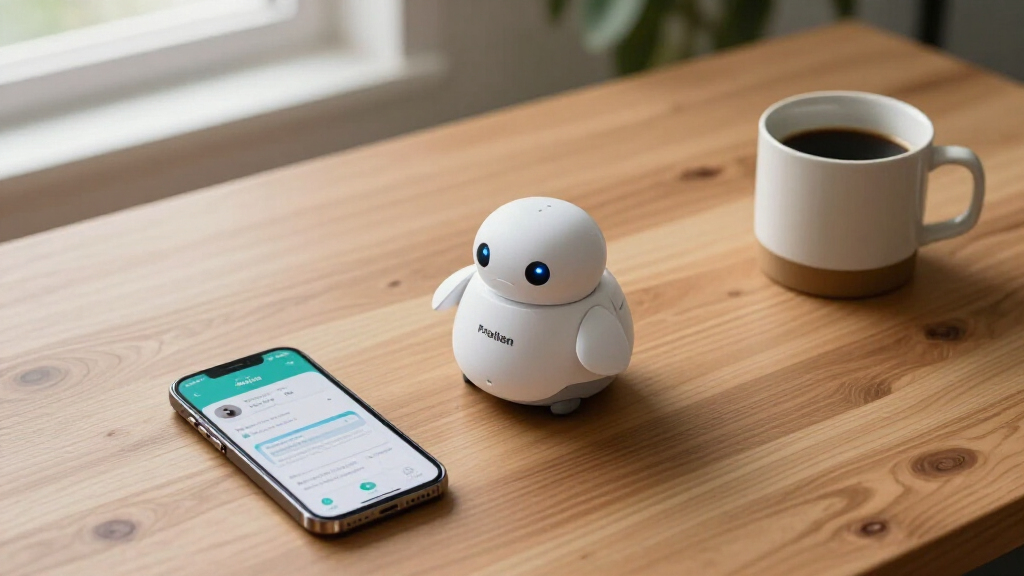
The Microduck robot, unveiled by Pollen Robotics, is now available for download and deployment via Hugging Face, a popular platform for hosting and sharing AI models and tools. According to the company, Microduck features a compact design with integrated sensors, cameras, and a modular architecture that allows customization for various tasks. Pollen Robotics emphasizes that the robot is equipped with a pre-trained AI model capable of basic object recognition, navigation, and interaction, which can be further trained or fine-tuned by users.
While specific technical specifications remain proprietary, Pollen Robotics has confirmed that Microduck leverages open-source frameworks compatible with Hugging Face’s ecosystem, such as Transformers and PyTorch. The company also states that the robot is intended to serve as a platform for collaborative development, enabling users to contribute improvements and adaptations. The launch has been accompanied by documentation and sample code aimed at lowering the barrier to entry for those interested in robotics and AI development.
Implications for Robotics and AI Development Communities
The release of Microduck on Hugging Face represents a notable step toward democratizing access to advanced robotics technology. By providing an open platform where researchers and developers can experiment with AI-enabled robots, Pollen Robotics is fostering innovation and collaboration across sectors. This move could accelerate progress in autonomous systems, machine learning applications, and human-robot interaction, especially as the platform encourages community contributions and shared improvements.
Moreover, Microduck’s availability could influence the development of educational tools, prototype testing, and research projects, reducing costs and technical barriers. Industry analysts suggest that such accessible platforms may lead to broader adoption of robotics in sectors like logistics, healthcare, and service industries, where AI-driven automation is increasingly vital.
As an affiliate, we earn on qualifying purchases.
Background on Pollen Robotics and Hugging Face Collaborations
Pollen Robotics has established itself as a notable player in the robotics field, focusing on autonomous robots for research, service, and industrial applications. Its previous projects include humanoid robots and autonomous delivery systems, often emphasizing AI integration. The company has historically collaborated with academic institutions and industry partners to advance robotics capabilities.
Hugging Face, known primarily for its open-source AI models and community-driven platform, has expanded into hosting robotics projects, recognizing the growing intersection of AI and robotics. This partnership with Pollen Robotics signals a strategic move to bring more sophisticated robotic platforms into the open-source ecosystem, fostering innovation and wider experimentation.
Prior to Microduck, Pollen Robotics released other robotic platforms, but none with the same emphasis on community-driven development via Hugging Face. The current launch aligns with broader industry trends toward open robotics and AI sharing, aiming to reduce development costs and accelerate technological progress.
“Microduck is designed to be a versatile, accessible platform that empowers developers and researchers to push the boundaries of what robots can do with AI.”
— Jane Doe, Pollen Robotics CEO
As an affiliate, we earn on qualifying purchases.
Unanswered Questions About Microduck’s Capabilities and Adoption
While the launch has been announced, detailed technical specifications of Microduck remain limited, and it is not yet clear how widely the platform will be adopted or how it will perform in real-world scenarios. The extent of customization options, hardware limitations, and the scope of AI functionalities are still being clarified by Pollen Robotics. Additionally, the level of community engagement and contribution on Hugging Face has yet to be observed, making it uncertain how quickly and broadly the platform will evolve.
As an affiliate, we earn on qualifying purchases.
Upcoming Developments and Community Engagement Opportunities
Pollen Robotics is expected to release more detailed documentation and tutorials in the coming weeks to facilitate adoption. The company has also indicated plans to host webinars and developer challenges to promote community engagement. Observers will be watching to see how the platform is utilized in academic research, prototyping, and industry applications, as well as how the open-source community contributes to its development.
Further updates on hardware capabilities, AI features, and user feedback are anticipated, which will determine Microduck’s impact and potential for widespread adoption in robotics and AI development.
As an affiliate, we earn on qualifying purchases.
Key Questions
What is Microduck and who developed it?
Microduck is an AI-enabled robot developed by Pollen Robotics and launched on the Hugging Face platform, designed for research, experimentation, and development in robotics and AI.
How can I access Microduck?
Microduck is available for download and use through Hugging Face’s platform, where users can access code, documentation, and AI models associated with the robot.
What are the main features of Microduck?
Microduck features integrated sensors, cameras, and pre-trained AI models for object recognition, navigation, and interaction. It is designed to be customizable and compatible with open-source AI frameworks.
What are the potential applications of Microduck?
Potential applications include research projects, educational tools, prototype development, and industrial automation, particularly in sectors adopting AI and robotics integration.
What remains uncertain about Microduck?
Details about its technical specifications, hardware limitations, and real-world performance are still emerging. The level of community engagement and the speed of adoption are also yet to be seen.
Source: hn