
TL;DR

Get business pricing on tech for your team
- Business-only prices and quantity discounts
- Tax-exempt purchasing
- Multiple users, one account, clear invoices
An anonymous developer has shared a tool that allows for infinite, non-Euclidean notes within the Poincaré disk model. This innovation offers a radically different way to organize and visualize information, with potential applications in knowledge management and creative work.
An anonymous developer has introduced an innovative note-taking tool that uses the Poincaré disk, a model of hyperbolic geometry, to create an infinite, non-Euclidean canvas for notes and ideas. This development matters because it challenges traditional Euclidean spatial constraints, potentially transforming how users organize and visualize complex information.
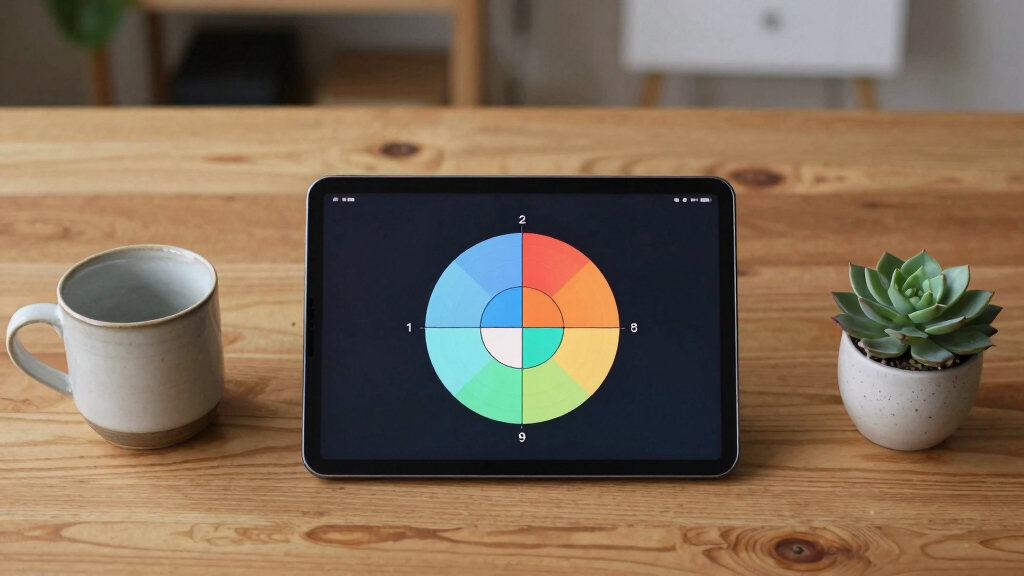
The project, shared via a Show HN post, features a digital canvas based on the Poincaré disk model, which inherently supports infinite expansion without the typical Euclidean limitations. Unlike conventional note apps, this tool allows notes to be placed on a curved, hyperbolic surface, enabling users to visualize relationships and hierarchies in a non-linear, expansive manner. The implementation appears to be experimental, with the developer emphasizing its potential as a proof of concept rather than a finished product.
The Poincaré disk is a well-known model in hyperbolic geometry, where space expands exponentially as one moves toward the boundary. Applying this to note organization means users can theoretically add an unlimited number of notes without running into spatial constraints, unlike traditional flat canvases. The developer has not specified whether this tool is publicly available for download or use, but the post indicates active development and interest from the Hacker News community.
Why It Matters
This innovation matters because it introduces a fundamentally different approach to digital note-taking and visualization. By leveraging hyperbolic geometry, the tool could enable users to manage large, complex data sets or ideas more intuitively, especially in fields like knowledge management, research, or creative brainstorming. It also demonstrates the potential for non-Euclidean mathematics to influence practical applications in software design, expanding the horizons of spatial interfaces.
digital note-taking app with hyperbolic geometry
As an affiliate, we earn on qualifying purchases.
As an affiliate, we earn on qualifying purchases.
Background
Traditional digital note-taking tools rely on Euclidean space, which limits the amount of information that can be stored and visualized within a fixed area. The Poincaré disk model is a mathematical representation of hyperbolic geometry, where space expands exponentially toward the boundary, allowing for infinite expansion within a finite boundary. Prior to this, most digital interfaces have not explored non-Euclidean geometries for practical applications, making this project a noteworthy experiment in alternative spatial representations.
“Using the Poincaré disk for notes allows for an infinite, non-linear organization that can adapt dynamically as ideas grow.”
— an anonymous researcher
“This is an early proof of concept aimed at exploring how hyperbolic geometry can change our approach to digital note management.”
— the developer
As an affiliate, we earn on qualifying purchases.
What Remains Unclear
It is not yet clear whether this tool will be made publicly available or how user-friendly it will be. The technical details of implementation and performance are still emerging, and its practical applications remain to be tested in real-world scenarios.
non-Euclidean visualization software
As an affiliate, we earn on qualifying purchases.
As an affiliate, we earn on qualifying purchases.
What’s Next
Next steps include further development, potential public release, and community testing to evaluate usability and effectiveness. Observers will be watching for updates on feature expansion, integration options, and potential commercialization.
knowledge management tools for complex data
As an affiliate, we earn on qualifying purchases.
As an affiliate, we earn on qualifying purchases.
Key Questions
What is the Poincaré disk?
The Poincaré disk is a model of hyperbolic geometry where space expands exponentially toward the boundary, allowing for infinite expansion within a finite boundary.
How does this tool differ from traditional note apps?
Unlike flat, Euclidean note apps, this tool uses a non-Euclidean, hyperbolic space that supports infinite, curved expansion, potentially enabling more flexible organization of large or complex datasets.
Is this tool available for public use?
As of now, it appears to be an experimental project shared via Hacker News, with no official release announced. Further development and testing are ongoing.
What are potential applications of this technology?
Possible uses include knowledge management, creative brainstorming, data visualization, and research, especially where complex relationships benefit from non-linear spatial organization.
Source: Hacker News
Halloween Picks
halloween
As an affiliate, we earn on qualifying purchases.