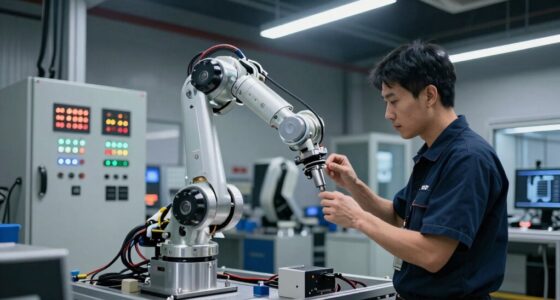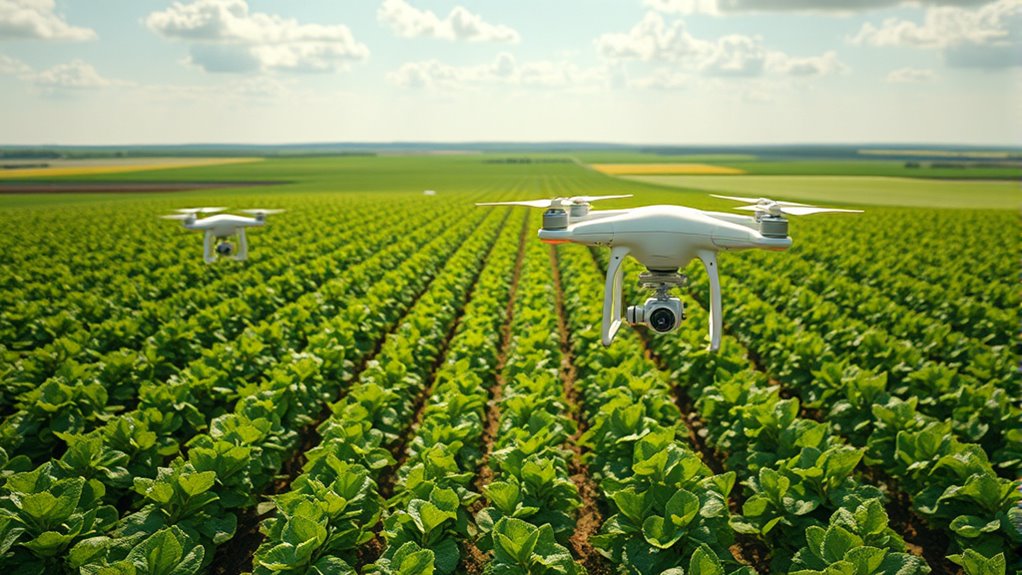
Agricultural automation involves using drones, robots, and sensors to make farming more efficient and sustainable. Drones can quickly survey fields, monitor crop health, and identify issues early. Robots manage livestock and assist with tasks like feeding and cleaning, while sensors provide real-time data on animals and crops. This technology reduces manual labor, cuts costs, and minimizes environmental impact. Keep exploring to discover how these innovations can transform your farming operations.
Key Takeaways
- Drones equipped with multispectral cameras enable precise crop monitoring and early issue detection.
- Robots and sensors facilitate real-time livestock health tracking and automated feeding.
- Automation reduces manual labor and chemical usage, promoting sustainable farming practices.
- Data collected by drones and robots supports informed decision-making for crop and herd management.
- Advanced tools like off-road vehicle tuning improve access and maintenance in diverse farm environments.
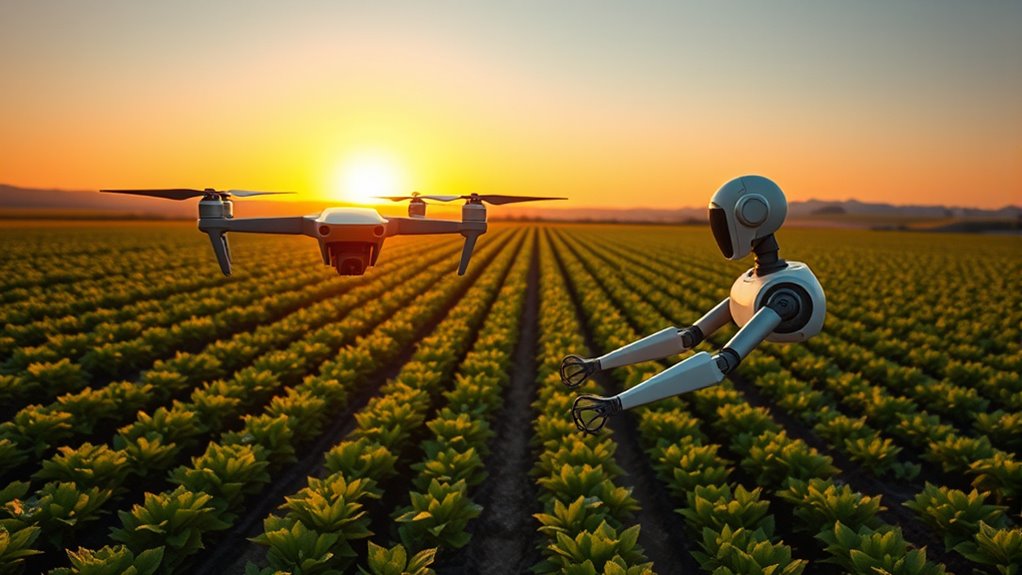
Have you ever wondered how technology is transforming farming? Today’s advancements are revolutionizing the way you manage your fields and livestock, making farming more efficient, precise, and sustainable. With agricultural automation, tools like drones and robots are changing the game, giving you new ways to monitor and care for your land and animals. These innovations help you gather real-time data, make informed decisions, and reduce manual labor, ultimately boosting productivity and profitability.
One of the key areas where automation shines is crop monitoring. Instead of walking through endless rows or relying on outdated methods, you can now deploy drones equipped with multispectral cameras to survey your fields. These drones fly over your crops, capturing high-resolution images that reveal plant health, moisture levels, and pest infestations. This data allows you to identify issues early, target treatments precisely, and avoid unnecessary chemical use. As a result, you save money and minimize environmental impact while ensuring your crops grow strong and healthy. Crop monitoring with automation also means you spend less time in the field and more time analyzing data and planning next steps, making your farming operation more efficient.
Livestock management is another area that benefits markedly from automation. Robots and sensor technology help you keep a closer eye on your animals without disturbing them. Automated feeding systems can deliver the right amount of feed at scheduled times, reducing waste and ensuring your livestock receives ideal nutrition. Wearable sensors attached to animals monitor vital signs, activity levels, and location, giving you real-time insights into their health and behavior. This early detection of illnesses or stress allows you to intervene promptly, improving animal welfare and reducing veterinary costs. Automated systems also streamline record-keeping, making it easier to track growth, breeding cycles, and health history, which is essential for effective herd management. Furthermore, integrating Jeep Tuning principles into off-road vehicle setups can help farmers reach remote locations more reliably and efficiently during field inspections and maintenance.

DJI P4 Multispectral Agriculture Drone, 3-Axis Stabilized Camera, RGB + 5 Multispectral Sensors, RTK Module, 27-Min Flight Time, 4.4-Mile Range
- Multispectral Imaging: RGB plus five spectral sensors
- Precision Data Collection: TimeSync for centimeter accuracy
- Long Flight Time: Up to 27 minutes of flight
As an affiliate, we earn on qualifying purchases.
As an affiliate, we earn on qualifying purchases.
Frequently Asked Questions
What Are the Safety Considerations for Using Agricultural Drones?
When using agricultural drones, you should prioritize drone maintenance to guarantee safe operation and prevent malfunctions. Always check for hardware issues and update software regularly. Be mindful of privacy concerns by respecting local regulations and avoiding flyovers of private property without permission. You also need to stay aware of airspace restrictions and maintain a safe distance from people and animals, to minimize risks and ensure safe, responsible drone use.
How Do Robots Adapt to Different Crop Types?
Imagine robots as chameleons, blending seamlessly into different fields. They adapt to crop variety through advanced sensors and versatile tools, allowing them to handle diverse plants with precision. Robotic versatility means they can switch tasks—be it planting, watering, or harvesting—by adjusting settings or attachments. This adaptability makes them invaluable, ensuring they meet the unique needs of each crop type, much like a chameleon changing colors to fit its environment.
What Is the Cost Comparison Between Manual and Automated Farming?
You’ll find that automated farming offers better cost efficiency over time, despite higher initial investment costs. While manual farming may seem cheaper upfront, automation reduces labor expenses and increases productivity, leading to savings in the long run. You should consider the balance between the upfront investment costs and the potential for increased yield and efficiency, which can make automation a smarter financial decision in the end.
How Is Data From Drones Analyzed for Farm Management?
You analyze data from drones by first collecting drone imaging that captures detailed images of your farm. Then, you use data analytics tools to process these images, identifying issues like pest infestations, water stress, or nutrient deficiencies. This analysis helps you make informed management decisions quickly, optimizing crop health and yields. By leveraging drone imaging and data analytics, you gain precise insights that manual observation can’t provide efficiently.
What Are the Legal Regulations Surrounding Drone Usage in Agriculture?
You need drone licensing to legally operate in agriculture, as many countries require registration and certification. While flying, you should be aware of privacy concerns, ensuring you don’t invade neighbors’ rights or private property. Regulations often restrict flying heights and no-fly zones around airports. Investigating these laws helps you avoid penalties and safely use drones for crop monitoring, ensuring compliance and respecting privacy while enhancing your farm management.

Adjustable Speed Electric Powder Particle Feeder, Automatic Feeding Machine for Livestock & Animal Feed (Stainless Steel)
- Automatic Powder and Granular Feeding: Efficient automatic feeding of powders and granules
- Adjustable Speed Control: Easily regulate material flow rate
- Large Hopper and Multiple Nozzles: Flexible discharge options for various materials
As an affiliate, we earn on qualifying purchases.
As an affiliate, we earn on qualifying purchases.
Conclusion
As you embrace agricultural automation, you’re gently guiding farming into a brighter, more efficient future. Drones and robots become your trusted partners, helping you nurture your fields with care and precision. While these advancements quietly reshape your work, they also open doors to more time spent enjoying the simple joys of farming. With each innovative step, you’re cultivating not just healthier crops, but a more sustainable and rewarding way to connect with the land.

Long-Range Sensor Networks: Build private monitoring systems for farms, homes, and remote assets
As an affiliate, we earn on qualifying purchases.
As an affiliate, we earn on qualifying purchases.
off-road vehicle tuning for farmers
As an affiliate, we earn on qualifying purchases.
As an affiliate, we earn on qualifying purchases.