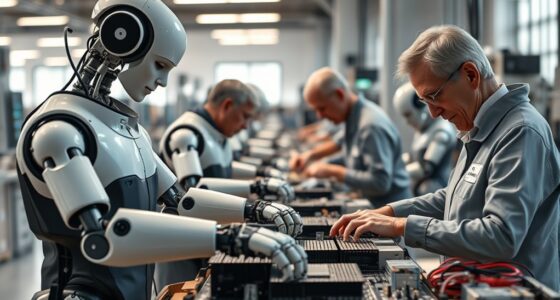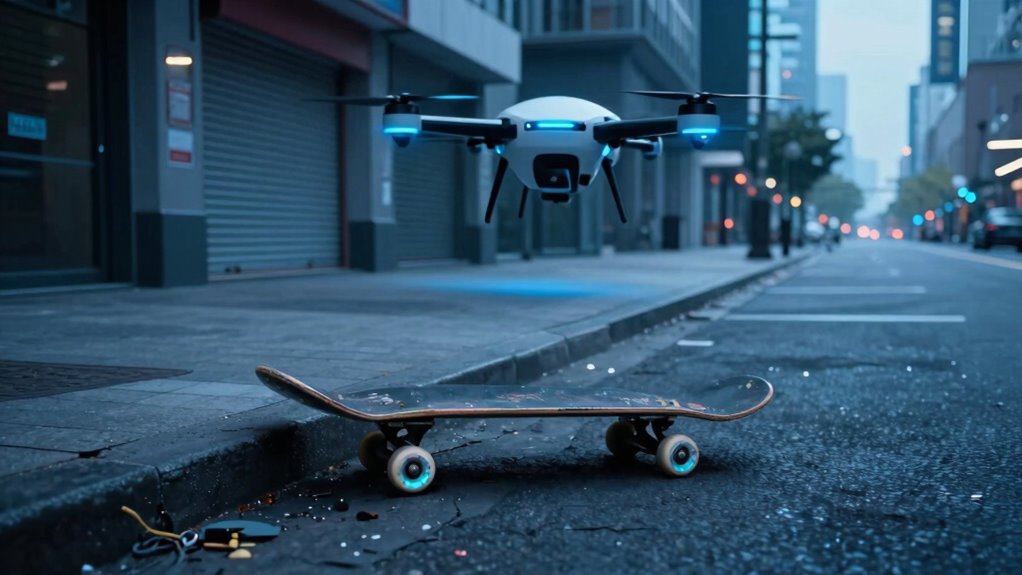

Automation might restrict your ability to move freely and access opportunities before it takes your job. As autonomous vehicles and drones become more common, control could shift to a few corporations or governments, limiting your mobility. This reduced movement could make it harder to reach education, healthcare, or work. If these trends continue, societal divides may grow wider. To understand how you can stay ahead and protect your access, keep exploring these important issues.

Get business pricing on tech for your team
- Business-only prices and quantity discounts
- Tax-exempt purchasing
- Multiple users, one account, clear invoices
Key Takeaways
- Automation could limit physical mobility and access to opportunities before significantly affecting employment levels.
- Reduced mobility may deepen inequalities by restricting access to education, healthcare, and jobs.
- Control over autonomous transportation systems might concentrate power, diminishing individual freedom to travel.
- Infrastructure vulnerabilities and technological barriers could prevent equitable benefits from automation.
- Ensuring resilient policies and infrastructure is crucial to maintain societal participation amid technological shifts.
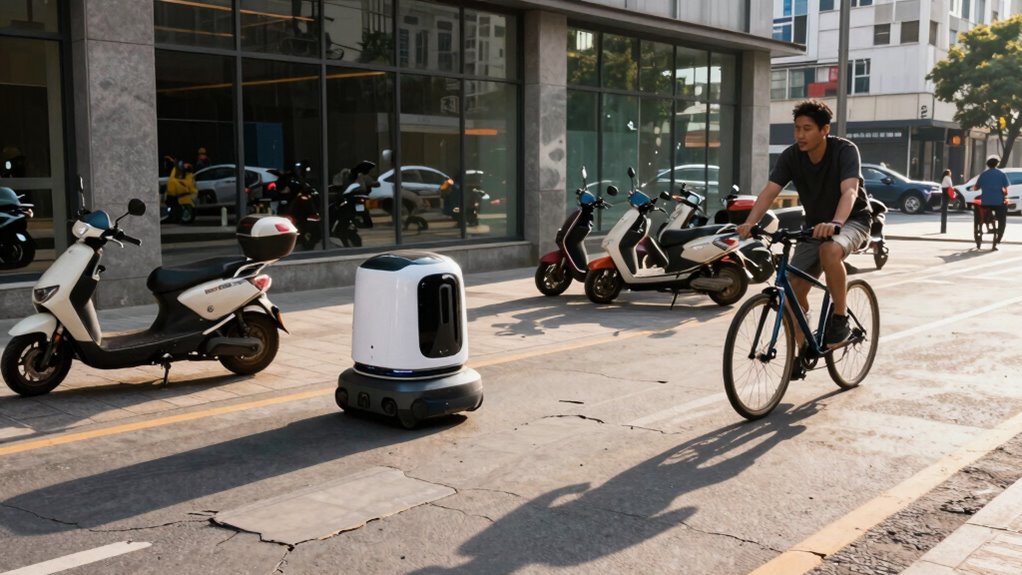
Many people assume automation will primarily lead to job losses, but emerging trends suggest it might first threaten your mobility—your ability to move freely and access opportunities. While concerns about technological unemployment are valid, the immediate challenge could be maintaining your capacity to participate in the economy and society. Automation’s rapid integration into transportation, communication, and infrastructure means your ability to travel, learn, and connect might become more restricted before jobs start disappearing. This shift could limit your access to education, healthcare, and employment, especially if automation widens existing inequalities or creates new barriers.
Automation may threaten your mobility and access to opportunities before it causes widespread job losses.
As automation advances, it reshapes how people move within cities and between regions. Autonomous vehicles and drone deliveries promise efficiency and convenience, but they also risk consolidating control over transportation networks. If these systems are managed by a few powerful corporations or governments, your freedom to choose how and when to travel could diminish. This loss of mobility isn’t just about physical movement; it’s about access to opportunities that depend on being able to reach them. Reduced mobility could isolate communities, making it harder for you to participate fully in the economy, whether that’s through commuting to work, accessing education, or visiting healthcare providers. Moreover, lack of equitable access can exacerbate existing societal divides and hinder social mobility. Recognizing how automation influences infrastructure can help you understand potential vulnerabilities in your mobility. Additionally, technological barriers might prevent some groups from benefiting equally from these advancements.
The threat to mobility underscores the importance of workforce resilience. If you’re unprepared for these shifts, you might find yourself trapped in a cycle of dependence, unable to adapt swiftly to changing circumstances. Building resilience means acquiring skills that complement automation—such as digital literacy, critical thinking, and adaptability—so you can pivot as new opportunities arise. It’s also crucial to be aware of the social implications of automation, as they can influence how these changes affect different communities. Supporting policies that ensure equitable access to transportation and technology, preventing automation from deepening divides, is essential. Additionally, investing in public infrastructure can ensure that mobility remains accessible to all segments of society.
In this context, your focus should be on guaranteeing that automation enhances mobility rather than hampers it. Investments in public infrastructure, affordable connectivity, and inclusive policies can help buffer the negative impacts on your ability to move and access resources. Workforce resilience isn’t just about individual effort but also about collective action—supporting community programs and policies that safeguard your rights to mobility and opportunity. If you act now to develop your skills and push for equitable automation policies, you can help shape a future where technology empowers rather than restricts you.
Ultimately, automation’s impact on your mobility might be the first sign of broader societal shifts. Recognizing this early gives you the chance to adapt, advocate, and prepare so that your access to opportunity remains intact, even amid rapid technological change.
As an affiliate, we earn on qualifying purchases.
Frequently Asked Questions
How Does Automation Impact Urban Transportation Systems?
Automation transforms urban transportation systems by making them smarter and more efficient. You’ll notice improved traffic flow and reduced congestion through smart infrastructure that adapts to real-time data. Policy adaptations become essential, guiding how automation integrates into daily transit. As a result, your commute can become faster and safer, with automated vehicles and smart signals working together seamlessly. Automation ultimately boosts mobility, but only if policies evolve alongside technological advancements.
Which Industries Are Most Affected by Mobility Reductions?
Imagine a small town losing its heartbeat when transportation options vanish; industries like rural agriculture and tourism suffer most from mobility reductions. When rural accessibility declines, farmers struggle to get supplies, and tourism declines as visitors find it hard to reach destinations. Data shows that reduced mobility hits these sectors hardest, as they rely heavily on easy transportation. You’ll notice the ripple effects on local economies and community significance.
How Might Automation Change Daily Commuting Habits?
Automation will likely transform your daily commuting habits by making remote work and telecommuting trends more common. You might find yourself commuting less frequently or even eliminating daily travel altogether, thanks to advanced technology enabling seamless remote collaboration. As automation improves, companies may encourage flexible work arrangements, reducing traffic congestion and environmental impact. You’ll adapt to a lifestyle where digital connectivity replaces traditional commutes, giving you more time and flexibility in your day.
What Are Alternative Solutions to Mobility Challenges Caused by Automation?
You can adopt remote work to reduce reliance on traditional mobility, easing congestion and transportation demands. Additionally, supporting infrastructure investment, like improved public transit and cycling lanes, offers practical alternatives to mobility challenges caused by automation. By embracing flexible work arrangements and advocating for better infrastructure, you help create a more resilient community that adapts to technological changes without sacrificing mobility or access.
How Does Reduced Mobility Influence Economic Growth?
Reduced mobility can slow economic growth because it hampers workforce adaptation, limiting access to jobs and training opportunities. When people can’t move easily, social inequality increases, as marginalized groups face greater barriers. This constrains consumer spending and innovation, ultimately stalling economic progress. To counter this, you need policies that improve mobility, support workforce adaptation, and reduce social inequality, ensuring a resilient and inclusive economy that can thrive despite automation challenges.
As an affiliate, we earn on qualifying purchases.
Conclusion
So, brace yourself—automation isn’t just coming for your job; it’s sneaking into your mobility, your freedom to move and grow. If you think losing a job is bad, imagine losing the ability to change your circumstances entirely, all while stuck in the same digital grid. It’s not just about robots replacing workers; it’s about a future where your ability to move forward gets trapped in unseen chains. The real threat might be the death of your mobility, not your job.
As an affiliate, we earn on qualifying purchases.
accessible transportation devices
As an affiliate, we earn on qualifying purchases.
As an affiliate, we earn on qualifying purchases.
Fall Picks
fall essentials
As an affiliate, we earn on qualifying purchases.