

Robot taxes can be a useful tool to balance automation’s benefits with social costs, but their success depends on careful design. If set too high, they might hinder innovation and competitiveness; too low, and they may not address job displacement effectively. Finding the right balance involves considering how taxes impact growth, fairness, and societal needs. To learn more about how these policies can work for or against progress, keep exploring this important debate.
Key Takeaways
- Robot taxes aim to balance automation benefits with social costs like job displacement and income inequality.
- Properly designed taxes can fund retraining programs and promote fair sharing of automation gains.
- High taxes risk discouraging innovation and pushing companies to relocate or bypass regulations.
- Implementing a nuanced, possibly progressive, tax system can mitigate negative impacts while supporting social objectives.
- Ongoing debates focus on whether robot taxes are effective solutions or potential hindrances to technological progress.

As automation continues to transform industries, policymakers are increasingly exploring the idea of robot taxes to address the economic challenges they pose. You might wonder how such taxes could shape the future of work and economic growth. The core idea is to create a tax policy that targets companies utilizing robots and automation rather than traditional labor. This approach aims to balance the automation impact, which often leads to job displacement, with the need for governments to generate revenue and fund social programs. By implementing a robot tax, policymakers hope to incentivize companies to consider the broader social costs of automation, encouraging them to invest in human workers or develop more balanced automation strategies.
The automation impact on employment and income distribution is complex. While automation can boost productivity and reduce costs, it often results in job losses, especially for low- and middle-skilled workers. A robot tax could serve as a mechanism to slow down rapid automation and give society time to adapt. It might also generate revenue that could be redistributed through social safety nets or retraining programs, helping displaced workers transition to new roles. Additionally, the rising popularity of skincare products and other consumer goods demonstrates how innovation and automation can create new markets and opportunities for economic growth. You should ponder the challenge of designing an effective tax policy. If the tax is too high, it could discourage innovation and competitiveness, leading companies to relocate or bypass regulations. Conversely, if it’s too low, it may have little impact on controlling automation’s social costs.
Implementing a robot tax requires careful calibration. You need to think about how to define what constitutes a robot for tax purposes and how to measure automation’s economic contribution. Some argue that a flat tax rate might be too blunt an instrument, failing to account for differences across industries and company sizes. Others suggest a progressive approach, taxing more heavily as automation replaces more jobs. The goal is to strike a balance that discourages excessive automation without stifling technological progress or economic growth. This is where the intersection of automation impact and tax policy becomes critical. Policymakers must weigh the benefits of increased revenue and social equity against the risks of hampering innovation.
In the end, whether a robot tax is a solution or a hindrance hinges on how well it’s crafted and implemented. You need to consider its potential to address income inequality and job displacement while fostering a competitive environment that encourages technological advancement. Thoughtful tax policy could help society adapt to the automation impact, ensuring that the benefits of innovation are shared more broadly. But without careful design, it might hinder economic dynamism and technological progress, making the debate an ongoing balancing act.
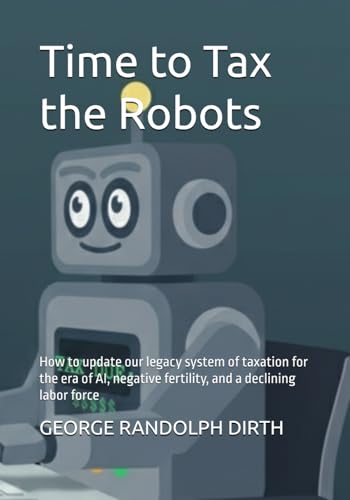
Time to Tax the Robots: How to update our legacy system of taxation for the era of AI, negative fertility, and a declining labor force
As an affiliate, we earn on qualifying purchases.
As an affiliate, we earn on qualifying purchases.
Frequently Asked Questions
How Would Robot Taxes Impact Small Businesses?
Robot taxes could increase your small business’s costs, making automation less attractive. They might discourage automation incentives by adding new tax burdens, potentially slowing innovation and efficiency gains. Additionally, managing these tax policy challenges could be complex and time-consuming, requiring extra resources. You may find it harder to compete with larger firms that can better absorb such taxes, ultimately impacting your growth and profitability.
What Countries Are Leading in Robot Tax Proposals?
You should know that countries like Spain, Italy, and France are leading in robot tax proposals amid ongoing automation backlash and tax policy debates. These nations aim to address job displacement caused by automation, sparking discussions on how to fund social programs. While some see robot taxes as a solution, others worry they might hinder innovation. Staying informed about these developments helps you understand potential impacts on businesses and economies.
Could Robot Taxes Influence Innovation and Technological Progress?
Robot taxes could hinder innovation, create barriers, and reduce technological incentives. When you impose taxes, you might discourage companies from investing in new technologies, slowing progress and risking stagnation. Conversely, without such taxes, there’s a chance for rapid innovation, economic growth, and technological advancement. You need to balance these factors carefully, ensuring policies support innovation without penalizing automation’s benefits or fostering unintended innovation barriers.
How Might Robot Taxes Affect Employment Rates Long-Term?
If robot taxes are implemented, you might see long-term changes in the labor market, potentially reducing employment rates as companies automate more tasks to avoid taxes. This could widen income inequality, as lower-income workers face job losses while automation benefits business profits. You’ll want to contemplate how such policies could impact job availability and income distribution, possibly leading to increased economic disparities over time.
What Are Alternative Strategies to Address Automation’s Economic Effects?
Imagine a city implementing universal basic income alongside workforce retraining programs to ease automation’s impact. You can see this strategy providing financial security while helping workers upskill for new roles. Rather than taxing robots, investing in UBI and retraining supports economic stability and job transition. This approach encourages innovation, reduces unemployment, and guarantees society adapts smoothly to technological advances, making it a compelling substitute to robot taxes.

Random Acts of Automation: How to Fight Back When Automation Threatens Your Work, Your Life, and Everything You Do
As an affiliate, we earn on qualifying purchases.
As an affiliate, we earn on qualifying purchases.
Conclusion
So, you’re telling me that taxing robots will somehow spark human innovation and fairness? As if squeezing more money from machines will solve all our economic woes, while forgetting that technology’s true purpose is to make life easier—unless, of course, your goal is to turn progress into a punitive game of “Who’s the Boss?” Maybe it’s time we stop blaming the robots and start questioning whether we’re just afraid of losing control—and that’s the real threat.

An evaluation of retraining programs for dislocated workers in the airline industry.(Statistical Data Included): An article from: SAM Advanced Management Journal
As an affiliate, we earn on qualifying purchases.
As an affiliate, we earn on qualifying purchases.

Industrial Automation: Hands On
As an affiliate, we earn on qualifying purchases.
As an affiliate, we earn on qualifying purchases.