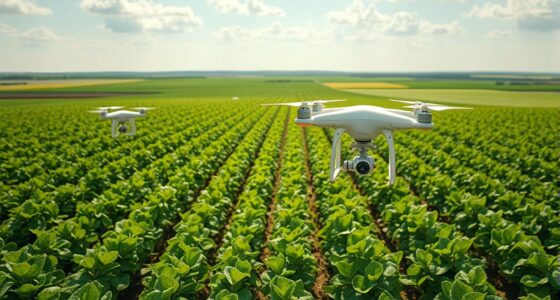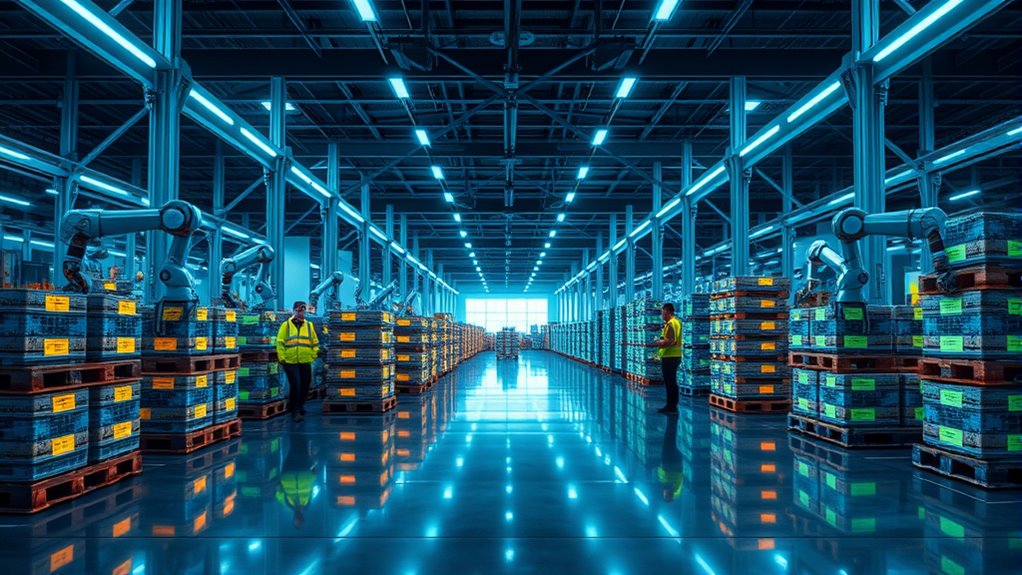

Inside the warehouse of the future, you’ll see humans and machines working side by side, seamlessly blending automation with human skills. Advanced robots and AI handle routine tasks like picking, packing, and moving goods, boosting speed and accuracy. While automation takes care of repetitive work, humans focus on strategic, problem-solving roles. This collaboration creates a smarter, more sustainable operation. To discover how these innovations are shaping the workspace, explore more about this evolving environment.

Get business pricing on tech for your team
- Business-only prices and quantity discounts
- Tax-exempt purchasing
- Multiple users, one account, clear invoices
Key Takeaways
- Future warehouses feature advanced automation and robotics that handle routine tasks, allowing humans to focus on strategic roles.
- AI and predictive analytics optimize staffing, balancing human labor with machine efficiency for fluctuating demands.
- Autonomous mobile robots and automated systems enhance speed, accuracy, and space utilization alongside human workers.
- Human-machine collaboration boosts productivity, with technology supporting secure, real-time data sharing and decision-making.
- Emphasis on security and sustainability ensures resilient, eco-friendly operations combining human oversight with smart automation.
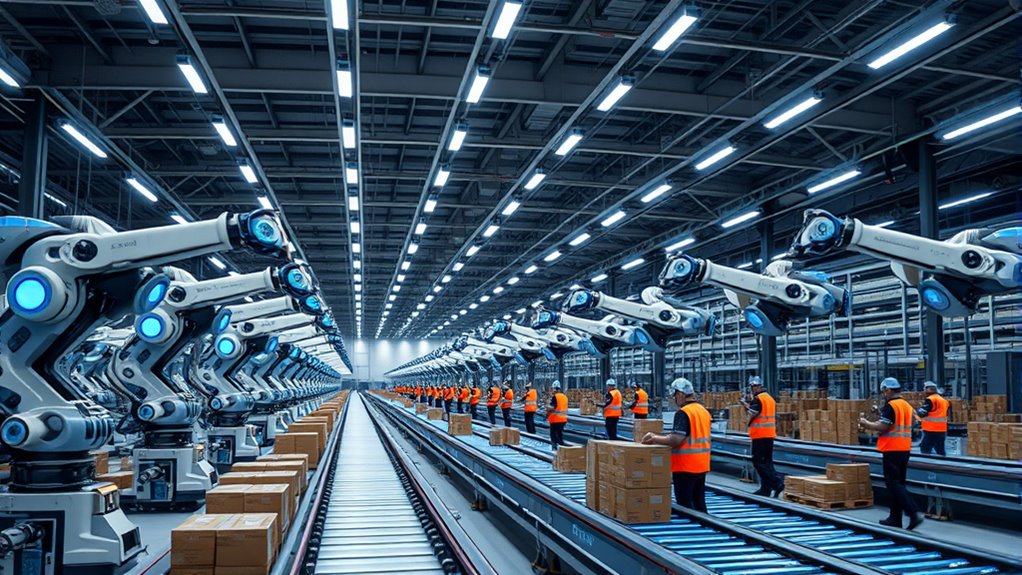
The warehouse of the future is transforming rapidly, driven by cutting-edge technologies that enhance efficiency, sustainability, and workforce management. As you step into this evolving environment, you’ll notice how artificial intelligence (AI) plays a critical role in decision-making. It analyzes vast amounts of data to optimize operations, helping you anticipate demand and adjust stock levels proactively. Cloud computing further boosts your warehouse’s agility by providing scalable, real-time data processing and storage, allowing you to access information anywhere and adapt quickly to changing conditions.
Automation and robotics are reshaping your workspace, taking over many manual tasks. Autonomous mobile robots (AMRs), equipped with sensors and machine learning, navigate dynamic environments to transport goods and assist in order picking. These robots improve speed and accuracy, reducing the need for manual effort and minimizing errors. Automated storage and retrieval systems (AS/RS) maximize space utilization, especially in densely packed warehouses, while modular designs like AutoStore offer flexible expansion options, letting you scale operations seamlessly. Robotic pick-and-place arms speed up order fulfillment, decreasing turnaround times and boosting throughput. As a result, you’ll find that automation not only enhances productivity but also allows human workers to focus on more complex, value-added tasks.
Automation and robotics streamline tasks, boosting efficiency and enabling workers to focus on higher-value activities.
Sustainability is a key focus in the warehouse of the future. Green innovations, such as renewable energy sources and energy-efficient robotics, help lower emissions and operational costs. Automation plays a crucial role here, reducing waste through optimized packaging and minimizing unnecessary energy consumption. With energy-efficient practices in place, your warehouse becomes more resilient and adaptable to environmental challenges. These sustainable operations benefit your bottom line, improve your company’s eco-credentials, and contribute to long-term viability. Additionally, understanding for sale 100 options can help you invest in cost-effective equipment to further support sustainability goals.
When it comes to workforce management, AI-driven systems analyze historical data and seasonal trends to predict staffing needs accurately. You’ll see roles evolving, with automation handling routine tasks and human workers shifting toward more complex, strategic responsibilities. Predictive analytics optimize labor deployment, ensuring you have the right number of staff when you need them. Human-machine collaboration becomes the norm, combining the strengths of both to enhance productivity. As operational demands fluctuate, technology helps you scale your workforce efficiently, avoiding overstaffing or shortages.
Security remains a priority in this connected environment. Protecting data from cyber threats and ensuring secure communication protocols are essential to maintain system integrity. By integrating these advanced technologies, you create a smarter, safer, and more sustainable warehouse—where humans and machines work together seamlessly to meet tomorrow’s logistics challenges.
As an affiliate, we earn on qualifying purchases.
Frequently Asked Questions
How Will Human Jobs Evolve With Increased Automation?
You’ll find your job evolving as automation increases. Instead of performing repetitive tasks, you’ll focus on high-value roles like problem-solving, creativity, and decision-making. Upskilling becomes essential, helping you stay adaptable and relevant. Automation handles routine work, freeing you to use your human skills more effectively. Embracing change, continuously learning, and collaborating with machines will position you for success in this new, dynamic work environment.
What Safety Measures Protect Workers Around Autonomous Machines?
You’re asking about safety measures around autonomous machines. You’ll find real-time monitoring systems and sensors that detect hazards, triggering automated alerts to prevent accidents. Predictive maintenance keeps equipment reliable, reducing failure risks. Proper training helps you interact safely with robots, while task allocation minimizes manual effort in dangerous tasks. Together, these measures create a safer environment, ensuring you and your coworkers can work confidently alongside autonomous machines.
Will Robots Replace All Manual Labor Tasks in Warehouses?
You wonder if robots will replace all manual labor tasks in warehouses. Currently, automation handles repetitive, low-complexity tasks, but many jobs still need human judgment, flexibility, and decision-making. Robots can’t fully replace humans because of the complexity and variability of certain tasks. Instead, automation complements human roles, with humans focusing on oversight, strategy, and exception handling, making warehouse operations more efficient without eliminating the need for human workers entirely.
How Do Cost Savings Balance With Employee Training and Onboarding?
Did you know automation can cut operational costs by up to 20%? When balancing cost savings with training, you’ll find that initial investments in employee retraining and skill development are essential. These costs might seem high initially, but they’re investments toward long-term gains. As you upgrade your warehouse, you’ll improve efficiency, accuracy, and adaptability, making the training worthwhile and ensuring your workforce evolves alongside technological advancements.
What Ethical Considerations Arise From Human-Machine Collaboration?
You need to consider the ethical implications of human-machine collaboration, such as protecting workers’ rights and ensuring job security. As automation increases, it’s vital to balance efficiency with dignity, involving employees in decision-making and creating new roles that emphasize human skills like empathy and creativity. You must also prioritize safety, privacy, and fair treatment, fostering trust through transparent practices and inclusive policies that support workforce well-being.
As an affiliate, we earn on qualifying purchases.
Conclusion
As you step into the warehouse of the future, remember it’s like a symphony where humans and machines move in harmony. While technology accelerates efficiency, your ingenuity and adaptability are what truly drive success. Together, you create a future that’s brighter than any single part could achieve. Embrace this collaboration, knowing that your role is crucial—just as a heartbeat keeps a pulse alive. The future is yours to shape, vibrant and full of endless possibilities.
autonomous mobile robot for warehouse
As an affiliate, we earn on qualifying purchases.
As an affiliate, we earn on qualifying purchases.
automated storage and retrieval system
As an affiliate, we earn on qualifying purchases.
As an affiliate, we earn on qualifying purchases.
Fall Picks
fall essentials
As an affiliate, we earn on qualifying purchases.