
TL;DR
The ATM’s arrival in 1967 automated cash handling, but U.S. teller employment rose modestly through 2010 as cheaper branches helped banks expand. Mobile banking and branch closures later drove a sharper decline: U.S. teller employment fell to about 339,200 in 2025, while German bank branches dropped to 16,799.
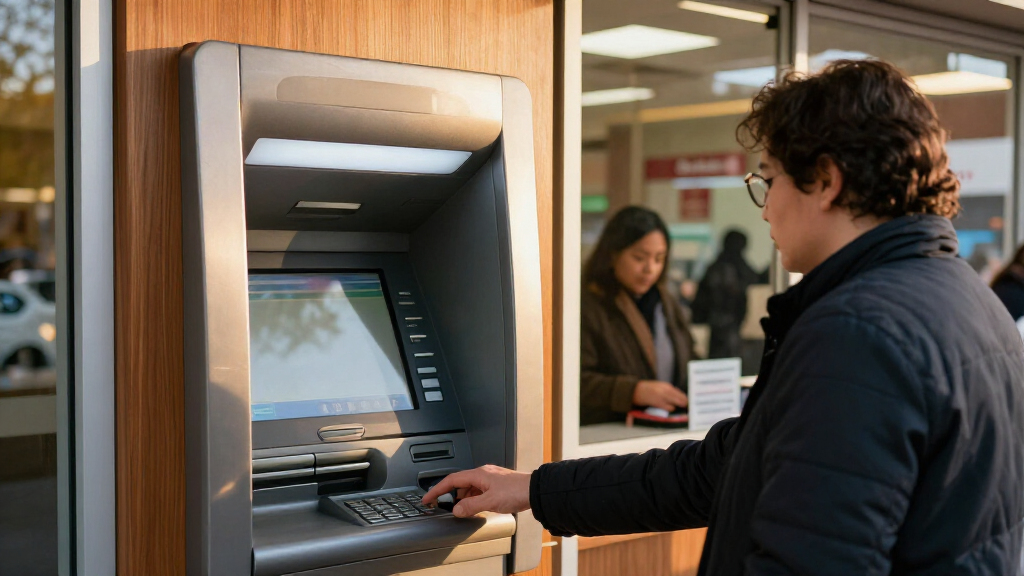
ATMs did not initially eliminate bank teller jobs in the United States: while ATM numbers roughly quadrupled from 1995 to 2010, teller employment rose modestly over the longer period from 1980 to 2010. A November 20, 2026, report traces how the machines first shifted tellers toward customer advice, while mobile banking and branch closures later cut the workforce.

Get business pricing on tech for your team
- Business-only prices and quantity discounts
- Tax-exempt purchasing
- Multiple users, one account, clear invoices
The first Barclays cash machine opened outside a branch in Enfield, north London, on June 27, 1967. Actor Reg Varney withdrew up to £10 in one-pound notes. The machines took over a teller’s central task—dispensing cash—though customers used a special paper cheque and personal code, rather than a plastic card. A German cash machine followed in 1968; a U.S. installation came in 1969.
In figures cited from economist James Bessen’s analysis, U.S. ATMs increased from about 100,000 in 1995 to about 400,000 in 2010. Yet teller employment rose from roughly 500,000 in 1980 to 550,000 in 2010, according to findings summarized by MIT economist David Autor. The report says fewer tellers were needed per branch, but cheaper operations and changes that allowed banks to expand branch networks helped offset those reductions.
That pattern later shifted. The report cites Bureau of Labor Statistics figures showing U.S. teller employment fell from about 600,500 in 2008 to 339,200 in 2025. In 2023, 48.3% of U.S. households with a bank account mainly used mobile banking, compared with 15.1% that mainly used a teller. Germany’s bank branches fell from 45,467 at the end of 2004 to 16,799 at the end of 2025.
AI, ATMs, and bank tellers A changing balance
ATMs first changed teller work without ending job growth. Later, mobile banking and branch closures coincided with fewer tellers and branches.
ATMs changed the teller role
The first Barclays cash machine opened in Enfield on June 27, 1967, taking over routine cash dispensing.
Customers used a paper cheque and personal code to withdraw cash.
With less cash handling at each branch, tellers shifted toward customer advice.
Mobile banking and branch closures later coincided with falling teller employment.
Why jobs initially held up
Fewer tellers per branch did not immediately mean fewer teller jobs overall.
- A typical urban branch needed about 13 tellers instead of 20.
- ATMs reduced routine cash work.
- U.S. city branches grew by 43% from 1988 to 2004.
- Lower operating costs helped banks expand.
The balance later shifted
U.S. teller employment fell from about 600,500 in 2008 to 339,200 in 2025.
What customers and workers should watch
The figures show a changing pattern, but they do not isolate what caused the later decline.
| Indicator | What it tells us |
|---|---|
| Teller employment | Whether the workforce decline continues |
| Household banking choices | How customers access routine services |
| Branch counts | Where in-person help remains available |
From Cash Handling to Mobile Banking
The changing numbers show that automation’s effect depends on how businesses reorganize. ATMs reduced the amount of routine cash work at each branch, but lower operating costs helped banks open more branches, sustaining demand for tellers. In this account, the later contraction coincided with customers shifting to mobile banking and banks closing branches.
For workers and customers, that means the question is broader than whether a machine can perform one task. The availability of in-person service also depends on whether banks keep branches open and what staff are asked to do there. The figures suggest tellers’ work moved toward advice and customer relationships before falling employment became more pronounced.
Products Worth Considering

Kindle Paperwhite Signature Edition 32GB (2024 Model) – Metallic Black

Bose Lifestyle Ultra Wireless Home Speaker, White Smoke

Logitech MX Keys S Combo Wireless Keyboard and Mouse, Graphite
As an affiliate, we earn on qualifying purchases.
How ATMs Reshaped Branch Staffing
Before cash machines, people generally had to visit a bank during office hours to get cash, according to the Barclays archive cited in the report. The 1967 device was called an automated teller machine because it took on work associated with the counter role. Its early paper-cheque system differed from the card-based machines that became familiar later.
Bessen’s explanation for the U.S. employment pattern centers on two changes between 1988 and 2004: a typical urban branch needed fewer tellers, roughly 13 rather than 20, while the number of bank branches in U.S. cities grew by 43%. The FDIC’s nationwide count of commercial bank offices, including head offices and branches, also rose during that period, from 58,937 at year-end 1988 to 77,302 at year-end 2004. It peaked at 88,522 in 2012.
The report describes a later phase in which digital banking and branch reductions changed the balance again. It says cash machines are also retreating in Germany, China and Japan, though it provides no comparable counts for those countries.
“actually rose modestly from 500,000 to approximately 550,000 over the 30-year period from 1980 to 2010”
— David Autor, summarizing James Bessen’s findings in 2015
What the Figures Cannot Show
The figures describe changes over time but do not establish that mobile banking alone caused the decline in teller employment. The report does not break down how much of the fall reflects branch closures, other changes in bank staffing, or shifts in the types of teller work. The causes cannot be separated from the data presented.
The account also does not provide current ATM counts or detailed figures for China and Japan, despite describing cash machines as retreating there. Its employment numbers use different periods and measures, so they do not by themselves show how many teller jobs were directly displaced by machines. Future staffing and branch trends are not specified.
The Next Phase of Bank Service
The report points to branch closures and mobile banking as the main developments behind the newer shift, but it names no upcoming policy change, company decision or employment forecast. The next clear indicators will be updated teller employment, household banking preferences and branch counts, which can show whether the trends reported through 2025 continue.
For customers, the practical question is whether banks retain accessible in-person help as routine transactions move online or to machines. How much advice and service remain available at branches will depend on banks’ staffing and location decisions; the source does not say what those decisions will be.
Key Questions
When did the first ATM open?
The report dates Barclays’ first cash machine to June 27, 1967, outside a branch in Enfield, north London. It dispensed up to £10 in one-pound notes.
Did ATMs immediately reduce U.S. teller employment?
Not in the period cited. U.S. ATM numbers roughly quadrupled from 1995 to 2010, while teller employment rose modestly from about 500,000 in 1980 to 550,000 in 2010, according to Bessen’s figures as summarized by Autor.
Why did teller employment initially hold up?
The report says each branch needed fewer tellers, but ATMs lowered operating costs and banks opened more branches. It cites a 43% increase in U.S. city branches from 1988 to 2004.
What happened to teller employment more recently?
The report cites Bureau of Labor Statistics figures showing U.S. teller employment fell from about 600,500 in 2008 to 339,200 in 2025. It does not quantify how much of that decline was caused by mobile banking or branch closures individually.
Source: Thorsten Meyer AI