
🔍 Read the full analysis: AI-Driven Search For Antimicrobial Molecules: The Role Of Codex And ChatGPT on ThorstenMeyerAI.com
Get ready for Prime Big Deal Days — try Prime free
Exclusive member deals on October 6–7, plus fast free delivery. Cancel anytime.
Start your free trialAs an affiliate, we earn on qualifying purchases.
TL;DR
The University of Pennsylvania’s bioengineering lab uses AI models alongside ChatGPT and Codex to rapidly identify potential antimicrobial molecules from genomic data. This approach can cut the initial discovery phase from years to hours, though candidates still require extensive validation, as detailed in the original analysis. The development highlights AI’s growing role in tackling antimicrobial resistance.
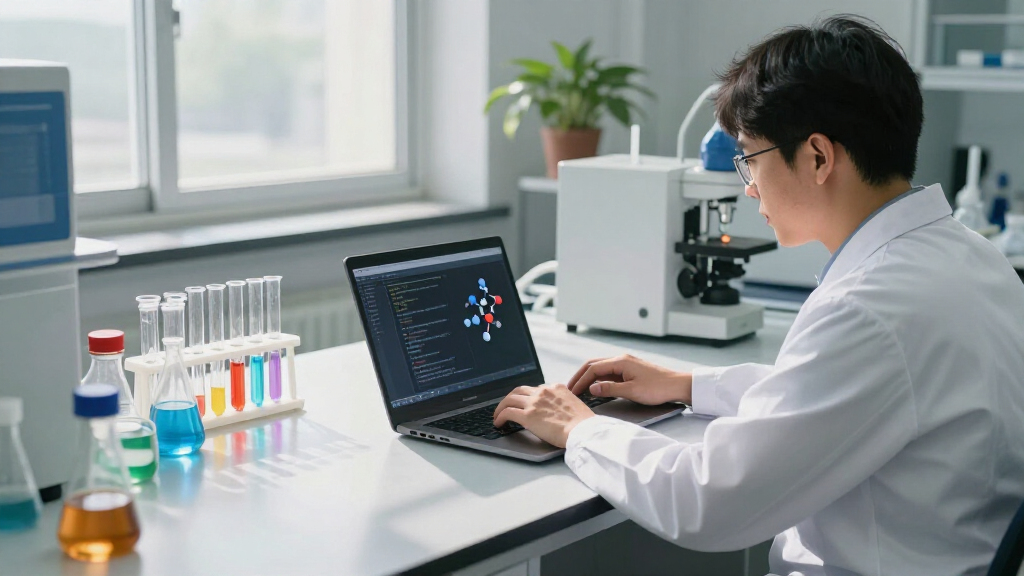
The University of Pennsylvania’s bioengineering lab has demonstrated that integrating AI tools like ChatGPT and Codex with custom deep-learning models can reduce the initial search for antimicrobial candidates from years to hours, according to a report from OpenAI. This breakthrough could accelerate the development of new antibiotics amid rising antimicrobial resistance, involving researchers led by bioengineer César de la Fuente.
De la Fuente’s team employs AI models that interpret biological sequences as an information system, treating DNA nucleotides and amino acids as an alphabet to recognize patterns indicative of antimicrobial activity. By scanning vast genomic and proteomic datasets, the models identify promising peptide candidates more efficiently than traditional methods. ChatGPT and Codex support the process by assisting in hypothesis generation, coding, data analysis, and interdisciplinary communication, enabling a collaborative workflow across biology, chemistry, and computer science.
The reported reduction in search time is specific to the computational phase, where the team claims to narrow down millions of sequences to a manageable shortlist within hours. This contrasts with the years typically needed for laboratory-based screening and initial discovery. However, the report clarifies that candidate validation—testing for efficacy, toxicity, resistance, and pharmacokinetics—remains a lengthy process, often taking years before a molecule can reach clinical trials. The work is part of a broader effort to address the stagnant pace of antibiotic discovery, with no new class of antibiotics introduced in roughly five decades, as discussed in the original analysis.
The research highlights the potential of AI as a cross-disciplinary collaborator, lowering barriers between fields and enabling biologists to leverage programming tools like Codex and ChatGPT. According to de la Fuente, this approach could redirect laboratory efforts toward the most promising candidates, ultimately speeding up the pipeline from genome to drug. Nonetheless, the report emphasizes that AI-driven discovery is only an initial step, and extensive validation remains necessary before any candidate can become a therapeutic agent.
Implications for Antibiotic Development Speed
This development signifies a major shift in how early-stage antimicrobial discovery can be conducted, potentially reducing the time to identify promising molecules from years to hours. Such acceleration could allow researchers to respond more swiftly to emerging resistant bacteria, saving lives and reducing healthcare costs. Moreover, the integration of general-purpose AI tools like ChatGPT and Codex demonstrates a broader trend of AI facilitating cross-disciplinary collaboration, lowering technical barriers, and enabling teams to explore vast genomic datasets more effectively. However, the process from candidate identification to approved drug remains lengthy, with validation, clinical testing, and regulatory approval still taking years. The approach does not eliminate the challenges of toxicity, resistance development, or commercialization, but it offers a promising way to prioritize candidates more efficiently, potentially transforming the early phases of antibiotic discovery.
antimicrobial peptide discovery kits
As an affiliate, we earn on qualifying purchases.
As an affiliate, we earn on qualifying purchases.
Evolution of Antimicrobial Discovery Techniques
Historically, the search for antimicrobials involved labor-intensive collection and testing of samples from natural sources like soil, water, and plants, often taking years per candidate. The advent of genomic databases shifted the focus to in silico screening across the entire spectrum of life, including extinct species, vastly expanding the potential pool of antimicrobial molecules. Despite these technological advances, the bottleneck shifted from sample collection to identifying meaningful signals within complex genomes. Only a small fraction of sequences encode molecules with antimicrobial activity, and understanding their functions remains challenging. The integration of AI into this process aims to address this bottleneck by automating pattern recognition and hypothesis generation, thus accelerating early discovery phases.
De la Fuente’s lab emphasizes that promising antimicrobial candidates often emerge at the intersection of disciplines, where few researchers operate. Their work underscores the importance of computational tools in exploring these less-charted territories, with the goal of overcoming the stagnation in new antibiotic classes over the past 50 years. While AI can speed up initial discovery, the subsequent validation stages still require extensive laboratory work and clinical testing, which are the main hurdles in bringing new antibiotics to market.
“Antimicrobial resistance is one of the greatest existential threats to humanity, and yet we haven’t had a new class of antibiotics in 50 years.”
— César de la Fuente
As an affiliate, we earn on qualifying purchases.
Limitations of AI-Driven Candidate Screening
The report clarifies that the ‘years to hours’ reduction pertains solely to the computational identification of candidate molecules. It remains unverified how many of these candidates will progress to laboratory validation, preclinical testing, or clinical trials. No candidates identified through this pipeline have yet received regulatory approval, and the effectiveness and safety of these molecules are still unproven at this stage. Additionally, the report, published by OpenAI, emphasizes the potential but does not provide peer-reviewed validation of the workflow. The actual impact on the overall antibiotic development timeline is therefore still uncertain, pending further experimental validation and real-world testing.
laboratory testing for new antibiotics
As an affiliate, we earn on qualifying purchases.
As an affiliate, we earn on qualifying purchases.
Next Steps for Validation and Clinical Development
Following the promising computational results, the immediate next step involves laboratory validation of identified candidates to confirm antimicrobial activity, toxicity profiles, and resistance potential. Researchers will need to synthesize these molecules, test them against target microbes, and evaluate safety in cell and animal models. Successful candidates will then enter preclinical development, including pharmacokinetic studies and toxicity assessments, before advancing to clinical trials. The process is expected to take several years, and success is not guaranteed. Simultaneously, efforts will continue to refine AI models, improve prediction accuracy, and integrate feedback from experimental results. Overall, the focus remains on translating computational discoveries into tangible therapeutic options.
As an affiliate, we earn on qualifying purchases.
Key Questions
How reliable are AI models in predicting effective antimicrobial molecules?
AI models can identify promising candidates based on pattern recognition in genomic data, but their predictions require extensive laboratory validation to confirm efficacy and safety. They are tools to prioritize molecules, not definitive solutions.
Will AI replace traditional drug discovery methods?
AI is expected to complement and accelerate traditional methods rather than replace them. It helps narrow down candidates more quickly, but laboratory testing, clinical trials, and regulatory approval remain essential steps.
Are any AI-discovered antimicrobial candidates already in clinical trials?
As of now, no candidates identified solely through this AI pipeline have reached clinical trials or received regulatory approval. The approach is still in early validation stages.
What are the main challenges in translating AI discoveries into approved drugs?
Challenges include confirming antimicrobial activity, assessing toxicity, resistance development, pharmacokinetics, manufacturing, and navigating regulatory processes. AI accelerates early discovery but does not eliminate these hurdles.
How does this development impact global efforts against antimicrobial resistance?
If successful, AI-driven discovery could significantly speed up the pipeline for new antibiotics, addressing the urgent need for novel treatments and helping combat rising antimicrobial resistance worldwide.
Primary source: OpenAI · via ThorstenMeyerAI.com
NFL season / tailgating Picks
team gear
As an affiliate, we earn on qualifying purchases.