📊 Full opportunity report: Vertigo relief app on IdeaNavigator AI — validation score, market gap, and execution plan.

Get business pricing on tech for your team
- Business-only prices and quantity discounts
- Tax-exempt purchasing
- Multiple users, one account, clear invoices
TL;DR
A vertigo relief app is being developed to help adults manage benign paroxysmal positional vertigo (BPPV) at home. It combines guided maneuvers, motion sensors, and symptom logging, with potential for clinic integration. The app aims to improve self-treatment accuracy and reduce relapse rates.
A new vertigo relief app is being designed to assist adults suffering from recurrent benign paroxysmal positional vertigo (BPPV) in performing repositioning maneuvers at home. The app aims to address long wait times for specialist care and improve self-treatment accuracy, potentially reducing relapse rates. You might find it interesting to explore The Question No To-Do App Can Answer for how AI can assist in managing health routines. It is targeted for initial testing with ENT clinics, audiologists, and vestibular physiotherapists, who could recommend or white-label it for patient use between visits.
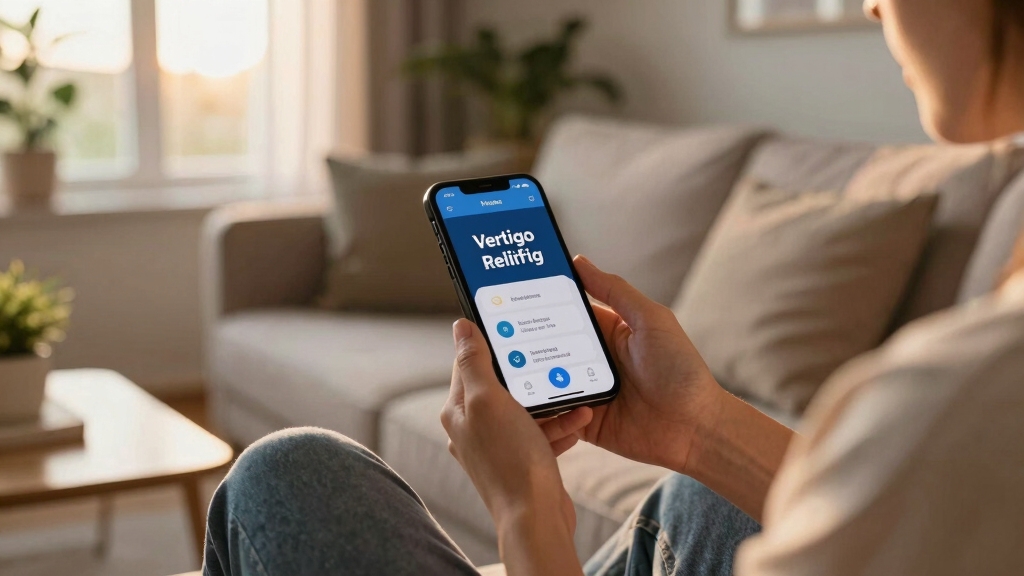
The app is planned as an iOS and Android platform that will initially screen users for BPPV candidacy through a short safety survey and optional motion-sensor self-check. It will guide users through the Epley and Brandt-Daroff maneuvers with animated, step-by-step instructions, audio cues, and real-time gyroscope-based head-angle feedback. Additionally, it will log dizziness episodes, triggers, and symptom severity over time, supporting both patient self-management and clinician review.
This development responds to the high prevalence of BPPV, the most common vestibular disorder, which often results in relapse when self-treatment is performed incorrectly. The app’s features leverage smartphone sensors to improve maneuver accuracy and track symptoms, addressing gaps in current static diagrams and self-help resources. The initiative also aligns with a broader shift toward telehealth and digital therapeutics, with the digital vestibular rehab market projected to grow at approximately 13.5% CAGR through 2033, reaching nearly USD 498 million in 2024. For related insights, see The unbundling of the budget app.
Potential Impact on BPPV Self-Treatment and Care
This app could significantly improve the quality of self-treatment for BPPV, which affects a large and often older demographic. By providing guided, sensor-supported maneuver execution and symptom tracking, it may reduce relapse rates and improve patient outcomes. Its integration into clinical workflows could also streamline care and reduce the burden on specialized services, especially as telehealth becomes more prevalent.
Furthermore, the app’s development reflects growing acceptance of digital therapeutics in vestibular care, with potential revenue streams from both consumer subscriptions and B2B licensing to clinics. Its success could pave the way for broader adoption of home-based vestibular rehabilitation tools, transforming how patients manage chronic dizziness and vertigo.
As an affiliate, we earn on qualifying purchases.
Rise of Digital Tools in Vestibular Disorder Management
Benign paroxysmal positional vertigo (BPPV) is the most common vestibular disorder, often causing brief episodes of dizziness triggered by head movements. Traditional treatment involves manual repositioning maneuvers performed by clinicians, but many patients struggle to execute these correctly at home, leading to high relapse rates. The COVID-19 pandemic accelerated the adoption of telehealth and remote rehab solutions, with smartphones now equipped with accurate motion sensors capable of measuring head angles in real time.
Market research indicates that digital therapeutics for vestibular disorders are growing, with the market estimated near USD 498 million in 2024 and expected to expand at a compound annual growth rate of about 13.5%. This environment encourages innovation in home-based management tools, including apps that combine guided exercises, symptom tracking, and clinician oversight, aiming to improve patient adherence and outcomes.
“Leveraging smartphone gyroscopes for real-time head-angle feedback can improve the accuracy of self-administered repositioning maneuvers.”
— an anonymous researcher
vestibular disorder symptom tracker
As an affiliate, we earn on qualifying purchases.
As an affiliate, we earn on qualifying purchases.
Development Stage and Clinical Validation Status
It is not yet clear how soon the app will be available for consumer testing or clinical deployment. The exact features, user interface, and efficacy data remain under development. Pilot testing with clinics is planned, but results and user feedback are still pending, and regulatory approval processes are not yet defined.
head-angle feedback device for vertigo
As an affiliate, we earn on qualifying purchases.
As an affiliate, we earn on qualifying purchases.
Next Steps for App Development and Pilot Testing
The development team plans to launch a lightweight landing page and a no-code prototype of the guided Epley maneuver to gather user interest and validate demand. They will also approach ENT, audiology, and physiotherapy clinics to secure pilot partnerships. The goal is to collect user engagement data, refine the app’s features, and prepare for a broader clinical trial and eventual commercial launch.
As an affiliate, we earn on qualifying purchases.
Key Questions
Will the app replace professional treatment for BPPV?
No, the app is designed as a supplementary tool to assist with home management. It emphasizes that users should consult healthcare professionals for diagnosis and red-flag symptoms.
Is the app safe for all BPPV patients?
The app includes a screening survey and safety instructions, but it is not intended for patients with certain conditions or severe symptoms. Users should seek medical advice before use.
When will the app be available to the public?
The timeline depends on pilot testing results and regulatory considerations. A commercial release is not yet confirmed but is targeted after successful validation.
Can clinics white-label the app for patient use?
Yes, the app is being designed with a B2B licensing model in mind, allowing clinics to offer it under their branding for between-visit home care.
Source: IdeaNavigator AI
Halloween Picks
halloween
As an affiliate, we earn on qualifying purchases.