

TL;DR
The United States issued a new licensing rule for certain advanced AI chips used by data centers serving companies headquartered in China. Analysts say Beijing could respond by tightening rare-earth exports, but China has announced no such move. A pause on six wider Chinese export-control measures is due to run through January 10, 2027.
The U.S. Commerce Department on November 16, 2026, issued a licensing rule covering certain advanced AI chips sent to data centers that provide computing capacity to firms headquartered in China, prompting renewed attention to a possible Chinese response involving rare-earth exports. That response remains an analyst warning: Beijing has not announced new rare-earth restrictions tied to the U.S. rule.

Get business pricing on tech for your team
- Business-only prices and quantity discounts
- Tax-exempt purchasing
- Multiple users, one account, clear invoices
The U.S. rule, issued by the Commerce Department’s Bureau of Industry and Security, requires a licence before covered advanced AI chips can go to data centers anywhere that provide companies headquartered in China, Macau or other specified locations with more than 12 million aggregate TPP of computing power. The agency says the measure is intended to address access to sensitive U.S. technology through remote computing arrangements in third countries. The rule is an interim final rule; the supplied material does not detail its implementation timetable or any subsequent changes.
Chinese controls already require licences for exports of seven medium and heavy rare earths and related items. The controls, effective since April 4, 2025, cover samarium, gadolinium, terbium, dysprosium, lutetium, scandium and yttrium, as well as some magnets containing terbium or dysprosium.
A broader package of six Chinese measures announced on October 9, 2025, was suspended the following month. It included controls involving five additional rare earths, rare-earth technology and equipment, and a rule covering some products made abroad that contain at least 0.1% Chinese rare-earth content. China extended the suspension on November 9, 2026, through January 10, 2027. The supplied account says the measures remain paused until then; it does not establish whether they will return on that date.
Rare-Earth Supply Meets Chip Controls
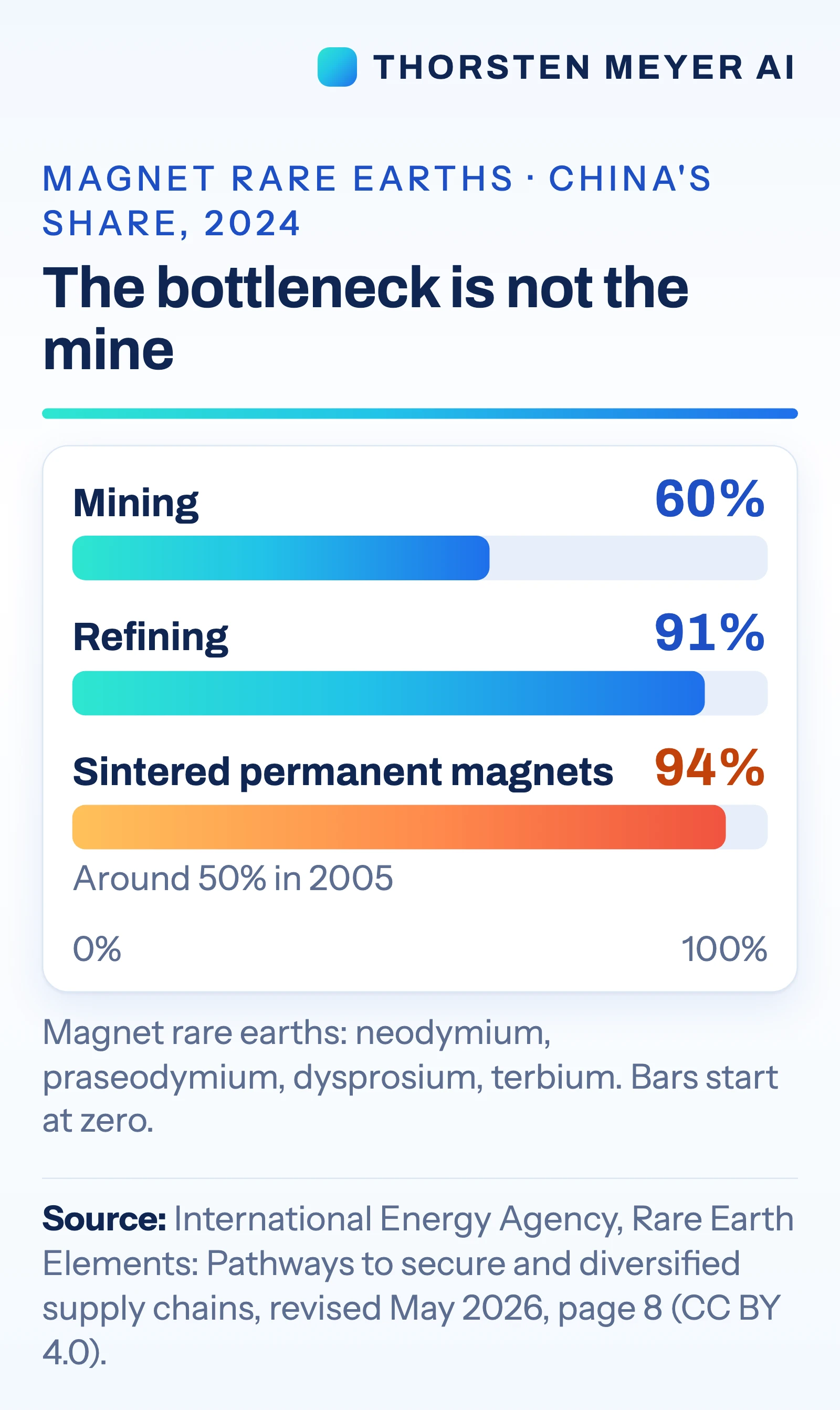
Rare earths matter to this dispute because they are used in permanent magnets found in products ranging from electric vehicles and defence systems to data-center hardware. The International Energy Agency reports that China accounted for 60% of mined magnet rare earths, 91% of refining and 94% of sintered permanent magnets in 2024. Those figures describe separate stages of the supply chain, not a single overall share.
The concentration gives Chinese export controls potential reach across industries that depend on magnets and processed materials. A licensing requirement or broader restriction could complicate sourcing, although the actual effects would depend on which products and suppliers were covered, how licences were handled and whether businesses had alternatives. The current warning is conditional, and no new measure has been announced.
For companies, the January 10 date is a practical planning marker because the wider suspended package could return if the pause is not extended. Mapping rare-earth magnets and Chinese-origin material in products and suppliers’ components can help businesses understand exposure while the measures remain suspended. The available information does not specify how individual firms would be affected.
Products Worth Considering

Jackery Solar Generator 1000 v2 with 200W Solar Panel, 1024Wh LiFePO4 Battery

Samsung Galaxy Tab A11+ Kids Edition, 128GB, Royal Blue

DJI Mic 3 (2 TX + 1 RX + Charging Case), Wireless Microphone
As an affiliate, we earn on qualifying purchases.
Two Export-Control Timelines
The dispute involves two different sets of controls. China’s April 2025 licensing requirements for seven rare earths and certain related goods are in force. The October 2025 measures are a wider package, but their suspension has been extended through January 10, 2027. Treating the two as one active ban would overstate what the source material establishes.
On the U.S. side, the new chip rule concerns access to advanced computing capacity through data centers, including those located outside China. The source says three congressional committee chairs also want four chip-related bills included in the annual defence bill. Those bills are a legislative push, not enacted law on the basis of the supplied account.
Reports published in November 2026, citing analysts quoted by the South China Morning Post, described rare-earth controls as a possible Chinese response if Washington tightens chip restrictions following the Nvidia episode. The source attributes the warning to analysts and says it was relayed by Seoul Economic Daily. It does not identify an official Chinese decision to take that step.
Beijing’s Response Is Unannounced
China has not announced that it will tighten rare-earth controls in response to the U.S. chip rule. The possibility comes from analysts quoted in media reports, and it remains conditional on further U.S. action. The supplied material does not show whether Chinese officials have discussed a specific response or whether any such proposal is under consideration.
It is also unclear what will happen to the six suspended measures after January 10, 2027. The date marks the end of the stated suspension period; the material does not confirm that the measures will automatically resume or that China will extend the pause again. The practical reach of the U.S. rule will likewise depend on its application to particular data centers and chip shipments.
Watch the January Suspension Date
The next stated date for the Chinese measures is January 10, 2027, when the current suspension period ends unless China extends it or makes another announcement. Businesses dependent on rare-earth magnets or Chinese-origin rare-earth content can use the period before then to review supplier and product exposure.
On the U.S. side, the Commerce Department’s interim final rule and the congressional push for four chip bills are separate developments to follow. The available source does not provide a further rulemaking milestone or say whether Congress will add the bills to the annual defence measure. Any Chinese response remains unconfirmed.
Key Questions
Has China announced new rare-earth restrictions in response to the U.S. chip rule?
No. The source material attributes the possibility of tighter controls to analysts; it reports no Chinese government announcement of a response.
What does the U.S. AI chip rule cover?
The November 16 rule requires a licence for covered advanced AI chips sent to data centers anywhere that provide more than 12 million aggregate TPP of computing power to companies headquartered in China and other specified locations.
Which Chinese rare-earth controls are already in force?
Since April 4, 2025, exports of seven specified medium and heavy rare earths and related items, including some magnets containing terbium or dysprosium, require a licence.
When does the pause on China’s wider export-control package end?
The announced suspension runs through January 10, 2027. The supplied information does not confirm whether the measures will resume then or whether China will extend the pause.
Source: Thorsten Meyer AI