

TL;DR
President Donald Trump said on Nov. 20 that the United States would stop companies from building data centers abroad or impose a “tremendous tax” on them. As of Nov. 21, no order or rule had been published; existing AI chip export controls remain in force.
President Donald Trump said Nov. 20 that the United States would not allow American companies to build data centers abroad, or would impose a “tremendous tax” if they did, raising questions for U.S. cloud and AI firms with overseas plans. No executive order, regulation, tax rate or implementation date had been published as of Saturday morning, Nov. 21, so the remarks had not changed the rules companies must follow.

Get business pricing on tech for your team
- Business-only prices and quantity discounts
- Tax-exempt purchasing
- Multiple users, one account, clear invoices
Trump made the comments at a White House news conference after a trip to Asia. In a transcript published by The Verge, he said, “We’re not going to allow our companies to build data centers outside of our country.” He then described a different possible outcome: “If they do that, they can, but we’re going to put a tremendous tax on them.” He said his staff had not heard the proposal from him before the news conference.
The remarks did not set out which companies or countries would be affected, whether existing projects would count, or whether leasing and cloud capacity would be covered. Trump named China and Finland in discussing overseas facilities. Newsweek reported that it was not immediately clear whether he was referring to Google’s planned investment in Finland, which he had criticized on Truth Social days earlier.
A check of the White House presidential actions page and the Federal Register on Nov. 21 found no published action addressing overseas data centers. The White House referred Newsweek to Trump’s remarks when asked for details. A threat at a news conference does not itself establish a tax or ban.
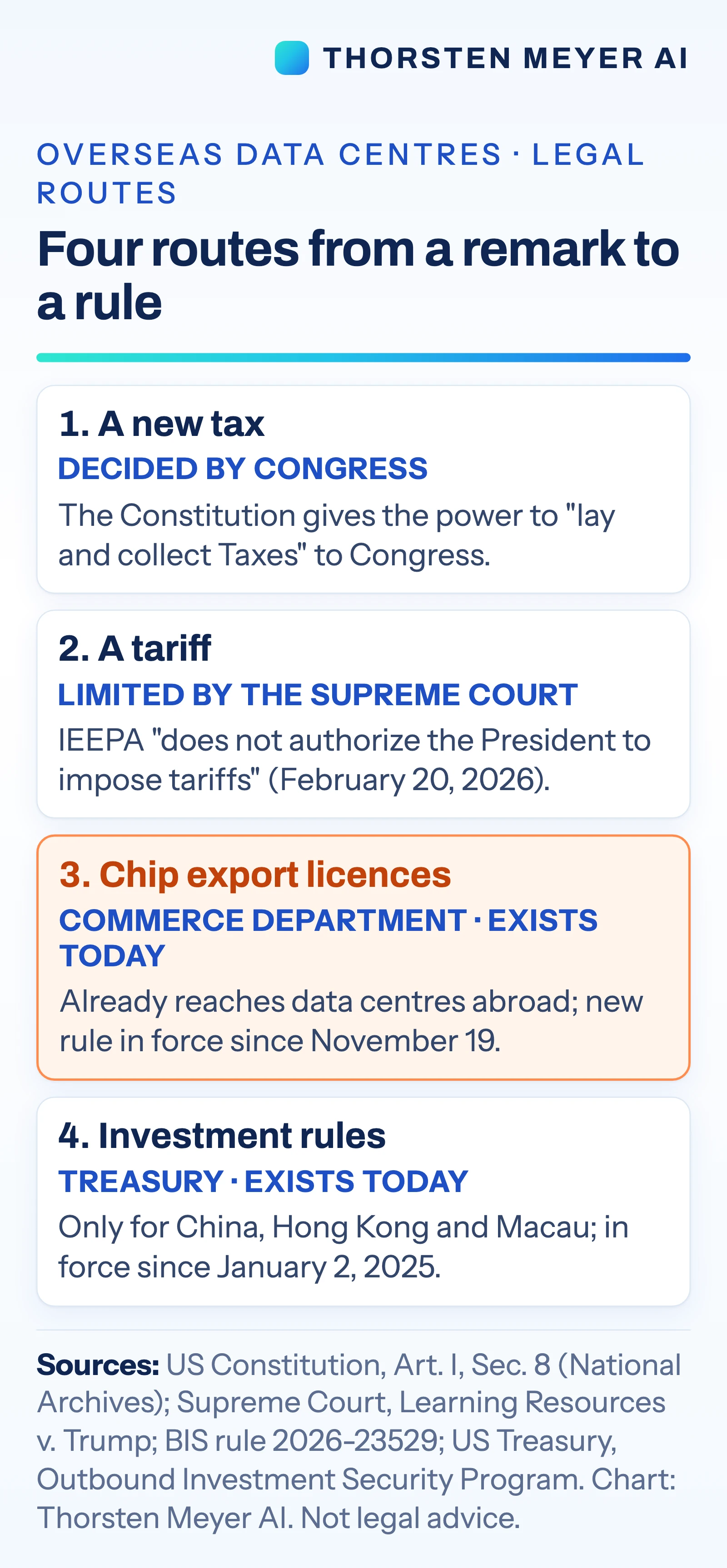
Costs for Overseas AI Capacity
If turned into policy, a restriction could affect how U.S. technology companies expand computing capacity and serve customers abroad. Data centers support cloud services and AI workloads, and companies may build, lease or use facilities across borders. The remarks leave open whether any of those arrangements would be covered, making it too soon to assess the effect on planned investments or customers.
The distinction between a ban and a tax matters. Trump said companies would not be allowed to build abroad, then said they could do so but face a large tax. Those approaches would have different legal bases and consequences. For now, businesses have no announced measure to apply to projects, and no tax amount or exemption has been specified.
Products Worth Considering
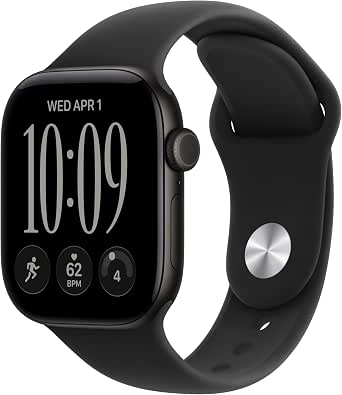
Apple Watch Series 12 GPS Smartwatch, 42 mm

Logitech MX Mechanical Mini for Mac Wireless Keyboard, Space Gray

Amazon Kindle Scribe (16GB) with Premium Pen, Tungsten
As an affiliate, we earn on qualifying purchases.
Existing Rules for AI Chips
The United States already regulates some overseas AI computing through controls on advanced chips. A Commerce Department rule effective Nov. 19, 2026, requires licences for advanced AI chips in five countries and covers data centers serving China-headquartered companies at scale. The rule also includes a reporting lane for U.S.-headquartered companies. These controls concern access to chips and related activity; they are distinct from a general prohibition on building data centers abroad.
A July 2025 executive order set U.S. policy to support the global deployment of U.S.-origin AI technologies, including data centers. That existing policy provides relevant context, but the supplied source material does not establish how the administration would reconcile it with Trump’s new remarks.
There are legal limits on possible routes. The Constitution gives Congress the power to lay and collect taxes. The Supreme Court ruled on Feb. 20, 2026, in Learning Resources v. Trump, that the International Emergency Economic Powers Act does not authorize the president to impose tariffs. That ruling concerns tariffs under IEEPA; it does not itself determine what other policy options might be available.
Scope and Legal Route Unsettled
Key details remain unknown: the countries and companies that could be covered, whether planned or existing facilities would be affected, and whether leasing capacity or providing cloud services would count as building a data center. Trump gave no tax rate, start date, exemptions or legal basis. The remarks also move between a ban and a tax, leaving unclear whether the administration intends one approach or both.
It is also unclear whether the comments refer to a specific company or project. Newsweek said the connection to Google’s planned Finland investment was not immediately clear. No administration document has confirmed that link.
Watch for a Written Proposal
The next concrete sign would be a published presidential action, proposed regulation, legislative proposal or agency guidance setting out the policy and its legal basis. The White House and relevant agencies could also clarify whether the remarks describe a plan under development or a broader policy intention. Until then, the Nov. 19 chip licensing rule remains the identified measure in force, while the threatened overseas data center tax or restriction has no published terms.
Key Questions
Has the United States banned American companies from building data centers abroad?
No ban had been published as of Nov. 21, 2026. Trump made the threat at a news conference, but the White House presidential actions page and Federal Register had no related order or rule.
Did Trump announce how much the tax would be?
No. He called it a “tremendous tax” but gave no rate, start date or method for imposing one.
Would the remarks affect Google’s Finland project?
That is unclear. Trump mentioned Finland, and Newsweek noted his prior criticism of Google’s planned investment there, but no source in the supplied material confirmed that the remarks targeted that project.
What overseas data center rules are already in force?
A Commerce Department rule effective Nov. 19 requires licences for certain advanced AI chips in five countries and covers data centers serving China-headquartered companies at scale. It is a chip export control, distinct from the broader restriction Trump described.
Source: Thorsten Meyer AI