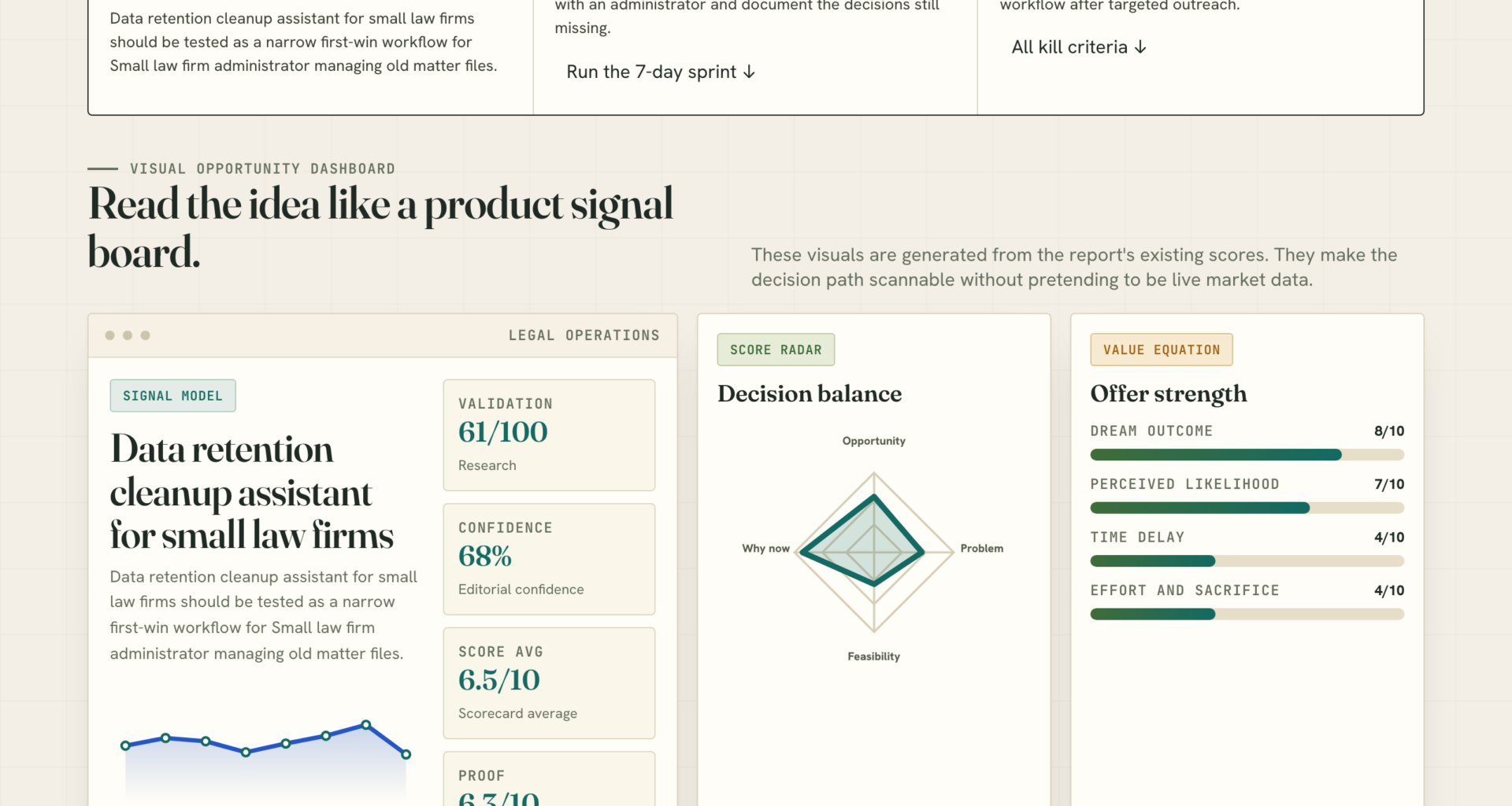

📊 Full opportunity report: Data retention cleanup assistant for small law firms on IdeaNavigator AI — validation score, market gap, and execution plan.

Get business pricing on tech for your team
- Business-only prices and quantity discounts
- Tax-exempt purchasing
- Multiple users, one account, clear invoices
TL;DR
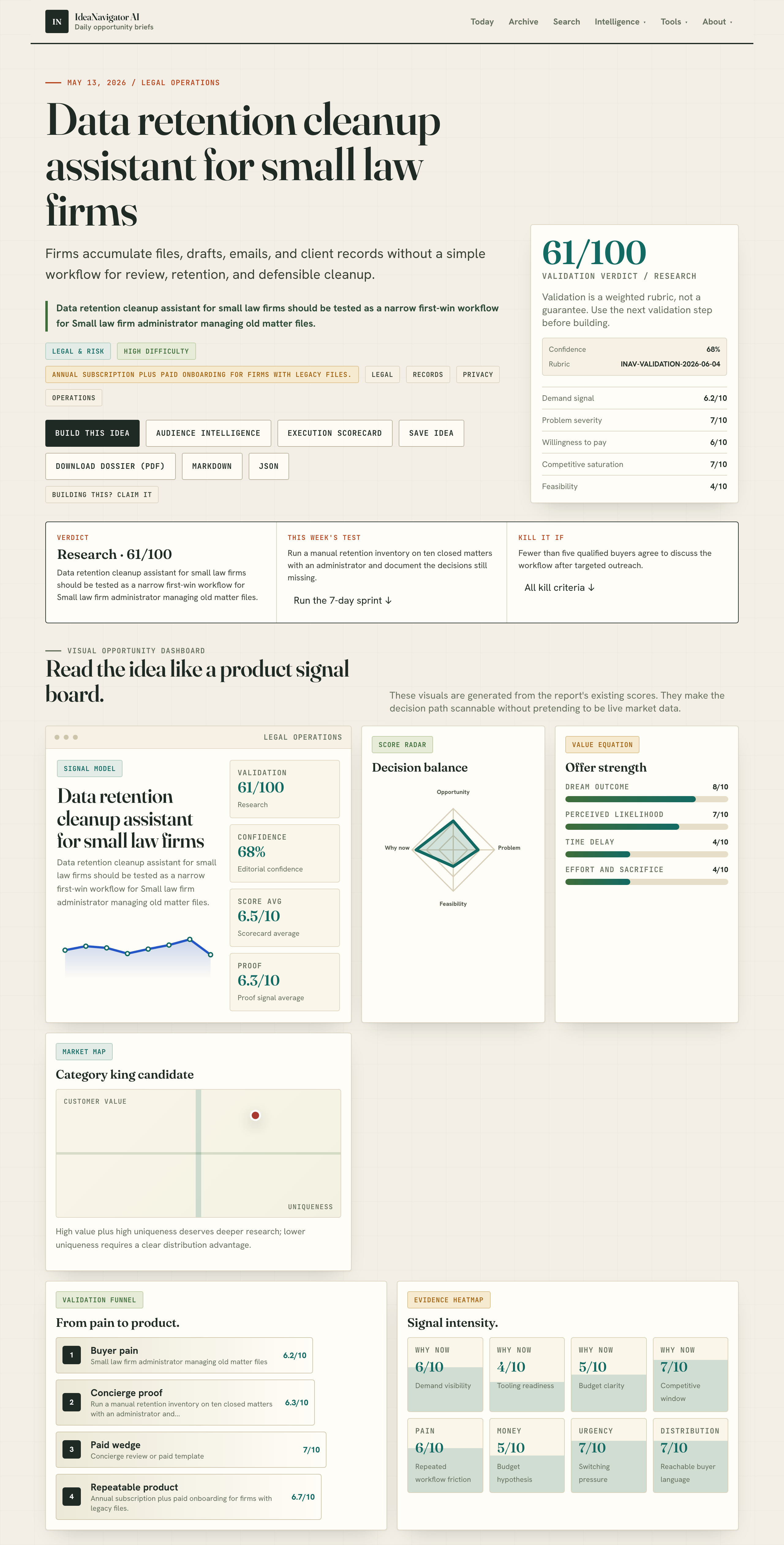
A new data retention cleanup assistant for small law firms is being tested, helping firms review and manage old matter files efficiently. The tool aims to streamline cleanup processes and improve compliance.
Small law firms are testing a new data retention cleanup assistant designed to help manage and review legacy matter files more efficiently, addressing a common challenge in legal operations.
The tool is intended for small law firm administrators who handle large volumes of old files, drafts, emails, and client records. It features a matter-file review queue that labels files based on age, ownership, retention status, and missing decisions, enabling defensible cleanup and exportable notes.
This initiative responds to the rapid digitization of records by small firms, which often lack streamlined workflows for data cleanup. The assistant is part of a broader effort to improve operational efficiency and compliance with data retention policies.
The initial validation involves running a manual retention inventory on ten closed matters, with an administrator documenting remaining decisions. The product will be offered through an annual subscription model, with paid onboarding for firms managing legacy files.
Why Small Firms Need a Data Cleanup Solution Now
This development is significant because many small law firms are digitizing records faster than they can update their data management practices, risking non-compliance and inefficient workflows. The cleanup assistant aims to fill a critical gap in legal operations by providing a simple, targeted tool for legacy file review and retention management, which can lead to better compliance, reduced storage costs, and improved data governance.
Products Worth Considering

Sony WH-1000XM6 Wireless Noise-Canceling Headphones, Black

Bose QuietComfort Headphones (2nd Gen), Wireless Over-Ear Noise-Cancelling Headphones, Black

LG UltraGear 27-Inch QHD OLED Gaming Monitor, 240Hz, 0.03ms, G-SYNC Compatible, FreeSync Premium Pro, HDMI 2.1, Black
As an affiliate, we earn on qualifying purchases.
Growing Digitization and Operational Gaps in Small Law Firms
Small law firms increasingly digitize client records and matter files, but often lack effective procedures for reviewing and deleting outdated information. This has led to accumulation of files without clear retention decisions, creating risks during audits and complicating data management. The new tool emerges as a response to these challenges, aiming to streamline cleanup workflows specifically tailored to the needs of small firms.
“The lack of simple, scalable workflows for data cleanup has become a bottleneck for small firms digitizing their records.”
— an anonymous researcher
Unclear Scope and Adoption of the Cleanup Assistant
It is not yet clear how widely the tool will be adopted after testing, or how effective it will prove in real-world settings. Details on user feedback, long-term impact, and integration with existing systems remain to be seen.
Next Steps for Validation and Market Rollout
The next phase involves completing the manual retention inventory on the initial test cases, gathering user feedback, and refining the tool’s features. If successful, a broader rollout to small law firms is expected, with ongoing updates based on user input and operational needs.
Key Questions
What specific features does the data retention cleanup assistant include?
The tool features a matter-file review queue that labels files by age, owner, retention status, and missing decisions, along with exportable cleanup notes and a workflow for defensible data management.
Who is the target user for this tool?
Small law firm administrators responsible for managing legacy files and ensuring compliance with data retention policies.
When will the tool be available for general use?
The tool is currently in testing, with broader availability anticipated after validation and refinement, likely within the next few months.
Will the tool integrate with existing legal practice management systems?
Details on integration are still being developed, but the initial focus is on creating a simple, standalone review workflow that can be adopted easily by small firms.
What are the costs associated with adopting this cleanup assistant?
The product will be offered via an annual subscription, with optional paid onboarding for firms managing legacy files.
Source: IdeaNavigator AI