TL;DR
AI is already used to help design parts around specified loads and to spot and correct some errors during 3D printing. The source material says text-to-CAD remains research, while simulation and AI predictions cannot replace human review and physical tests.
AI is helping engineers design some 3D-printed parts and monitor certain printers, but it does not yet produce parts that can be trusted without human review and testing, according to a November 29 explainer from Thorsten Meyer AI. The examples include NASA generative-design work and a University of Cambridge research system that detects and corrects common nozzle-printing errors.

Get business pricing on tech for your team
- Business-only prices and quantity discounts
- Tax-exempt purchasing
- Multiple users, one account, clear invoices
In the NASA example, engineers specify loads and areas that must remain clear, then software proposes a shape to meet those constraints. NASA engineers have reported producing lighter, stiffer designs in hours rather than days. Those results depend on the inputs: if a load, fastener or clearance requirement is missing, the software can optimize for an incomplete description of the problem.
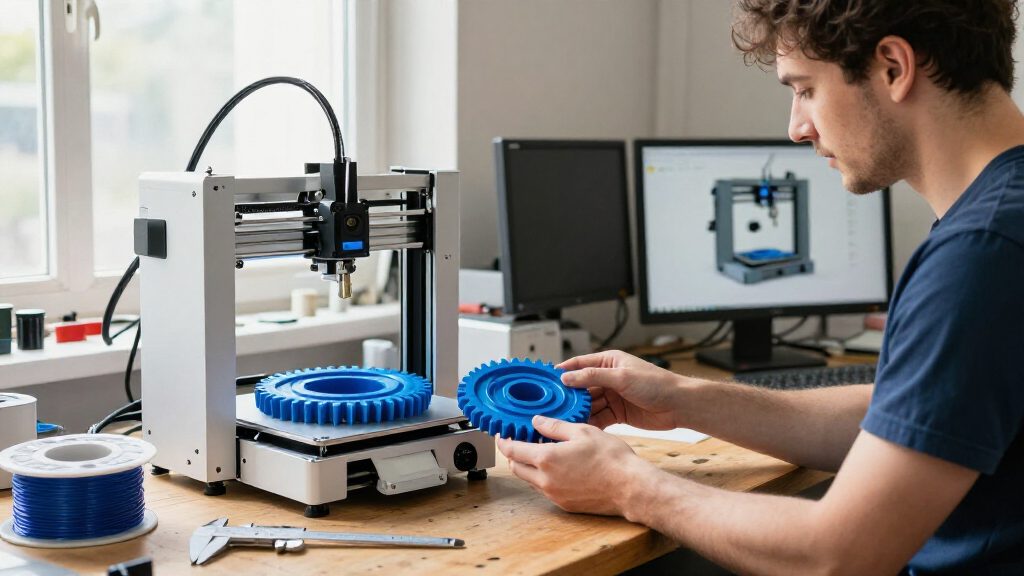
AI can also monitor printing. A camera-based system described by researchers at Cambridge was trained to identify and correct common errors during material-extrusion printing, in which a heated nozzle deposits plastic in layers. The explainer presents this as a research example, not a guarantee that printers generally can identify every defect or fix every failed print.
Text-to-CAD systems that turn written prompts into models remain a research area in the source material. A model or code output that runs is not proof that a resulting part has the right dimensions, material properties or strength. The explainer says NASA-designed printed parts still undergo stress analysis and testing, and notes that NASA has a standard for printed flight hardware.

Design Speed Still Needs Testing
Generative design may shorten the time needed to explore shapes for a specified engineering problem, while printer monitoring could help catch some production errors before a print is finished. For businesses, that may reduce repeated manual work. For home users, camera-based monitoring may act as an extra check during a print.
The practical limit is verification. Simulation predicts how a part may respond to forces; it does not establish how a manufactured part will behave under real conditions. The source quotes a NASA engineer warning that an algorithm “can sometimes make structures too thin.” A part that supports weight, protects people or is used in flight needs suitable engineering review and physical testing.
Products Worth Considering

DJI Osmo Mobile 7P 3-Axis Smartphone Gimbal with Mic Mini Transmitter, Infinity Black

Samsung Odyssey G55C 32-Inch QHD 1000R Curved Gaming Monitor

LG UltraGear 27-inch 4K UHD IPS Gaming Monitor, Dual Mode 180Hz/360Hz, 1ms, G-SYNC Compatible
As an affiliate, we earn on qualifying purchases.
From CAD Model to Printed Layers
A typical 3D-printing workflow starts with a computer-aided design (CAD) model, followed by checks such as simulation. A slicer then divides the model into layers and generates machine instructions, often called G-code. The printer follows those instructions to build the object layer by layer.
The source material identifies AI applications in design, checking and print monitoring, but describes no AI use at the slicer step. It also notes that printing commonly involves iterations because unexpected failures can occur. The camera-based Cambridge research concerns material extrusion, a widely used method in which a nozzle deposits material; it should not be taken as evidence about every printing technology, such as resin or powder-based systems.
The explainer also raises legal limits: under current U.S. rules as described in the source, purely AI-generated output is not eligible for copyright protection, and inventors named on patents must be human. Those points concern the legal status of outputs and inventorship; they do not establish whether a particular AI-assisted design qualifies for protection.
Limits of Current AI Evidence
The source material does not provide benchmark figures or independent comparisons showing how often the Cambridge system detects errors, how reliably its corrections work across printers, or whether the NASA time and stiffness results generalize to other designs. It also does not identify a text-to-CAD system validated for safety-critical parts. The range of errors each tool can catch, and how its performance changes with different materials and operating conditions, remains unclear.
Legal treatment can depend on the human contribution and the specific work or invention. The broad summary in the explainer does not resolve how a particular AI-assisted design would be assessed under copyright or patent rules.
Human Checks Remain Required
For now, users should treat printer cameras as an additional way to spot problems and treat generated designs as proposals that need review. Engineers must specify the loads and constraints that matter, examine the resulting geometry and verify parts with appropriate analysis and physical tests.
The source material gives no next release date or announced milestone for the research systems. Their practical reach will depend on further evidence about error detection and correction, performance across materials and machines, and validation of AI-assisted designs for their intended uses.
Key Questions
Can AI design a 3D-printed part?
Generative-design software can propose shapes based on specified loads and constraints. The resulting design still needs human review, and the source says text-to-CAD remains a research area rather than a dependable route to a verified part.
Can AI tell whether a printed part is strong enough?
Simulation can predict how a design may respond to forces, but it does not replace physical testing. The source says parts that carry weight or protect people still require checks and tests.
What kind of printing can the Cambridge camera system monitor?
The research example concerns material extrusion, where a nozzle deposits material in layers. The source does not say the system works across all types of 3D printers.
Does the explainer describe AI in the slicer step?
No. It describes AI-assisted design, checking and print monitoring, and says its sources do not describe an AI application at the slicer step.
Source: Thorsten Meyer AI