
AI-driven automation is rapidly reshaping global economic power by transforming industries, changing labor demands, and redefining international trade. As countries invest in advanced skills and innovative technologies, they can gain strategic advantages and influence economic alliances. Traditional trade and employment patterns are shifting, favoring high-tech hubs over low-cost labor markets. If you explore further, you’ll uncover how these shifts could redefine global influence and what it means for nations worldwide.
Key Takeaways
- Countries leading in AI and automation gain strategic economic and geopolitical advantages.
- Automation shifts trade dynamics, favoring high-tech hubs over traditional low-cost labor regions.
- Technological capacity influences global economic power and international market dominance.
- Automation accelerates skill-based employment, potentially marginalizing nations reliant on manual labor.
- Monitoring automation trends is vital to understanding future shifts in global economic influence.
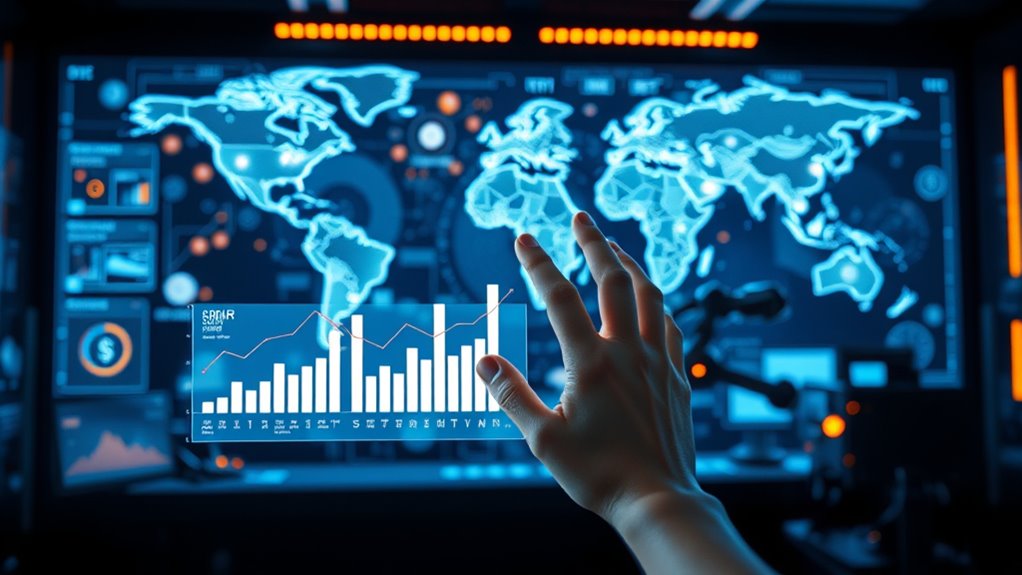
Automation is transforming global economies at an unprecedented pace, reshaping industries and labor markets worldwide. As machines and AI systems become more sophisticated, they’re not just replacing routine tasks but also altering the very fabric of the labor market. You’ll notice shifts in employment patterns, with some jobs disappearing while new roles emerge that demand different skills. This change impacts trade dynamics too, as countries adapt their industries to leverage automation’s benefits or to mitigate its disruptions. For you, understanding these interconnected shifts is essential, because they influence everything from job opportunities to the balance of economic power on a global scale.
Automation reshapes industries and labor markets, influencing jobs, trade, and global economic power.
In the labor market, automation accelerates the move toward a more skill-dependent workforce. Routine manufacturing jobs, for instance, are increasingly handled by robots, reducing the need for manual labor. While this boosts productivity and reduces costs for companies, it leaves workers in traditional roles vulnerable. Countries heavily reliant on low-cost manual labor might see their competitive edge diminish if they don’t adapt. Conversely, economies that invest in advanced education and tech skills can leverage automation to leap ahead, creating new industries and employment opportunities. You need to keep an eye on these trends because they determine the types of jobs that will be available in the future and the skills required to land them.
Trade dynamics are also shifting as automation alters supply chains and production costs. Companies can now relocate manufacturing closer to consumer markets or optimize their operations globally, thanks to automation’s flexibility. This means that traditional trade advantages—like cheap labor—are becoming less influential, reshaping international trade relationships. Countries that embrace automation and invest in innovative industries may gain a strategic edge, potentially shifting economic power toward high-tech hubs. For you, this means that geopolitical alliances could shift, with new centers of influence emerging based on technological capacity rather than just geographic or resource-based advantages.
Moreover, automation introduces a new layer of complexity to global economic competition. Nations that lead in AI and automation technology can set standards and dominate markets, influencing trade rules and economic partnerships. As a result, the distribution of economic power could become more concentrated among tech-driven economies, leaving others to play catch-up or face marginalization. Incorporating market research into your understanding is crucial because it helps anticipate which countries and industries might thrive or falter. For you, staying informed about these developments is essential, as they will shape job markets, trade policies, and the overall balance of power in the coming years. Automation isn’t just a technological upgrade; it’s a force that redefines how economies compete, collaborate, and evolve on the world stage.
Frequently Asked Questions
How Might Automation Impact Developing Countries’ Economies?
You might find that automation causes a significant technological leap in developing countries, boosting productivity and growth. However, it also leads to labor displacement, especially in low-skilled jobs, which could hurt local economies. To benefit from automation, you’ll need to invest in education and retraining programs, helping workers adapt to new roles. Without these efforts, developing countries risk widening economic disparities and missing out on the full potential of automation.
Could AI Lead to Increased Economic Inequality Worldwide?
Think of AI as a double-edged sword, like the myth of Icarus flying too close to the sun. It could widen wealth disparity and intensify employment polarization if only the wealthy benefit from automation. You might find yourself facing a world where the gap between rich and poor grows, with many struggling to adapt. Without inclusive policies, AI risks deepening economic inequality worldwide, leaving many behind in this technological leap.
What Are the Environmental Implications of Widespread Automation?
Widespread automation can considerably reduce your ecological footprint if implemented sustainably. It promotes efficient resource use, minimizes waste, and lowers emissions through smarter processes. However, if not managed carefully, it may lead to increased energy consumption and electronic waste. You should prioritize sustainable automation practices that balance technological advancement with environmental health, ensuring that automation benefits both your economy and the planet without compromising ecological integrity.
How Will AI Influence International Trade Policies?
AI will substantially influence international trade policies by shaping trade regulation and tariff policies. You’ll see governments leverage AI to monitor compliance, optimize tariffs, and detect trade fraud more efficiently. As a result, you might experience faster negotiations and more tailored trade agreements. However, you should also be aware that AI-driven decisions could lead to new disputes or protectionist measures if countries prioritize national interests over global cooperation.
What Ethical Concerns Arise From Ai-Driven Economic Shifts?
You face ethical concerns like algorithmic bias, data privacy, and job displacement. You worry about AI making unfair decisions, exposing personal data, and widening inequality. You question who’s responsible for biased algorithms and how to protect individual privacy. You also consider the impact on employment and societal fairness, knowing that without proper oversight, these economic shifts could deepen injustices and erode trust in AI-driven systems.
Conclusion
If AI continues to advance at this breakneck pace, you might soon witness a world where automation rules everything, turning traditional power structures upside down. Imagine a future where human labor is barely needed, and AI holds the reins of global economy—completely reshaping nations overnight. Brace yourself, because if this trend keeps accelerating, the very fabric of global power could unravel, leaving us all teetering on the edge of a new, AI-driven era.