

What if I told you we’re already living through the biggest economic transformation in human history? Did you know that Amazon eliminated over 14,000 customer service roles in 2024 alone through AI automation? By the end of last year, major corporations quietly automated entire departments, AI systems handled tasks we thought only humans could do, and productivity skyrocketed while employment stayed flat. The data is undeniable and the shift is accelerating. We’ll unpack why your next job interview might look very different than you expect.

Today, we’re examining the real numbers, interviewing automation experts, and exploring what this means for your future. But first, let’s look at what’s been happening behind closed doors at some of the world’s largest companies.
The Silent Revolution Already Happening
Picture thousands of jobs disappearing without a single news headline. While everyone was debating the future of work, major corporations were already rewriting the rules. Amazon eliminated 14,000 customer service positions in 2024, replacing them with AI systems that handle 95% of routine inquiries. JPMorgan Chase deployed AI for document review that used to require 360,000 hours of lawyer time annually. These aren’t pilot programs or experiments. They’re permanent changes that happened while we weren’t paying attention.

The numbers tell a story that business leaders prefer to keep quiet. AI adoption in Fortune 500 companies jumped from 20% in 2020 to over 60% by late 2024. But here’s what makes this remarkable: this transformation accelerated precisely when everyone expected it to slow down. The pandemic created the perfect testing ground for automation. Companies discovered that AI systems don’t get sick, don’t need breaks, and don’t require health insurance. What happens when an AI never calls in sick? What started as emergency measures became permanent business strategies.
General Electric replaced entire quality control teams with computer vision systems that detect defects faster than human inspectors ever could. UPS algorithms now plan delivery routes for 95,000 drivers, eliminating dispatcher jobs while increasing efficiency by 30%. These changes didn’t happen gradually over decades. They happened in months, sometimes weeks.
Here’s where it gets interesting: corporate profits are hitting record highs while employment in these same companies stays flat or declines. Amazon’s revenue grew 38% from 2021 to 2024, but their total workforce increased by only 4%. The math is simple but shocking. Companies are generating more value with fewer people, and the gap is widening every quarter.

What does this mean for us? We’re witnessing the fastest economic shift in human history, but it’s happening so quietly that most people think it’s still coming. Manufacturing took 45 years to automate away half its workforce. Service industries are doing the same thing in less than 10 years. The speed isn’t just unprecedented; it’s exponential. Each breakthrough in AI capability accelerates the next wave of job displacement.
McDonald’s has automated ordering in 20,000 locations worldwide. Walmart uses AI to manage inventory, reducing the need for hundreds of regional coordinators. Even creative industries aren’t immune. Netflix uses algorithms to decide which shows to produce, reducing the role of human development executives. Spotify’s AI curates playlists that used to require teams of music experts. The pattern is everywhere once you start looking.
The productivity data reveals something extraordinary. Departments that implement full automation see productivity gains of 40% to 60% within the first year. Meanwhile, headcount in those same departments drops by similar percentages. It’s not that companies are becoming more efficient with the same people. They’re becoming more efficient with dramatically fewer people. The machines aren’t just helping humans work better. They’re replacing humans entirely.

This transformation spans every industry you can imagine. Law firms use AI to review contracts faster than entire legal teams. Accounting firms deploy software that processes tax returns in minutes instead of hours. Even hospitals use AI diagnostic tools that outperform radiologists in detecting certain conditions. The technology doesn’t just match human performance; it exceeds it while costing a fraction of human labor.
What makes this different from previous economic transitions? The speed and scope are unprecedented. The Industrial Revolution took generations to reshape society. The computer revolution unfolded over decades. This transformation is happening in years, sometimes months. Companies can now automate entire departments over a weekend. The old assumption that technology creates as many jobs as it destroys no longer holds when the destruction happens faster than new job creation.
The evidence is hiding in plain sight if you know where to look. Job postings for routine cognitive work have declined 40% since 2020, even as overall economic activity increased. Customer service representative positions dropped by 25% while customer interactions actually increased. Data entry clerk positions fell 60% while data processing volumes exploded. The work is getting done, but humans aren’t doing it.

Here’s why this matters more than any previous economic shift: we’re not just automating physical labor or simple tasks anymore. We’re automating judgment, analysis, and decision-making. AI systems now write code, design products, and make investment decisions. They diagnose diseases, write legal briefs, and create marketing campaigns. The boundaries of what machines can do expand every month, and they’re expanding faster than we can adapt.
Banks provide a perfect example. Loan approval used to require human underwriters who analyzed applications for hours. Now AI systems make those decisions in seconds with greater accuracy. Insurance claims that took adjusters days to process now get resolved automatically. Trading floors that once employed hundreds of analysts now run with a handful of technicians monitoring AI systems. The humans didn’t become more productive. They became unnecessary.

The timeline compression is what makes this transition so dangerous and so exciting. Previous economic shifts gave society time to adapt, retrain, and adjust. This shift is happening faster than institutions can respond. Educational systems, government policies, and social safety nets were designed for gradual change. They’re not equipped for the pace we’re experiencing now.
Transportation offers another window into this acceleration. Uber and Lyft are piloting fully autonomous vehicles in multiple cities. Long-haul trucking companies are deploying self-driving trucks on specific routes. Delivery drones are replacing human couriers for short-distance packages. The 3.5 million professional drivers in America face potential displacement within the next decade, not the next generation.

The retail sector shows how quickly entire job categories can vanish. Self-checkout systems eliminated hundreds of thousands of cashier positions. AI-powered inventory management reduced the need for stock clerks. Automated warehouses require 90% fewer workers than traditional facilities. Amazon’s “Just Walk Out” technology could eliminate cashiers entirely from retail stores. The transformation isn’t coming; it’s already here.
The great decoupling has reached a tipping point where it’s visible in economic data, not just corporate earnings reports. Productivity per worker has increased 15% since 2020 while median wages stayed flat. GDP growth continues while job creation lags. Corporate profits soar while employment-to-population ratios decline. These aren’t temporary pandemic effects. They’re permanent structural changes that signal a fundamental shift in how our economy creates value without human labor.

But this raises a deeper question that goes to the heart of human identity in the workplace. As machines take over more tasks, we need to understand what exactly is being replaced.

Ai For Customer Experience And Support: A Practical Guide To Automating Service, Personalizing Interactions, And Driving Customer Loyalty With Artificial Intelligence
As an affiliate, we earn on qualifying purchases.
As an affiliate, we earn on qualifying purchases.
The Four Pillars of Human Value Under Attack
Think of humanity’s economic value like a four-legged stool. For centuries, we’ve built our worth around four fundamental capabilities: physical strength, manual dexterity, cognitive ability, and emotional empathy. These pillars have defined every job, every career, and every economic contribution humans make. But what happens when machines can do all four better than we can? That transformation isn’t coming in some distant future. It’s happening right now, and the speed is breathtaking.
Let’s start with strength, the first pillar to fall. Steam engines replaced human muscle power in the 1800s. Factory machines eliminated the need for blacksmiths, manual laborers, and countless workers whose primary value was physical power. This process took over a century to fully unfold. Entire generations had time to adapt, retrain, and find new roles. The economic disruption was manageable because it happened gradually. Workers could move from farms to factories, from physical labor to machine operation. Society had breathing room.

Dexterity represents the second pillar, and it’s crumbling faster than anyone expected. Industrial robots are automating tasks that once required human dexterity across manufacturing facilities worldwide. Tesla’s Optimus robots can sort objects, manipulate tools, and perform assembly tasks that once required years of human training. Factory automation has reached a point where entire production lines operate without human hands touching the products. These aren’t experimental prototypes. They’re production systems handling real work in real facilities.
Amazon’s fulfillment centers showcase this dexterity revolution. Robotic arms pick, pack, and sort millions of items daily with accuracy rates that exceed human workers. The robots don’t get tired, don’t make mistakes from fatigue, and don’t require breaks. What took human hands decades to master, these systems learn in weeks. The timeline compression is staggering. Manufacturing jobs that seemed secure just five years ago are disappearing as robots demonstrate capabilities that match or exceed human dexterity.

The third pillar, cognition, is where the current battle rages most intensely. AI systems are outperforming humans in legal research, coding, and complex analysis. Recent breakthroughs show just how quickly this is happening. Both OpenAI and Google’s AI systems achieved gold medals in the International Math Olympiad, a feat experts didn’t expect for another year or two. These aren’t simple calculations. These are complex mathematical proofs that challenge the brightest human minds.
Professional exams tell the same story. AI systems now pass bar exams, medical licensing tests, and CPA certifications with scores that exceed most human candidates. Law firms use AI to review contracts faster than entire legal teams. The AI doesn’t just match human accuracy; it surpasses it while processing documents in minutes instead of hours. Coding represents another cognitive domain where AI has achieved superiority. GitHub Copilot and similar tools write code that human programmers struggle to debug or fully understand.
The speed of cognitive automation defies every prediction. David Shapiro notes that AI technology is “improving very quickly, leading to network effects where the cost of AI goes down exponentially while its intelligence goes up exponentially.” This exponential improvement curve means capabilities that seem impossible today become routine within months. The cognitive pillar isn’t gradually eroding like physical strength did. It’s collapsing in real time.

Investment analysis, medical diagnosis, and strategic planning represent cognitive tasks that once required years of human experience and judgment. AI systems now make these decisions in seconds with access to data sets no human could process. Financial algorithms trade stocks, bonds, and derivatives faster than human traders can react. Medical AI diagnoses certain conditions more accurately than experienced radiologists. Strategic planning software optimizes supply chains and resource allocation beyond human capability.
The fourth pillar, empathy, seemed like humanity’s final stronghold. How could machines understand emotions, provide comfort, or build genuine relationships? Advanced language models are proving that assumption wrong. ChatGPT and similar systems demonstrate empathy, understanding, and emotional intelligence that many users find indistinguishable from human interaction. Customer service chatbots now handle complex emotional situations with responses that satisfy customers better than human representatives.
Emotional AI goes beyond simple conversation. These systems analyze facial expressions, voice patterns, and behavioral cues to understand human emotional states. Therapeutic chatbots now help people manage depression, anxiety, and relationship issues, often matching the effectiveness of human therapists. Educational AI provides personalized tutoring with patience and encouragement that adapts to each student’s emotional needs. AI diagnostic tools in healthcare settings demonstrate emotional intelligence that meets patient needs while providing accurate medical guidance.

Here’s what makes this transition unprecedented: all four pillars are under attack simultaneously. Previous economic revolutions targeted one pillar at a time over generations. The Industrial Revolution automated strength over decades. The computer revolution automated certain cognitive tasks over years. This revolution attacks strength, dexterity, cognition, and empathy all at once, and it’s happening in months, not decades.
The timeline compression creates unprecedented challenges. When strength was automated, humans had time to develop dexterity skills. When basic cognition was automated, humans had time to develop higher-order thinking and emotional intelligence. Now, machines are advancing across all four domains faster than humans can adapt or retrain. The economic value proposition for human labor is disappearing across every category simultaneously.
Manufacturing demonstrates this convergence. Modern factories use robots for physical tasks, AI for quality control and optimization, and automated systems for customer interaction and order processing. Human workers oversee these systems, but even supervisory roles are being automated as AI becomes capable of monitoring, troubleshooting, and optimizing entire production processes independently.

Service industries show the same pattern. Restaurants use robots for food preparation, AI for order taking and inventory management, and chatbots for customer service. Hotels deploy robots for cleaning and maintenance, AI for booking and pricing optimization, and automated systems for guest communication. The human jobs that remain are temporary, existing only until the next wave of automation arrives.
The convergence represents more than technological advancement. It represents a fundamental shift in the relationship between human capability and economic value. For the first time in history, machines can potentially replace humans across every category of economic contribution. We’re witnessing the first time all forms of human economic value face simultaneous challenge from artificial systems that improve exponentially rather than incrementally.

But understanding this theoretical framework is just the beginning. The real question is whether we can see this transformation reflected in the actual numbers that measure our economy.

The AI Teammate: A PRACTICAL GUIDE TO WORKING WITH AI IN SOFTWARE DEVELOPMENT
As an affiliate, we earn on qualifying purchases.
As an affiliate, we earn on qualifying purchases.
The Data Doesn’t Lie
Economic indicators reveal a labor crisis hiding in plain sight. Prime-age male employment peaked at 98% in 1953, now sits at 89%. That represents millions of people who have permanently left the traditional economy. MIT economist David Autor calls these the “missing millions” – jobs that should exist based on productivity levels but have been automated away. Economists trace these lost roles not to offshoring but to automation.
The manufacturing sector provides the clearest picture. American manufacturing employment peaked in 1979 with approximately 21 to 22 million workers. Today, the sector employs only half that number. Manufacturing output has tripled during the same period. We’re producing three times more goods with half the workforce. The math is undeniable. Machines haven’t just made workers more productive. They’ve made workers unnecessary.

What happened to manufacturing over 45 years is now happening to back-office jobs in just 20 years. Since 2000, the number of back-office positions has been cut in half. Cloud automation, software as a service, and artificial intelligence have compressed decades of gradual change into two short decades. The timeline compression is remarkable and terrifying. Manufacturing took nearly half a century to automate away millions of jobs. Service and knowledge work is experiencing the same level of displacement in less than a quarter of that time.
Labor force participation data reveals another troubling trend. The total participation rate in America peaked in 2000 at approximately 66%. Today, it has dropped to about 61%. More people are permanently checking out of the economy despite population growth from births and immigration. This isn’t temporary unemployment. These are people who have stopped looking for work entirely.
Productivity has grown at a much faster rate than wages over the past two decades. This isn’t about greedy corporations hoarding profits, though that happens too. It’s about the fundamental relationship between human work and economic value changing. When machines can do the work, human wages lose their connection to productivity gains. The benefits of increased efficiency flow to capital owners, not workers.
These trends aren’t slowing down. They’re accelerating as AI adoption curves steepen. Companies that implement automation see immediate productivity gains of 40% to 60% while reducing headcount by similar percentages. The return on investment for replacing human workers with AI systems is so compelling that businesses face competitive pressure to automate or risk being outpaced by rivals who do.
The data reveals patterns that challenge conventional economic wisdom. We’re told that technology creates as many jobs as it destroys. We’re told that productivity gains lead to wage growth. We’re told that economic growth means more employment opportunities. None of these assumptions hold when machines can perform cognitive, physical, and interpersonal tasks better than humans.

Consider what these numbers mean for the next five to ten years. If back-office jobs can be halved in 20 years, what happens when AI capabilities double every 18 months? If manufacturing can triple output with half the workforce, what happens when robots achieve human-level dexterity across all manual tasks? If prime-age male employment can drop nine percentage points over seven decades, what happens when that decline accelerates due to cognitive automation?
The trajectory suggests we’re approaching a tipping point where traditional employment becomes increasingly irrelevant to economic production. The correlation between human work and economic value is breaking down faster than our social systems can adapt. We’re not just witnessing job displacement. We’re witnessing the decoupling of human participation from economic activity.
Financial markets reflect this reality even when employment statistics lag. Corporate profits reach record highs while job creation stagnates. Stock prices soar for companies that successfully automate operations. Investors reward businesses that can generate revenue with minimal human labor costs. The market is pricing in a future where human workers become optional rather than essential for most economic activities.
The geographic distribution of this change reveals additional insights. Regions that specialized in manufacturing saw employment collapse first. Areas dependent on routine cognitive work are experiencing similar declines now. Cities built around knowledge work face the next wave of disruption as AI systems handle legal research, financial analysis, and strategic planning. The pattern repeats across different industries and locations with predictable regularity.

International comparisons show this isn’t uniquely American. European countries report similar labor force participation declines. Asian economies see the same productivity gains without proportional employment growth. Global manufacturing employment peaked in the early 2000s and has declined despite increasing output worldwide. The post-labor transition is happening everywhere that automation technology gets deployed.
The speed of change means we can measure the transition in real time rather than waiting for historical analysis. Monthly employment reports show sectors shedding jobs while increasing output. Quarterly productivity data reveals the growing gap between human work and economic value creation. Annual participation rates document more people leaving the traditional economy permanently.

What do these numbers mean for society? We’re not approaching a post-labor economy. We’re already deep into the transition. The data proves that human labor is becoming disconnected from economic value creation across multiple sectors simultaneously. This isn’t a future scenario to prepare for. It’s a current reality we need to address right now. The missing millions represent people who have already been left behind by an economy that no longer needs their contributions, and their numbers are growing faster each year as automation capabilities expand into new domains of human activity.
But raw statistics only tell part of the story. What happens when the machines doing this work start thinking faster than the brightest human minds?
![Arduino Nicla Vision [ABX00051] - Compact Vision AI Board with 5MP Camera, Edge AI Processing, and Integrated Connectivity for IoT & Machine Learning Applications](https://m.media-amazon.com/images/I/51EUNTSNNML._SL500_.jpg)
Arduino Nicla Vision [ABX00051] – Compact Vision AI Board with 5MP Camera, Edge AI Processing, and Integrated Connectivity for IoT & Machine Learning Applications
- Integrated Vision & AI: 5MP camera with AI processing capabilities
- Real-Time Image Processing: Enables object recognition and facial detection
- Edge AI Performance: Arm Cortex-M7 for low-latency inference
As an affiliate, we earn on qualifying purchases.
As an affiliate, we earn on qualifying purchases.
When Robots Think Faster Than Humans
The speed at which artificial intelligence processes information has already surpassed human cognitive limits. AI systems are handling tasks that require decades of human experience, completing them in seconds rather than hours. The legal profession showcases this transformation perfectly. AI systems now pass bar exams with scores exceeding most human candidates and review contracts faster than entire legal teams. These systems don’t just match human accuracy. They exceed it while processing documents at speeds no human could achieve.
Software development reveals an even more striking reality. AI systems write production-quality code and debug complex programs that challenge experienced developers. These aren’t simple scripts or basic functions. We’re talking about sophisticated algorithms that work perfectly but operate beyond traditional human comprehension. The AI isn’t just helping programmers code faster. It’s creating solutions that surpass human cognitive ability in specific domains.

Financial markets demonstrate another dimension of this cognitive revolution. AI financial analysts make investment decisions in milliseconds that used to take teams of experts weeks to research and execute. These systems process market data, economic indicators, and global news simultaneously while executing trades faster than human traders can react. The speed isn’t just impressive. It’s economically decisive. Markets now move at machine speed, and humans can’t keep up with the pace of analysis and decision-making.

Here’s where this gets really interesting. AI capabilities follow exponential improvement curves, with models doubling in performance every six to twelve months. David Shapiro notes that “AI systems from OpenAI and Google won gold medals in the International Math Olympiad, a development that was not predicted to occur for another year or two.” The timeline keeps accelerating beyond expert predictions. What this means is that intelligence is becoming too cheap to meter, fundamentally changing the economics of cognitive work.
AI systems share breakthroughs instantaneously, creating a collective learning that humans can’t replicate. When one system discovers a new solution or optimization, that knowledge spreads across all connected systems immediately. Imagine if every lawyer could instantly know everything every other lawyer learned today. That’s essentially what’s happening with AI systems. They’re not just getting smarter individually. They’re getting smarter collectively at a pace that no human network could match.
We’re approaching what experts call cognitive abundance. Intelligence is becoming as available and affordable as electricity. You flip a switch and get light. Soon, you’ll make a request and get expert-level analysis, creative solutions, or complex problem-solving instantly. The scarcity of human intelligence that has shaped economics for centuries is ending. When cognitive ability becomes unlimited and nearly free, what happens to jobs that depend on human thinking?

The implications become staggering when you consider unlimited cognitive resources. Every business could have access to the equivalent of thousands of expert consultants, analysts, and strategists working around the clock. Every individual could have personal AI assistants with capabilities that exceed the smartest humans in specific domains. The bottleneck isn’t going to be intelligence anymore. It’s going to be our ability to process and act on what AI systems discover and recommend.
Previous economic revolutions unfolded over decades. The Industrial Revolution took generations to transform society. The computer revolution played out over several decades. This cognitive revolution is happening in years, sometimes months. Shapiro emphasizes that “the technology is already in use across various sectors, from education to the military, and that the cost of AI is decreasing exponentially while its intelligence increases.” Companies don’t have decades to adapt. They’re making automation decisions in quarterly planning cycles.
The speed creates unique challenges that no previous generation faced. Workers who spent years developing expertise find their knowledge becoming obsolete in months rather than decades. Companies that built competitive advantages around human talent discover that AI systems can replicate and exceed that talent almost overnight. Educational institutions designed to train people over years struggle to keep pace with skills that machines acquire in weeks.

What makes this particularly intense is how AI systems are becoming smarter much faster than anyone anticipated. OpenAI’s computer-using agent became commercially available ahead of schedule. These agents are expected to become much smarter, further automating knowledge work that seemed secure just months ago. The acceleration isn’t slowing down. It’s speeding up as each breakthrough enables the next wave of capabilities.
The convergence of different AI technologies amplifies the impact. Shapiro notes that “the combination of AI, humanoid robots, and quantum computing represents a general-purpose technology that is also an automation technology.” We’re not just dealing with one breakthrough. We’re experiencing multiple technological revolutions simultaneously, each one reinforcing and accelerating the others.
Here’s what this means for different types of knowledge work. Legal research, financial analysis, medical diagnosis, strategic planning, and creative problem-solving are all being automated faster than experts predicted. The timeline compression means professions that seemed safe for decades could be transformed within the next few years. Human cognitive speed and capacity are becoming the limiting factors in work environments where AI handles the heavy intellectual lifting.

The financial incentives for cognitive automation are becoming impossible to ignore. Shapiro points out that “the calculus for businesses to adopt AI is being crossed much sooner than many people realize.” Companies that don’t automate cognitive work face competitive disadvantages against rivals who do. The economic pressure to replace human thinking with AI thinking grows stronger every quarter as the cost-benefit ratio tips further toward automation.
We’re approaching a tipping point where human cognitive speed and capacity become the primary constraint in most knowledge work. The AI systems can think faster, process more information, and generate better solutions than human experts. When was the last time you beat a machine at chess? Now imagine that machine knows your job. The race isn’t just against machines anymore. It’s against time itself as cognitive automation accelerates beyond our ability to predict what comes next. But this raises a deeper question about the very foundation of how we earn a living.

Route Optimization Software Then… and Now
As an affiliate, we earn on qualifying purchases.
As an affiliate, we earn on qualifying purchases.
The Great Income Shift
The foundation of how people earn money is shifting beneath our feet. Most households get their income from three main sources: wages make up about 60% of household income, property generates around 20%, and government transfers account for the remaining 20%. This breakdown has stayed relatively stable for decades, but automation is about to destroy that stability completely. When wages fall to 30%, where will your mortgage come from?
That 60% wage component is under direct attack from machines that work faster, cheaper, and more reliably than humans. Picture this: every job that pays your mortgage, funds your retirement, or covers your children’s education could disappear within the next decade. The technology already exists to automate most wage-paying positions. Companies are just deciding when to flip the switch. What does this mean for families who depend on paychecks to survive?
Labor’s share of total economic income peaked at approximately 56% about fifty years ago and has since decreased to just over 52% globally. This trend isn’t slowing down. It’s accelerating as automation technology improves. Projections show wages could drop to 30% or less of household income within a decade. Imagine a world where working provides less than one-third of what families need to live. The remaining income would come from property ownership and government programs. But here’s the problem: most people don’t own enough property to replace their wages. Most people don’t have investment portfolios that generate substantial returns. Most people depend on their jobs for economic survival.
What happens in a property-dominated economy? The people who own assets get richer while everyone else gets poorer. Property values increase as more wealth flows to capital owners. Investment returns compound for people who already have money to invest. Meanwhile, people without assets watch their economic opportunities shrink. The gap between property owners and wage earners becomes a chasm that’s almost impossible to cross.

Wealth concentration accelerates when capital becomes more important than labor. Here’s why this matters. Money makes money faster than work makes money. If you own a factory, you benefit when robots replace workers because your costs go down while your output stays the same. If you work in that factory, you lose your job and your income. The factory owner gets richer. The worker gets nothing. This dynamic creates a feedback loop where capital owners accumulate wealth faster while workers fall further behind.
Amazon provides a perfect example. The company’s value has exploded as it automated warehouses, customer service, and logistics operations. Shareholders who owned Amazon stock became enormously wealthy. Workers who got replaced by machines lost their paychecks and health insurance. The wealth didn’t disappear. It transferred from workers to capital owners. Capital begets more capital, further concentrating wealth and potentially increasing social and economic disparities.
What happens to housing affordability when property becomes the primary source of economic security while wage labor becomes increasingly unreliable? The social implications of this income shift are staggering. Democracy depends on broad economic participation. When most people can earn decent livings through work, they have stake in the system. They vote, participate in communities, and support institutions that protect their interests. But what happens when most people can’t earn decent livings anymore? What happens when economic power concentrates among a small group of property owners?

Political instability becomes almost inevitable. People who lose economic agency often turn to radical political movements. They support candidates who promise to overthrow existing systems. They reject democratic norms that no longer serve their interests. History shows this pattern repeatedly. Economic displacement leads to social unrest, which leads to political upheaval. The United States isn’t immune to these forces.
The urgency of this transition can’t be overstated. Previous economic shifts happened gradually over generations. People had time to adapt, retrain, and find new opportunities. This shift is happening much faster. Artificial intelligence capabilities improve exponentially, not gradually. Companies can automate entire departments in months, not years. Workers don’t have decades to adjust. They have years, maybe less.
Consider what this means for different groups of people. Young workers entering the job market face automation that will eliminate many entry-level positions. Middle-aged workers with mortgages and family obligations can’t easily retrain for new careers. Older workers approaching retirement have no time to build new income sources. The speed of change leaves everyone vulnerable regardless of age, education, or experience level.

The psychological impact extends beyond economics. Work provides identity, purpose, and social connection for millions of people. When automation eliminates jobs, it doesn’t just remove paychecks. It removes meaning from people’s lives. What happens to self-worth when society no longer needs your contributions? What happens to community when shared work experiences disappear? These questions don’t have easy answers.
International competition accelerates domestic automation adoption. Companies that don’t automate lose market share to competitors who do. Countries that don’t embrace artificial intelligence fall behind nations that do. The pressure to replace human workers grows stronger every quarter. Businesses can’t afford to maintain expensive human labor when machines do the same work for less money.
The financial markets reflect this reality. Stock prices soar for companies that successfully automate operations. Investors reward businesses that can generate profits without paying wages. Capital flows toward automation technologies and away from human-dependent industries. The market signals are clear: human labor is becoming less valuable while capital becomes more valuable.
What does this mean for retirement planning? Traditional advice assumes people will work for forty years and save for retirement. But what if careers last only twenty years before automation eliminates entire job categories? What if Social Security becomes unsustainable when fewer people pay into the system? What if pension funds lose value when the companies they invest in stop needing workers?
The transformation affects every aspect of personal finance. Mortgage payments assume steady employment income. Student loans expect decades of career earnings. Insurance policies depend on employer-provided benefits. Credit systems evaluate borrowers based on job stability and wage growth. All these assumptions break down when automation disconnects income from work.
Here’s why this matters more than any previous economic transition. We’re witnessing the end of the wage-labor economy that has defined modern society for 200 years. The system that created the middle class, funded public education, and supported democratic institutions is disappearing. The replacement system hasn’t been built yet. We’re racing against time to create new ways of distributing wealth before the old system collapses completely. The next few years will determine whether this transition leads to widespread prosperity or economic chaos for millions of families. But the economic implications are only part of the story. When most people lose their ability to contribute economically, something far more fundamental is at stake.
The Power Problem
Political power depends on economic leverage, and automation is destroying that connection completely. Democracy has always relied on people having economic agency through work, property ownership, and voting. But machines are attacking all three pillars simultaneously. When robots replace human labor, workers lose their bargaining power. When wealth concentrates among property owners, most people lose economic influence. When both happen together, democratic institutions face a crisis they weren’t designed to handle.

Economic agency flows through three channels that have supported democratic societies for centuries. Labor rights give workers the power to organize, strike, and demand better conditions. Property rights allow people to build wealth and economic security. Democratic rights let citizens vote for policies that protect their economic interests. These three channels worked together to create the middle class and sustain democratic institutions. But what happens when automation eliminates the first channel, concentrates the second channel among fewer people, and leaves the third channel disconnected from economic reality?
Labor power has been the foundation of democratic movements and social progress throughout history. Workers organized unions that fought for eight-hour workdays, workplace safety regulations, and minimum wage laws. These victories didn’t happen because employers became generous. They happened because workers had something valuable to withhold: their labor. The threat of strikes, slowdowns, and work stoppages gave ordinary people leverage against powerful corporations and wealthy elites. This economic leverage translated into political power that shaped laws, policies, and social contracts.

Europe’s labor shortage after the plague gave surviving workers unprecedented bargaining power—our last similar moment of labor leverage. The Black Death killed a third of Europe’s population in the 14th century, and this massive labor shortage gave surviving peasants the ability to demand higher wages, better living conditions, and more personal freedom because lords desperately needed workers. The labor scarcity broke feudal systems and created the foundations for modern economic rights. Similar patterns appeared during industrialization when skilled workers could demand better treatment because their abilities were scarce and valuable.
But history also reveals the dark side of this equation. Labor abundance has consistently led to authoritarianism and reduced human rights. Ancient China and Russia both experienced periods where human life became cheap because workers were plentiful and easily replaced. When labor is abundant, rulers can treat people harshly without economic consequences. Workers can’t strike effectively when replacements are readily available. The relationship between labor scarcity and human rights isn’t coincidental. It’s structural. Societies value people more when their contributions are harder to replace.

Our social contract was built on labor’s credible threat—strike, work stoppage—now robots hold that power. This threat forced employers and governments to negotiate with workers rather than simply exploiting them. The power to shut down factories, stop production, and disrupt economic activity gave workers a seat at the negotiating table. Without this credible threat, workers had no leverage to demand fair treatment or political representation.
What happens when that threat disappears? Automation eliminates the credible threat by making human labor optional rather than essential. Companies can operate factories without worrying about strikes because robots don’t organize unions. Governments can ignore worker demands because automated systems keep the economy running. The fundamental balance of power shifts completely when machines can do the work that once gave humans economic leverage. Only property owners retain real economic power in an automated economy.

This power imbalance creates conditions for serious social unrest and political instability. When people lose economic agency through work, they often turn to radical political movements that promise to restore their power through other means. The frustration of economic displacement combines with the anger of political powerlessness to create volatile social conditions. Democratic institutions struggle to handle this pressure when the economic foundations that supported them crumble.
Polling shows over one-third of Americans expect civil conflict and believe it’s necessary. This level of concern reflects deep anger about broken economic promises and social contracts. People increasingly believe that the system no longer works for them and that dramatic change is necessary. The expectation of civil conflict suggests that many Americans see political violence as more likely than peaceful solutions to economic inequality.

The erosion of labor power creates multiple crisis points simultaneously. When laborers become economically unnecessary, their political influence diminishes too. Voting power depends partly on economic importance. Politicians pay attention to groups that can affect economic outcomes through their work decisions. When those groups lose economic relevance, they also lose political influence. This creates what experts call a multi-dimensional race condition where economic and political power disappear together.
Historical examples show how quickly social contracts can collapse when these dynamics align. The Chinese Great Leap Forward and the dissolution of the Soviet Union both demonstrate how ruptures in social contracts can lead to national implosion. When the fundamental promises that hold societies together break down, countries can disintegrate rapidly despite appearing stable on the surface. The United States isn’t immune to these forces just because it has strong democratic traditions.

The concentration of economic power among capital owners creates a different kind of political system than what most Americans expect from democracy. When wealth determines political influence more than votes do, democratic institutions become hollow shells that maintain appearances while serving elite interests. This isn’t conspiracy theory. It’s the natural result of economic power concentrating among people who own automated systems while everyone else loses economic relevance.
What does this mean for political representation? Politicians will naturally focus on the interests of people who control economic resources. In an automated economy, that means property owners who benefit from machine productivity. Workers who lost their jobs to automation won’t have the economic leverage to demand political attention. Their votes might still count, but their economic irrelevance will reduce their political influence significantly.
The timeline for this crisis is compressed compared to previous economic transitions. Historical power shifts happened over generations, giving societies time to adapt their institutions and expectations. The automation revolution is happening in years or decades, not centuries. Democratic institutions designed for gradual change can’t handle the pace of economic transformation we’re experiencing now.

If you lose your negotiating power at work, how do you shape society? That’s the power problem we face. We’re confronting a fundamental crisis of democratic legitimacy as economic power concentrates among capital owners while most people lose economic agency. The social contract that supported democratic institutions for two centuries is breaking down faster than we can rebuild it. Without economic leverage, ordinary people lose their ability to influence the political system that governs their lives. This crisis demands solutions before economic displacement creates political upheaval that democratic institutions can’t survive.
The Solutions Framework
The path forward requires building new economic structures before the old ones completely collapse. We need a multi-layered approach that focuses on three key areas: measuring what’s actually happening, redistributing the prosperity that automation creates, and reallocating power so everyone maintains economic agency. Think of it like building a new foundation while the old house is still standing. We can’t just tear everything down and start over. We need solutions that work within our existing systems while preparing for a fundamentally different economic future.

The measurement piece is crucial because you can’t manage what you don’t measure. We need to track the three sources of household income more carefully than we do now. Most countries already collect data on wage income versus property income versus transfer income, but we’re not using this information to guide policy decisions. When wage income drops from 60% to 40% of household income, that should trigger automatic policy responses. When property income becomes the dominant source of wealth for most families, we need systems ready to handle that transition. The data exists. We just need to act on what it tells us.

Here’s where it gets interesting. The solutions framework looks like a pyramid with five distinct layers that build on each other. Five layers—from UBI to residual wages—create a diversified income foundation. At the foundation sits universal basic income, providing a safety net for all citizens. The second layer adds public wealth fund dividends from automation profits. The third layer focuses on collectively owned private assets through cooperatives and new legal structures. The fourth layer involves privately accumulated assets like stocks and property. The fifth layer encompasses residual wages from jobs that persist longer than others.
Universal basic income creates the foundation by providing security without eliminating work incentives. Pilot programs in various U.S. states and local experiments typically provide between $200 and $500 monthly, which covers basic needs but doesn’t replace the motivation to earn additional income. The UBI creates a floor below which no one can fall, giving people the security to take risks, learn new skills, or care for family members without facing economic disaster.

The second layer adds public wealth fund dividends, similar to sovereign wealth funds that already exist around the world. Alaska’s Permanent Fund distributes approximately $1,700 annually to every resident based on oil revenue. Norway has built a massive sovereign wealth fund from oil profits that could provide similar dividends. These funds don’t require new economic theories or untested policies. They’re already working in multiple locations. The key is expanding this model to capture wealth created by automation rather than just natural resources.
The third layer focuses on collectively owned private assets, including employee-owned companies, cooperatives, and land trusts. Wisconsin recently legalized decentralized autonomous organizations, and Switzerland has similar frameworks that enable new forms of collective ownership and governance. These legal structures allow communities to pool resources and share the benefits of automation. It’s not about government control. It’s about giving people new ways to own productive assets together within existing market systems.

The fourth layer involves privately accumulated assets like rental properties, stocks, and bonds. The goal is building on the foundation established by the first three layers so individuals can accumulate personal wealth. Governments can encourage this through programs like dollar-matching schemes, similar to 401k plans where the government matches investments. This layer provides opportunities for people to build individual financial security while benefiting from the collective foundation below them.
The fifth layer encompasses residual wages from jobs that will continue to exist longer than others. Personal coaching, yoga instruction, and other care economy jobs require human connection that machines can’t replicate easily. These roles tap into fundamental human needs for competence, autonomy, and relatedness that define meaningful work. High-liability jobs that require human judgment and accountability will also remain. These wages become supplementary income rather than the primary source of economic security, reducing the pressure on individuals to accept poor working conditions or low pay.
Real examples of these solutions are already being tested globally. Estonia has implemented digital democracy systems that give citizens more direct control over government decisions. Wisconsin’s legal recognition of DAOs creates new possibilities for collective ownership. Alaska proves that resource-based dividends can work at scale. These aren’t theoretical proposals. They’re working models that demonstrate the feasibility of post-labor economic structures.
This framework isn’t about expanding government control or eliminating free markets. It’s about preserving capitalism while broadening participation. The goal is ensuring that everyone has economic agency through multiple income streams rather than depending entirely on wages. People would own property through collective funds, receive dividends from automation profits, and maintain the freedom to earn additional income through work or investment. It’s capitalism with a broader base of participants.
The implementation challenges are real and significant. Political obstacles include resistance from wealthy interests who benefit from the current system. Technical challenges involve designing systems that prevent corruption and ensure fair distribution. Cultural barriers include changing mindsets about work, ownership, and economic rights. These aren’t insurmountable problems, but they require coordinated effort and political will to overcome.
The urgency can’t be overstated. We need to act now while we still have time to shape this transition. The convergence of artificial intelligence, robotics, and quantum computing is accelerating job displacement faster than anyone predicted. Companies are implementing automation at unprecedented speeds. Workers are losing economic leverage every quarter. The window for proactive solutions is closing rapidly.
What makes this framework powerful is its flexibility and market-friendly approach. Countries can implement different combinations of these layers based on their political systems and cultural values. Some might emphasize public wealth funds. Others might focus on collective ownership structures. The key is having multiple income sources so people aren’t dependent on wages alone for economic survival.
Here’s why this matters more than any other policy discussion happening right now. The next few years will determine whether automation creates widespread prosperity or massive inequality. The technology exists to eliminate most jobs. The wealth exists to support everyone at higher living standards than previous generations enjoyed. The question is whether we’ll build systems to distribute that wealth fairly or let it concentrate among a small group of capital owners.
The solutions exist and are being tested around the world. The pieces are already there. The question is whether we’ll put them together fast enough to prevent social collapse when automation eliminates millions of jobs over the next decade. But understanding these macro solutions is only part of the equation. The other part is figuring out how to navigate this transition on a personal level.
What This Means for You Right Now
Your personal strategy for this transformation starts with mastering the one skill that remains valuable across every economic system: communication. David Shapiro emphasizes that “the most valuable skill for navigating the post-labor transition is communication, encompassing negotiation, conflict resolution, coaching, and presentation skills.” This isn’t just about being able to talk to people. Public speakers who master conflict resolution now command higher rates than many coders. Communication forms the foundation for everything else you’ll need in a post-labor economy. It’s how you build relationships, solve problems, and create value that machines can’t replicate.

Communication skills work across every industry and economic system. Whether you’re negotiating with clients, resolving conflicts in your community, or coaching others through career transitions, these abilities remain valuable regardless of what machines can do. Shapiro notes that “communication skills are key to success in various fields, including content creation on platforms like YouTube, which is a growing area for many young people.” The platform economy creates opportunities for people who can communicate effectively with audiences, build trust, and provide value through human connection.
Beyond communication, you need to focus on authenticity, experience, and empathy. These represent areas where humans uniquely add value that machines struggle to replicate. Shapiro suggests that “even if machines can mimic these qualities, authenticity, which is underpinned by empathy, remains a key differentiator.” People connect with authentic human experiences in ways that artificial systems can’t fully capture. Your personal story, your struggles, and your genuine responses to situations create value that algorithms can’t manufacture.
Here’s a curious reality: why your plumber might outlast your accountant in the AI age. Some manual jobs are actually safer than knowledge work in the short term. Shapiro points out that “jobs requiring problem-solving, expertise, and fine motor control, such as those in plumbing, HVAC, and electrical work, are currently more secure.” While AI systems can write legal briefs and analyze financial data, they can’t yet crawl under houses to fix pipes or troubleshoot complex electrical systems. The physical world presents challenges that robots haven’t fully mastered, creating temporary opportunities for skilled trades.

But don’t assume these manual jobs will stay safe forever. Shapiro warns that “as displaced knowledge workers retrain for these roles, a labor glut could emerge, potentially impacting job security in those areas.” Millions of lawyers, accountants, and analysts who lose jobs to AI will look for alternatives. Many will choose skilled trades, creating competition that drives down wages and eliminates the current labor shortage in these fields. The window of opportunity is temporary, not permanent.
The meaning and experience economies offer more durable opportunities for people willing to adapt. Shapiro explains that “these sectors, which include coaching, nursing, and other care professions, have always existed but are now expanding.” According to Glasser’s choice theory, humans need mastery, autonomy, and relatedness for satisfaction. Care professions and coaching directly address these fundamental needs in ways that automation can’t replicate. People will always need human connection, emotional support, and personalized guidance. Yoga instructors, life coaches, therapists, and care providers create value through human presence and understanding. These jobs can’t be easily automated because they depend on authentic human relationships.
Building multiple income streams becomes essential for navigating this transition successfully. Shapiro suggests that “people should focus on expanding their passive income sources.” One specific example he provides is vending machine businesses, which can generate revenue with minimal ongoing attention. The key is creating income that doesn’t depend entirely on trading your time for money. This approach gives you flexibility and security that traditional employment can’t match.
What does this mean for your career planning? You need to think beyond traditional job categories and focus on creating value in ways that complement rather than compete with automation. If AI can analyze data faster than humans, become the person who interprets that analysis for clients who need human insight. If robots can manufacture products, become the person who designs experiences around those products. If algorithms can optimize logistics, become the person who helps companies implement those optimizations effectively.

The psychological preparation for this transition matters as much as the practical preparation. Your identity and self-worth need to expand beyond your job title and salary. Shapiro references self-determination theory, which “highlights the importance of mastery, control over one’s time, and strong relationships.” He also mentions “Glasser’s choice theory, which emphasizes the need for social status, fun, and other factors that are not necessarily tied to traditional employment.” Your happiness and fulfillment can come from many sources beyond paid work.
Real people are already living this transition successfully. Content creators build audiences and monetize their expertise through multiple channels. Entrepreneurs create businesses that generate passive income. Investors build portfolios that provide financial security without traditional employment. Teachers become coaches. Accountants become financial consultants. Lawyers become mediators. The pattern involves taking existing skills and applying them in new ways that emphasize human connection and personalized service.
Here’s why this matters for your timeline. You need to start preparing now, not when automation affects your industry directly. The changes are happening faster than most people realize, and the best opportunities go to people who adapt early. If you wait until your job disappears, you’ll compete with thousands of other displaced workers for the remaining opportunities. If you start building alternative income streams today, you’ll have options when traditional employment becomes unreliable.
What specific steps should you take starting today? First, identify your communication strengths and find ways to develop them further. Join speaking groups, practice negotiation skills, or start creating content around topics you understand. Second, build authentic relationships in your industry and community. The people you know and trust will create opportunities that job boards never advertise. Third, experiment with income streams that don’t require your constant attention. Even small investments in learning about real estate, stocks, or small businesses can pay dividends later.

The counterintuitive truth about this transition is that it can be liberating rather than frightening if you approach it strategically. Instead of clinging to a system that’s disappearing, you can build a more diverse and resilient economic foundation. Instead of depending on one employer for your entire income, you can create multiple sources of revenue that give you security and flexibility. Instead of competing with machines that work faster and cheaper, you can focus on human capabilities that create genuine value in ways automation can’t replicate.
The key is starting now while you still have time to experiment, learn, and build alternatives before you need them urgently. But this individual preparation raises a bigger question about what kind of world we’re actually building together.
The Abundance Paradox
The technology to create unprecedented abundance exists right now, but most people might not be able to access it. It’s like owning a key to a buffet with no plate. We’re heading toward a world where machines can produce almost anything we need at incredibly low costs, yet millions of people might struggle to afford basic necessities. This contradiction sits at the heart of the automation revolution. The challenge isn’t creating abundance anymore. It’s making sure everyone can benefit from what machines can produce so cheaply.
Picture hyperabundance in goods and services happening alongside widespread economic displacement. The deflationary power of automation drives costs toward zero across multiple sectors. Automated farms can already grow enough food to feed the world several times over using vertical farming and AI-optimized growing conditions. Solar energy abundance has reached the point where utilities sometimes pay customers to use electricity when production exceeds demand. AI education platforms can provide personalized instruction to billions of people simultaneously at costs approaching zero per student. The productive capacity exists to meet every human need and want. The question is whether people will have the income to purchase what machines can produce so efficiently.

This creates what economists call the distribution problem. We could have unlimited production capacity but limited access to the goods and services being produced. Imagine walking past stores filled with everything you could ever want, but having no money to buy anything because your job was automated away. The abundance exists, but the economic system fails to distribute it effectively. It’s the ultimate economic paradox of our time.
Historical examples show us how abundance revolutions can transform society in unexpected ways. The agricultural revolution created enough food surplus to support cities, art, and civilization. The industrial revolution produced goods so efficiently that living standards improved dramatically for entire populations. The digital revolution made information and communication essentially free for billions of people. Each abundance revolution initially created disruption and inequality, but eventually led to widespread improvements in quality of life. The question is whether this pattern will continue or if automation represents something fundamentally different.
Here’s where things get interesting from an economic perspective. Deflation from automation could interact with stimulus policies to create unprecedented stability and prosperity. When robots make products cheaper every year instead of more expensive, that’s deflationary pressure. Governments could respond with stimulus spending that puts money directly into people’s hands. The combination of falling prices and rising incomes could create a sweet spot where everyone becomes wealthier even without traditional jobs. It’s like having your cake and eating it too, economically speaking.
The psychological and social implications of moving beyond scarcity-based thinking are profound. Human civilization has been built around managing scarcity. We compete for resources, hoard wealth, and structure our entire economic and political systems around the assumption that there isn’t enough to go around. What happens when that assumption breaks down? When scarcity ends, human motivation shifts toward mastery and relationships rather than survival. People naturally pursue activities that provide autonomy, competence, and connection when basic needs are guaranteed.
Imagine what daily life could look like in a post-labor society where abundance is the norm rather than the exception. You wake up without an alarm because you don’t need to be anywhere at a specific time unless you choose to be. Your AI assistant has already ordered groceries based on your preferences and had them delivered by autonomous systems. Your home’s energy comes from solar panels and batteries that cost almost nothing to maintain. Entertainment, education, and information are available instantly based on whatever interests you that day. You spend time on relationships, creativity, personal growth, and pursuits that bring meaning rather than income.
The cultural and spiritual renaissance that could emerge from this transition might dwarf anything we’ve seen in human history. When people don’t need to spend forty hours per week earning money for survival, what will they do with that time? History suggests they’ll create art, explore ideas, build communities, and pursue activities that fulfill deeper human needs. The Renaissance happened partly because increased wealth gave more people time to think, create, and innovate. A post-labor society could unleash human creativity and potential on a scale never before possible.
Consider the scientific and artistic achievements that could emerge when millions of people have the time and resources to pursue their interests without economic pressure. How many potential scientists, artists, inventors, and philosophers are currently stuck in jobs that don’t utilize their talents? How many breakthrough discoveries and creative works are we missing because people spend their best hours and energy on economic survival rather than meaningful pursuits? The post-labor transition could unlock human potential that’s been constrained by economic necessity for centuries.
What does this mean for different aspects of daily life? Housing costs could plummet when automated construction systems build homes efficiently and cheaply. Transportation costs could disappear when autonomous vehicles provide rides for the cost of electricity and maintenance. Food costs could approach zero when automated farms produce crops without human labor. Entertainment and education costs could vanish when AI systems provide unlimited content and personalized instruction. The basic necessities of life could become so cheap that even modest incomes provide comfortable living standards.
Here’s why this transition could represent the greatest period of human flourishing in history. We’re potentially solving the fundamental constraint that has limited human civilization since its beginning: scarcity. When basic needs are met abundantly and cheaply, people can focus on higher-order activities like creativity, relationships, learning, and personal development. When survival is guaranteed, risk-taking and innovation become safer and more appealing. When economic competition decreases, cooperation and collaboration can increase.
The transformation won’t happen automatically or without challenges. We need to navigate the transition carefully to ensure that abundance benefits everyone rather than just capital owners. We need to redesign economic and social systems that were built for scarcity-based thinking. We need to address the psychological and cultural adjustments required when work becomes optional rather than necessary. But if we manage this transition wisely, we could create a world where human potential flourishes like never before.
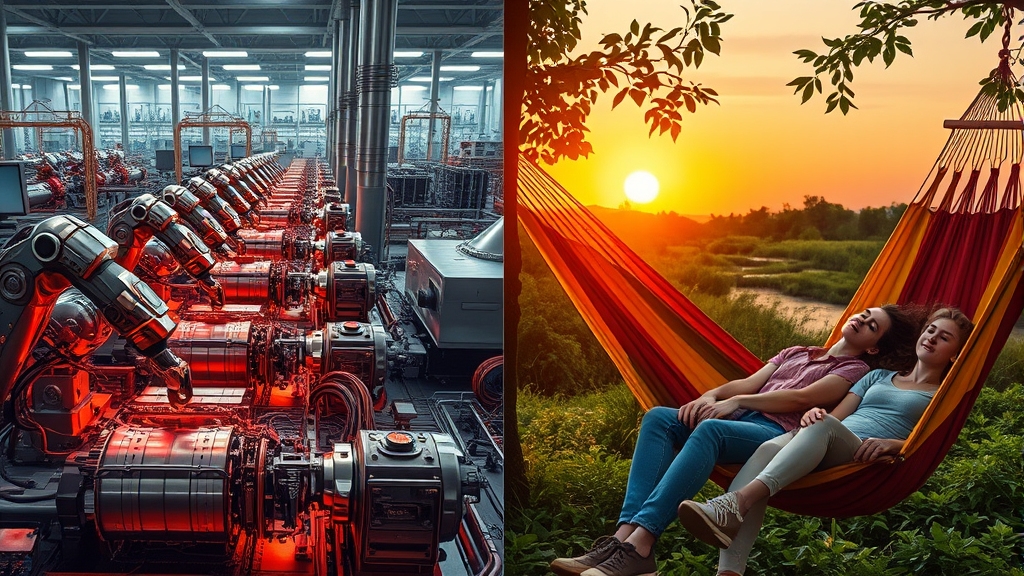
The abundance paradox challenges us to think beyond traditional economic assumptions and imagine possibilities that seemed like fantasy just decades ago. The technology exists to create unprecedented prosperity. The question is whether we’ll build systems to distribute that prosperity broadly or allow it to concentrate among a small group while everyone else struggles with economic displacement. If everything could be free, what would you choose to do? The answer to that question depends entirely on how quickly we act to shape this transition.
The Race Against Time
The timeline for action has compressed beyond every expert prediction. Both OpenAI and Google won gold medals in the International Math Olympiad, a feat not predicted to occur for another year or two. Think about what this means. The world’s leading AI researchers underestimated their own technology’s progress by years, not months. If the people building these systems can’t predict how fast they’ll improve, how can the rest of us prepare for changes that arrive ahead of schedule? Shapiro emphasizes that “the timeline is compressed, with the transition happening much faster than people appreciate.” We’re not looking at a gradual shift that unfolds over decades. We’re witnessing exponential improvements that double AI performance every six to twelve months.

This acceleration creates a cascading effect across the entire economy. When AI systems exceed expectations in one area, they accelerate development in related areas. Better reasoning capabilities lead to better code generation. Better code generation leads to better AI training methods. Better training methods lead to even faster capability improvements. The cycle compounds on itself, creating what Shapiro describes as exponential growth where “the cost of AI goes down exponentially while its intelligence goes up exponentially.” Each breakthrough shortens the timeline for the next breakthrough.
We’ve never seen change this fast—governments and schools can’t keep up in years, not centuries. The difference today is that the pace of change is much faster than any previous economic transition, giving us less time to adapt and fewer opportunities to course-correct if we make mistakes. Shapiro draws parallels to how “social contracts were ruptured” during events like the dissolution of the Soviet Union, where entire economic and political systems disintegrated within years when fundamental assumptions holding society together broke down. The United States isn’t immune to these dynamics just because we have strong democratic traditions and a robust economy.
Here’s what makes our current situation particularly precarious. We have a narrow window of opportunity while automation is creating wealth but hasn’t fully displaced workers yet. Corporate profits are hitting record highs as companies automate operations and reduce labor costs. This wealth creation provides resources that could fund transition programs, universal basic income pilots, and retraining initiatives. But this window won’t stay open forever. Once mass unemployment begins, the tax base shrinks, government revenues decline, and the resources needed for solutions become scarce.

The political challenges of implementing solutions during this transition are enormous. Politicians typically respond to crises rather than preventing them. Voters often resist changes until problems become undeniable. Special interests fight policies that threaten their advantages. These normal political dynamics become dangerous when dealing with exponential technological change. By the time problems become obvious to everyone, the solutions become much more expensive and difficult to implement. We need to act while prevention is still possible, not wait until we’re managing catastrophe.
Practical challenges compound the political obstacles. Designing universal basic income systems requires extensive testing and refinement. Building public wealth funds takes time to accumulate assets and establish governance structures. Creating new forms of collective ownership needs legal frameworks that don’t exist yet. Training displaced workers for new roles requires educational programs that take years to develop and implement. All of these solutions need to be ready before mass displacement occurs, not after.
What do success versus failure scenarios look like by 2030? Success means we’ve implemented income support systems before unemployment spikes, created wealth distribution mechanisms before inequality becomes extreme, and established new forms of economic participation before traditional jobs disappear. People adapt to post-labor lifestyles gradually while maintaining economic security. Social institutions evolve to handle new realities without collapsing. Democracy survives the transition because most people maintain economic agency through multiple income sources.

Failure scenarios paint a much darker picture. Mass unemployment creates social unrest as millions of people lose economic security simultaneously. Wealth concentrates among capital owners while everyone else struggles with poverty and displacement. Democratic institutions break down as economically irrelevant populations lose political influence. Regional conflicts emerge as different areas experience automation impacts unevenly. International tensions increase as countries compete for remaining human-labor advantages. The transition becomes chaotic and destructive rather than managed and beneficial.
The roles that individuals, businesses, and governments need to play in this transition are interconnected and urgent. Individuals need to start building alternative income streams and developing skills that complement rather than compete with automation. Businesses need to consider the social impacts of their automation decisions and invest in transition programs for displaced workers. Governments need to experiment with new policies like universal basic income, public wealth funds, and collective ownership structures. None of these groups can solve the problem alone, but together they could manage the transition successfully.
Global coordination becomes essential to prevent a race to the bottom where countries compete by offering the cheapest automated production. If one nation implements strong worker protections and transition programs while others don’t, businesses might relocate to avoid the costs. This dynamic could undermine efforts to manage the transition responsibly. International agreements and cooperation are necessary to ensure that automation benefits get shared rather than concentrated in a few locations while others experience only the displacement costs.

The stakes couldn’t be higher or the timeline more compressed. Shapiro warns that “the impact of these changes will be greater than most people realize” and stresses that “action within the next 2-3 years is crucial to shape the future.” We’re facing what he calls “a race against time to adapt to the rapidly evolving economic landscape.” The decisions made in the next few years will determine whether automation creates widespread prosperity or widespread suffering for billions of people worldwide.
What makes this particularly challenging is that we’re not just racing against time. We’re racing against exponential technological improvement that consistently exceeds predictions. Every month we delay action, the solutions become more difficult and expensive to implement. Every quarter we spend debating rather than acting, more people lose economic security to automation. Every year we postpone building new systems, the gap between what’s needed and what’s possible grows wider.
Share this article to start the conversation, and tell your local rep this transition can’t wait. The technology to create abundance exists. The wealth to fund solutions is being generated. The examples of what works are being tested around the world. The question is whether we’ll implement these solutions fast enough to prevent chaos or whether we’ll wait too long and watch society struggle through an avoidable crisis. What happens next depends on how quickly we recognize the magnitude of what’s unfolding around us.
Conclusion
The path forward requires decisive action across three critical areas: measure the shift, redistribute the wealth, reallocate power. This isn’t just about jobs disappearing. It’s about whether we create systems that let everyone benefit from automation’s incredible productivity gains. The decoupling of labor from productivity is happening right now, and our actions in the next few years will shape the next century.

Start engaging with these discussions today. Support policies like universal basic income pilots and public wealth funds. Build multiple income streams beyond your regular job. If this sparked new questions, comment below on which solution layer you’d pilot first.
The next decade is ours to shape—will we build an economy for everyone, or watch it leave most behind?