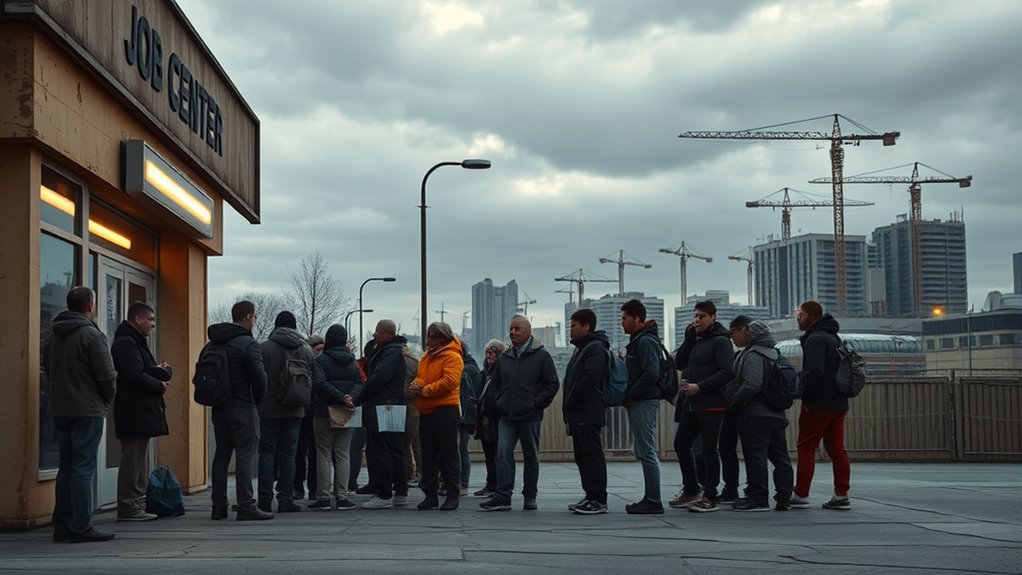

As jobs become scarce due to automation and global shifts, you need social safety nets that go beyond traditional workfare programs. Concepts like Universal Basic Income offer unconditional financial support, ensuring dignity and security regardless of employment status. Conditional cash transfers incentivize desired behaviors while supporting vulnerable groups. These evolving approaches aim to build resilience and fairness in society’s support systems. Exploring these strategies reveals how social safety nets can adapt to future economic realities—keep exploring to find out more.

Get business pricing on tech for your team
- Business-only prices and quantity discounts
- Tax-exempt purchasing
- Multiple users, one account, clear invoices
Key Takeaways
- Shifting from workfare to unconditional support models like UBI addresses job scarcity caused by automation and economic shifts.
- Conditional cash transfers (CCTs) focus on promoting social outcomes while maintaining flexibility in aid distribution.
- Evolving social safety nets prioritize dignity and resilience over strict work requirements amid shrinking employment opportunities.
- Policymakers are rethinking traditional welfare to better support vulnerable populations in changing economic landscapes.
- Infrastructure and backup systems are essential to ensure stability and essential services during economic or social disruptions.

Have you ever wondered how societies shift from work-based programs to broader welfare systems? It’s a complex transition driven by changing economic conditions, technological advancements, and evolving social values. Traditionally, many countries relied on workfare programs, which tie assistance to employment or community service. But as job opportunities shrink due to automation and global market shifts, policymakers are exploring alternative approaches that move beyond the strict work requirement paradigm. One such approach gaining traction is the implementation of universal basic income (UBI). UBI offers a fixed, unconditional cash payment to every individual, regardless of employment status, aiming to provide a financial safety net that guarantees basic living standards. This concept challenges the idea that social support must be earned through work, focusing instead on ensuring everyone’s dignity and economic security. By providing a steady income, UBI can reduce poverty, foster entrepreneurship, and allow people the freedom to pursue education or caregiving without the immediate pressure of earning a livelihood. On the other hand, some countries prefer conditional cash transfers (CCTs), which link aid to specific behaviors like children’s school attendance or healthcare visits. CCTs are designed to incentivize positive social outcomes while supporting vulnerable populations, but they still maintain a connection to work or community participation. Both UBI and CCTs reflect a shift towards recognizing that social safety nets need to adapt to a world where traditional employment isn’t always available or sufficient. As you consider these options, think about how they challenge the old workfare model, which often assumes that everyone can or should work to receive assistance. Instead, these approaches acknowledge that economic security might require providing support unconditionally or with minimal strings, especially when job markets are volatile. The move toward broader welfare systems doesn’t mean abandoning work as a value; it means rethinking how society ensures its members aren’t left behind when jobs are scarce. Universal basic income offers simplicity and universality, reducing bureaucracy and stigma, while conditional cash transfers aim to promote specific social goals while still providing necessary support. Both strategies recognize that the goal isn’t just to incentivize work but to build resilience and fairness into social safety nets. As societies grapple with automation and economic displacement, you’ll see more discussions about how best to support individuals, whether through unconditional payments like UBI or targeted programs like CCTs. Additionally, reliable backup power solutions can help communities maintain essential services during economic or social crises, underscoring the importance of resilience in modern societal infrastructure. Ultimately, these approaches represent a fundamental shift from the traditional workfare model, emphasizing dignity, stability, and adaptability in the face of changing economic realities.
Universal Basic Income (UBI) cash support
As an affiliate, we earn on qualifying purchases.
As an affiliate, we earn on qualifying purchases.
Frequently Asked Questions
How Do Workfare Programs Impact Long-Term Unemployed Individuals?
Workfare programs can help long-term unemployed individuals by reducing employment barriers and promoting skill development. You might gain access to training opportunities, which boost your employability and confidence. However, if these programs are too rigid or lack proper support, they could also become a source of frustration, potentially hindering your progress. Overall, effective workfare initiatives can empower you to re-enter the workforce, but they need to be well-designed to meet your needs.
What Are Alternative Strategies Besides Workfare for Supporting Jobless Families?
You might consider exploring universal basic income, which provides steady support regardless of employment status, offering financial stability for families. Additionally, engaging in targeted job training initiatives can equip you with new skills, increasing your chances of finding sustainable work. These strategies foster independence and resilience, helping families navigate economic uncertainties without solely relying on traditional workfare programs. Embracing these alternatives can create a more adaptable safety net for your community.
How Do Social Safety Nets Differ Across Countries With Varying Economies?
You’ll notice that in wealthier countries, social safety nets often include universal healthcare and pension schemes, providing broad coverage and financial security. In contrast, lower-income nations may rely on targeted aid and conditional cash transfers due to limited resources. These differences reflect each country’s economic capacity, shaping how effectively they support their populations during tough times, ensuring basic needs are met regardless of employment status.
What Role Do Private Sectors Play in Supplementing Government Welfare Efforts?
You can see private sectors play a essential role in supplementing government welfare efforts through public-private partnerships and corporate social responsibility. By collaborating with governments, they provide resources, funding, and services that enhance social safety nets. Their involvement helps address gaps in public programs, create employment opportunities, and support community development. Your engagement in these initiatives can make a significant difference in building resilient, inclusive safety nets for those in need.
How Can Policies Ensure Dignity and Fairness in Work-Based Welfare Programs?
You can guarantee dignity and fairness in work-based welfare programs by designing policies that prioritize income security and fair employment practices. This means providing adequate wages, safe working conditions, and opportunities for skill development. You should also implement transparent evaluation systems to prevent exploitation and promote respect. By focusing on these elements, you create an environment where beneficiaries feel valued and supported, fostering trust and encouraging continued participation.
conditional cash transfer programs
As an affiliate, we earn on qualifying purchases.
As an affiliate, we earn on qualifying purchases.
Conclusion
As you navigate this shift from workfare to welfare, remember that social safety nets are the roots holding our communities together. When jobs are scarce, these programs become the lifelines guiding people back to stability. Think of the safety net as a sturdy bridge—without it, many would be stranded in hardship. By rethinking and strengthening these supports, you help create a foundation where everyone can stand tall, even in the stormiest times.
social safety net support products
As an affiliate, we earn on qualifying purchases.
As an affiliate, we earn on qualifying purchases.
As an affiliate, we earn on qualifying purchases.
Fall Picks
fall essentials
As an affiliate, we earn on qualifying purchases.