

AI adoption seems easier in keynotes because it mainly improves visuals, storytelling, and engagement with minimal ethical or regulatory concerns. You face fewer hurdles since integration is straightforward, and there’s little resistance or oversight needed. In contrast, procurement committees deal with complex ethical issues, data privacy, bias, and strict regulations, making adoption more challenging. If you want to understand how these differences impact organizations, keep exploring the details below.

Get business pricing on tech for your team
- Business-only prices and quantity discounts
- Tax-exempt purchasing
- Multiple users, one account, clear invoices
Key Takeaways
- Keynotes face fewer ethical and regulatory hurdles, simplifying AI integration compared to procurement’s complex compliance landscape.
- Implementation in keynotes is straightforward with minimal resistance, unlike procurement’s technical and governance challenges.
- Keynotes prioritize engaging visuals and storytelling, making AI tools easier to adopt without extensive validation.
- Procurement requires high transparency and stakeholder trust, which slows down AI adoption due to risk and accountability concerns.
- Evolving standards and strict regulations in procurement create additional barriers, whereas keynotes focus mainly on content enhancement.
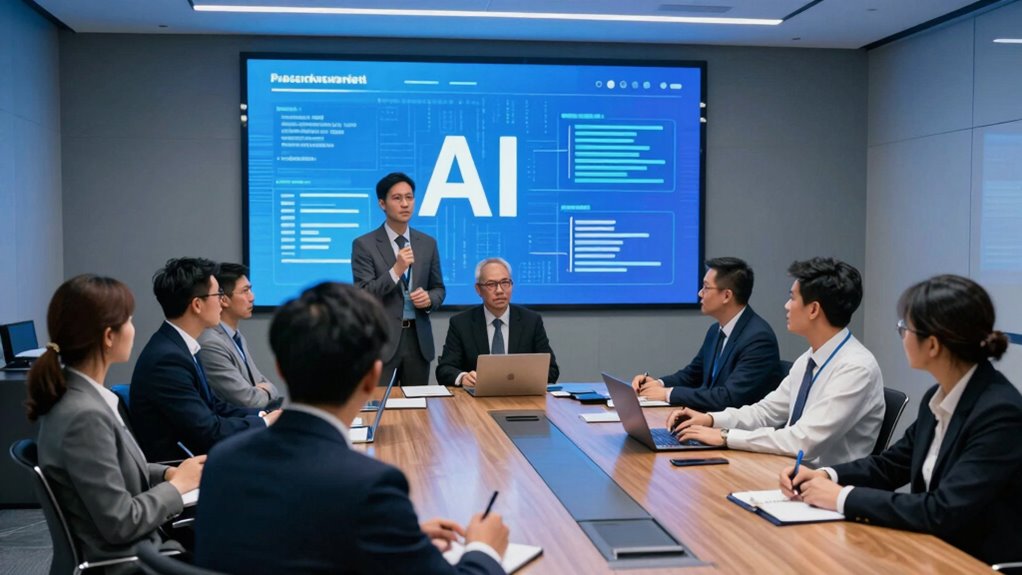
While AI adoption is transforming various organizational functions, its integration into keynote presentations and procurement committees occurs in distinctly different ways. In keynote settings, AI tools are often used to craft compelling visuals, generate data insights, and personalize content, making the presentations more engaging and impactful. Here, the focus is on storytelling and persuasion, allowing AI to enhance the speaker’s message without raising many ethical concerns. The implementation hurdles are relatively minimal—organizations can adopt AI-powered presentation tools with straightforward integrations and quick learning curves. The emphasis on innovation and audience engagement makes AI adoption in keynotes seem seamless and promising.
AI enhances keynote visuals and insights, boosting engagement with minimal ethical or implementation barriers.
In contrast, when AI enters procurement committees, the landscape becomes more complex and fraught with challenges. Procurement decisions involve sensitive data, vendor evaluations, and compliance issues that demand transparency and accountability. Ethical challenges emerge around bias in AI algorithms, data privacy, and the risk of unfair decision-making. Stakeholders worry about AI systems favoring certain vendors or skewing results based on biased training data. Implementing AI in procurement processes requires careful planning, validation, and oversight, which often slows down adoption. The hurdles aren’t just technical—they involve navigating internal resistance, ensuring regulatory compliance, and establishing trust in AI-generated recommendations. Additionally, organizations must consider the ethical implications of AI use in high-stakes decisions, further complicating adoption. Building stakeholder trust is crucial to overcoming resistance and ensuring responsible AI deployment.
Moreover, procurement functions are inherently risk-averse, especially when it comes to financial and legal implications. This cautious stance amplifies implementation hurdles, as organizations need to thoroughly test AI tools and develop robust governance frameworks before they can confidently rely on them. Organizations also face the challenge of trust building around AI systems, which is crucial for acceptance in high-stakes decision-making environments. Unlike keynote presentations, where AI primarily aids in content creation, in procurement, AI directly influences high-stakes decisions. This shift elevates the importance of ethical considerations, making adoption more complicated and cautious. The complex regulatory landscape further intensifies these concerns, requiring organizations to stay vigilant about evolving compliance standards. Additionally, many organizations are working to establish ethical AI standards to guide responsible deployment and mitigate risks. As AI technology continues to evolve rapidly, staying informed about industry regulations becomes vital to ensure ongoing compliance and trust.
As an affiliate, we earn on qualifying purchases.
Frequently Asked Questions
How Do Leadership Biases Influence AI Presentation Versus Procurement Decisions?
Leadership biases influence AI presentations by amplifying enthusiasm and downplaying risks, leading to presentation skepticism among stakeholders. You might notice that leaders tend to showcase AI’s potential more confidently, which fuels bias influence, but procurement committees often remain cautious due to past experiences or risk aversion. This disconnect causes skepticism, making it harder to translate compelling presentations into real AI adoption decisions.
What Are Common Misconceptions About AI Capabilities in Executive Talks?
You might think AI can solve every problem instantly, but that’s a misconception fueled by hype versus reality. In executive talks, future forecasts often highlight exaggerated capabilities to impress audiences. While AI’s potential is vast, it’s essential to understand its current limits and realistic applications. Don’t get caught up in overpromising; instead, focus on practical steps to integrate AI thoughtfully into your organization’s decision-making processes.
How Does Organizational Culture Affect AI Adoption in Procurement?
Imagine your organization’s culture as a garden. Cultural resistance acts like weeds, choking innovation adoption, including AI. If your team values tradition over change, it’s harder to nurture new tech. To foster AI growth, you need to clear these weeds, encourage openness, and cultivate an environment that celebrates innovation. When culture supports experimentation, AI can flourish, transforming procurement from cautious to cutting-edge.
Are There Legal Concerns Overlooked in Keynote AI Demonstrations?
You might overlook legal concerns like legal compliance and intellectual property during keynote AI demonstrations. These presentations often focus on innovation and potential, but don’t always address the legal risks involved. When adopting AI, you need to guarantee compliance with regulations and protect intellectual property rights. Ignoring these issues can lead to legal disputes, fines, or compromised data security, so it’s essential to evaluate legal aspects alongside technical capabilities before full deployment.
How Do Funding and Resource Allocation Impact Real AI Implementation?
You might think funding and resources don’t matter, but they’re the backbone of real AI success. Budget constraints can cripple implementation plans, while inadequate staff training leaves talent untapped. Without enough resources, your AI projects could stall, no matter how shiny the keynote demo looks. To truly adopt AI, you need committed funding and ongoing training—otherwise, you’re just dreaming, not doing.
As an affiliate, we earn on qualifying purchases.
Conclusion
You might feel inspired by AI’s potential after hearing it in keynotes, but real change happens in procurement committees. Imagine a company that hesitated to implement AI, only to miss out on a major deal because manual processes slowed decision-making. Don’t let the excitement of speeches overshadow the hard work needed to adopt AI effectively. Take action now—your organization’s future depends on translating those inspiring words into tangible results.
AI decision support tools for procurement
As an affiliate, we earn on qualifying purchases.
As an affiliate, we earn on qualifying purchases.
AI compliance and governance software
As an affiliate, we earn on qualifying purchases.
As an affiliate, we earn on qualifying purchases.
Fall Picks
fall essentials
As an affiliate, we earn on qualifying purchases.