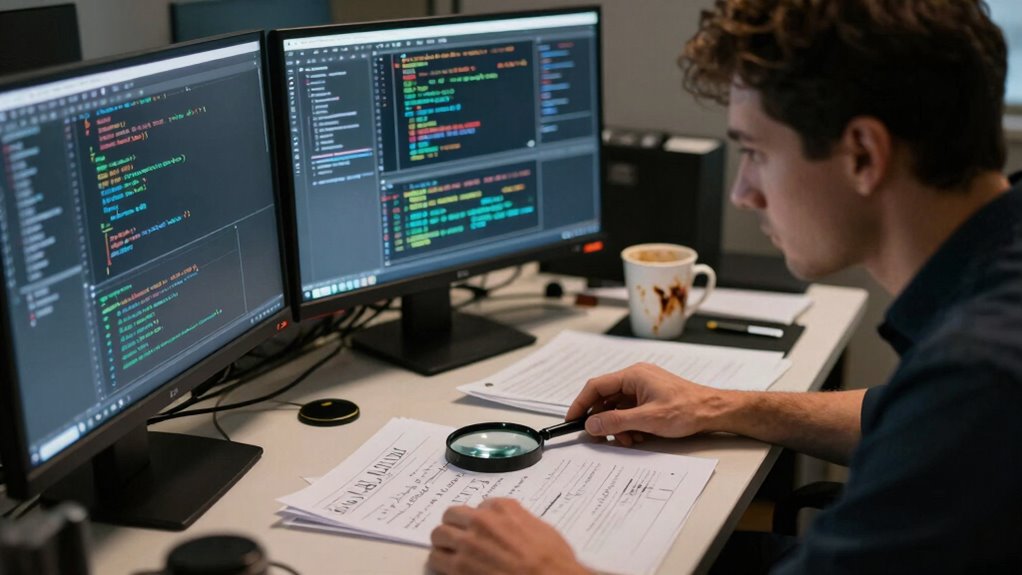

The real hidden cost of AI isn’t just the compute power; it’s the extensive verification needed to guarantee your systems are trustworthy, fair, and compliant. You must constantly monitor and validate to prevent biases, protect data privacy, and avoid costly mistakes. Skipping thorough checks can lead to legal issues, reputation damage, and unethical outcomes. If you want to understand how continuous oversight influences AI’s success, keep exploring this crucial topic.
Key Takeaways
- Verification ensures AI fairness, safety, and compliance, preventing costly mistakes and legal issues.
- Continuous monitoring addresses evolving data, reducing risks of bias and privacy breaches.
- Rushed verification processes can lead to biased, unreliable, or unethical AI deployment.
- Hidden costs include long-term validation efforts critical for trustworthy, responsible AI systems.
- Proper verification safeguards against vulnerabilities, ensuring sustainable and ethical AI operation.

Artificial intelligence often promises efficiency and innovation, but behind its sleek surface lies a hidden cost that many overlook. While the focus often falls on processing power and data volume, the real challenge lies in verifying AI outputs to assure trustworthiness. As you rely more on AI-driven decisions, you must consider the complexities of data privacy and algorithm bias. These issues aren’t just technical hurdles; they’re fundamental to the integrity of AI systems.
Data privacy is a vital concern. When AI models are trained on vast amounts of personal information, safeguarding that data becomes essential. Without proper verification, sensitive data can be exposed or misused, leading to privacy breaches that harm individuals and erode trust. You might think that once data is anonymized or encrypted, the risk diminishes, but verification involves constantly checking for vulnerabilities, guaranteeing compliance with privacy regulations, and preventing unintended leaks. This ongoing process demands rigorous oversight, which is often underestimated or overlooked in the rush to deploy new AI solutions. Recognizing the importance of ongoing verification helps ensure these safeguards remain effective over time. Additionally, many organizations struggle to allocate sufficient resources for continuous validation, which is crucial for maintaining long-term data security. In fact, the evolving landscape of regulations and threats makes continuous verification an essential component of trustworthy AI. Incorporating adaptive verification strategies can help address the dynamic nature of data and threats, ensuring ongoing compliance and security.
Algorithm bias adds another layer of complexity. Many AI systems inadvertently learn prejudiced patterns from biased training data, resulting in unfair or discriminatory outcomes. Detecting and correcting these biases isn’t straightforward; it requires meticulous verification at every stage. You need to scrutinize how your AI models interpret data, challenge assumptions, and test for unintended consequences. Without thorough verification, biased algorithms can reinforce stereotypes or make unjust decisions, damaging reputations and harming those affected.
The core issue isn’t just building the AI but making sure it functions ethically and accurately in real-world applications. This verification process is time-consuming and often underfunded, yet it’s essential for preventing costly mistakes and maintaining user trust. When you skip or rush this step, you risk deploying AI that compromises data privacy or perpetuates bias, leading to legal repercussions and public backlash. The true hidden cost isn’t hardware or energy consumption; it’s the failure to verify and validate that AI operates responsibly. Moreover, the dynamic nature of data and models means that static checks become quickly outdated, emphasizing the need for continuous monitoring to adapt to evolving conditions.
Furthermore, the verification process itself must be thorough and ongoing, as static checks are insufficient to keep pace with evolving data and models. Ensuring that verification methods are adaptable and robust is crucial for maintaining the trustworthiness of AI systems over time. Recognizing that verification and validation are ongoing activities helps organizations stay ahead of potential flaws and vulnerabilities, reinforcing the importance of proactive oversight. Ultimately, the effort you invest in rigorous verification pays off by creating systems that are not only innovative but also trustworthy and fair. Without this vital step, AI remains vulnerable to unseen flaws that can undermine its benefits. Recognizing that the real cost isn’t just compute, but the work needed to verify and validate AI outputs, shifts the focus toward sustainable, ethical development. This approach ensures that AI serves everyone’s interests, safeguarding data privacy and mitigating algorithm bias in the process.
As an affiliate, we earn on qualifying purchases.
Frequently Asked Questions
How Does Verification Impact AI Development Timelines?
Verification considerably impacts your AI development timelines by requiring thorough ethical oversight and regulatory compliance checks. As you develop AI systems, you must allocate time for rigorous testing, validation, and ensuring adherence to legal standards. This process can slow progress but is essential to prevent ethical issues and legal repercussions later. Ultimately, verification acts as a key checkpoint, helping you build trustworthy, compliant AI that aligns with societal expectations.
What Are the Main Verification Techniques Used in AI?
You might think verification is just testing, but it’s more nuanced. You actively perform model validation, guaranteeing your AI behaves as intended across scenarios. Bias detection is essential, helping you identify and eliminate unfair biases. Techniques like cross-validation, robustness checks, and fairness audits are indispensable. They guarantee your AI’s reliability and fairness, ultimately saving you time and resources by catching issues early and building trust in your models.
How Can Verification Costs Be Minimized?
You can minimize verification costs by integrating ethical oversight early in the development process, ensuring potential issues are addressed proactively. Additionally, actively collecting user feedback helps identify flaws and biases more efficiently, reducing the need for extensive re-verification later. Combining these approaches streamlines validation, saves resources, and improves AI reliability, ultimately lowering overall verification expenses while maintaining high standards of safety and fairness.
Who Is Responsible for Verifying AI Systems?
You’re responsible for verifying AI systems, ensuring they meet ethics oversight and regulatory compliance. You act as the guardian, overseeing that the AI operates fairly, transparently, and safely. It’s your duty to double-check algorithms, data integrity, and decision-making processes. By staying vigilant and informed about evolving standards, you help prevent unintended harm, making verification a crucial part of responsible AI deployment. Your efforts keep AI trustworthy and compliant.
What Are the Risks of Inadequate AI Verification?
If you neglect adequate AI verification, you risk ethical concerns and bias issues going unchecked. Inadequate verification can cause biased outputs, unfair treatment, or even harm to users. You might overlook biases or errors, leading to unethical decisions and loss of trust. Proper verification helps mitigate bias, ensuring the AI behaves responsibly and aligns with societal values. Without it, the AI’s decisions could become unpredictable or damaging, risking reputational and legal consequences.
data privacy monitoring software
As an affiliate, we earn on qualifying purchases.
As an affiliate, we earn on qualifying purchases.
Conclusion
Think of building AI like assembling a complex puzzle. You might have all the pieces—powerful algorithms and shiny models—but without confirming each piece’s fit, the picture remains flawed. Just like a puzzle missing a piece, unverified AI can lead to costly mistakes. The real hidden cost isn’t just the compute power, but the time and effort spent on verification to guarantee your AI masterpiece is accurate and trustworthy. Skimp on verification, and the whole picture falls apart.

Spies, Lies, and Algorithms: The History and Future of American Intelligence
As an affiliate, we earn on qualifying purchases.
As an affiliate, we earn on qualifying purchases.
As an affiliate, we earn on qualifying purchases.