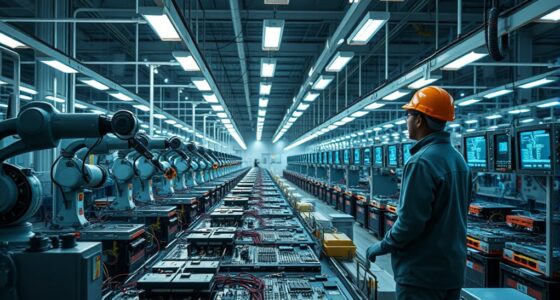
Robot blackouts happen when automation systems unexpectedly fail due to power issues, hardware malfunctions, or software bugs, causing sudden operational halts. These failures can lead to costly production delays, increased expenses, and disrupted supply chains in industries like automotive and aerospace. Preventing such crashes requires backup power, regular maintenance, and system monitoring. To understand how to safeguard against these spectacular failures and keep your operations running smoothly, keep exploring these critical strategies.
Key Takeaways
- Power disruptions, software bugs, or hardware failures can cause robot blackouts, halting production unexpectedly.
- Such failures lead to delays, increased costs, and compromised product quality in manufacturing processes.
- Preventative measures include backup power systems, regular maintenance, and software updates to enhance reliability.
- Safety protocols like lockout/tagout and staff training are essential for emergency response during automation failures.
- Investing in IoT monitoring and redundancy improves system resilience, minimizing the impact of unexpected robot blackouts.

Robot blackouts are sudden failures in automation systems caused by power disruptions or technical glitches. These events happen unexpectedly, halting production and disrupting workflows. When power outages strike or software bugs creep in, your automated systems can shut down without warning, often leaving you scrambling to restore operations. Common causes include power interruptions, which cut off the energy supply needed for robots to function. Software bugs, on the other hand, can cause systems to freeze or behave unpredictably, while hardware malfunctions—such as faulty sensors or damaged components—can also trigger blackouts. These failures don’t just halt machinery; they can have serious repercussions on your business. Production lines can grind to a halt, leading to missed deadlines, increased costs, and wasted materials. If a robot stops mid-cycle, you might end up with defective products that need rework or disposal, adding to your expenses.
Robot blackouts can halt production unexpectedly, causing costly delays and defective products.
To combat these risks, many companies implement backup power systems like uninterruptible power supplies (UPS). These systems provide emergency energy, allowing critical operations to complete or safely shut down during outages. Proper planning and redundancy are essential to keep your systems running smoothly. Regular maintenance helps identify potential hardware issues before they cause failures, while software updates fix bugs and improve stability. Continuous system monitoring allows you to detect early signs of trouble, so you can address problems before they lead to a blackout. Implementing predictive maintenance can further reduce unexpected failures by identifying potential issues early on. Training your staff in emergency procedures and safety protocols is equally important. When systems fail unexpectedly, well-prepared operators can execute shutdown procedures safely, minimizing hazards and preventing accidents. Additionally, power quality issues such as voltage sags or surges can also contribute to system blackouts, emphasizing the need for power conditioning equipment.
Safety concerns are a significant aspect of robot blackouts. Lockout/tagout procedures are crucial for safe maintenance, ensuring robots don’t restart accidentally during repairs. Power, hydraulic, and pneumatic systems need to be secured properly to avoid injury or damage. Educating operators about these safety measures and compliance with industry standards helps reduce risks. Establishing clear emergency shutdown protocols ensures rapid response if a blackout occurs, protecting both personnel and equipment.
The economic impact of blackouts is substantial. Production stops translate to lost revenue, especially if delays extend or quality suffers. Repair costs can add up quickly, and frequent failures might cause your business to lose a competitive edge. Investing in redundancy and backup systems can mitigate these financial risks, safeguarding your bottom line. In the broader industry context, automated manufacturing, especially in sectors like automotive and aerospace, relies heavily on reliability. Failures can disrupt global supply chains, causing ripple effects across markets. To reduce these risks, many organizations adopt advanced mitigation strategies, such as UPS systems, cloud computing backups, IoT-based monitoring, and robust system design. Training employees in response protocols further enhances resilience, helping your operation withstand unexpected blackouts and keep production flowing smoothly.
Frequently Asked Questions
How Common Are Robot Blackouts in Industrial Settings?
You might wonder how often robot blackouts happen in industrial settings. While robots are highly reliable, with failure rates around 12%, blackouts occur more frequently due to external factors like positioning issues and system errors. On average, a robot might experience a blackout roughly every 87 minutes. These incidents can disrupt operations and emphasize the need for proper safety measures, regular maintenance, and operator training to minimize their impact.
What Are the Main Causes of Automation Failures?
You need to understand that automation failures often stem from inadequate knowledge of system components like robots, sensors, and control systems. Poor planning, unrealistic expectations, and neglecting detailed workflows can cause breakdowns. Human errors, insufficient training, or over-reliance on automation also play a role. Additionally, technical issues such as hardware failures, software bugs, and environmental factors further increase the risk of system failures, disrupting operations.
Can Robot Blackouts Lead to Safety Hazards for Workers?
Yes, blackouts in robots can pose serious safety hazards for you. When a robot unexpectedly stops or moves unpredictably, you risk injury from being trapped or struck by moving parts. Maintenance and emergency situations increase this risk, especially if safety measures like presence sensors and interlocks aren’t in place. Staying alert, following proper procedures, and ensuring safety systems are active can help you stay safe during such blackout events.
How Do Companies Recover From Robot Blackouts Quickly?
Did you know that 75% of companies report significant downtime during robot failures? To recover quickly, you should have a clear recovery plan, including designated teams and defined procedures. Use fault detection tools for fast diagnosis, perform staged restarts, and prioritize critical functions. Regular drills and updated training guarantee your team reacts efficiently, minimizing downtime and safety risks during robot blackouts.
Are There Predictive Measures to Prevent Future Robot Failures?
You can implement predictive measures to prevent future robot failures by leveraging AI and IoT technologies. Continuous monitoring of sensors tracks essential parameters like temperature and vibration, while machine learning analyzes data to spot early signs of wear or malfunction. Automated alerts enable you to schedule maintenance proactively, reducing downtime. Additionally, incorporating cybersecurity and redundancy safeguards ensures smoother operations, minimizing the risk of unexpected failures and keeping production running efficiently.
Conclusion
So, next time you rely on automation, remember: even the smartest robots can stumble. When they fail, chaos lurks just around the corner—like a house of cards waiting to fall. Are you prepared for the blackout that could disrupt everything? Embrace the lesson: technology is powerful, but never infallible. Stay vigilant, keep backup plans ready, and never put all your trust in machines—because when they fail, it’s your turn to face the fallout.